
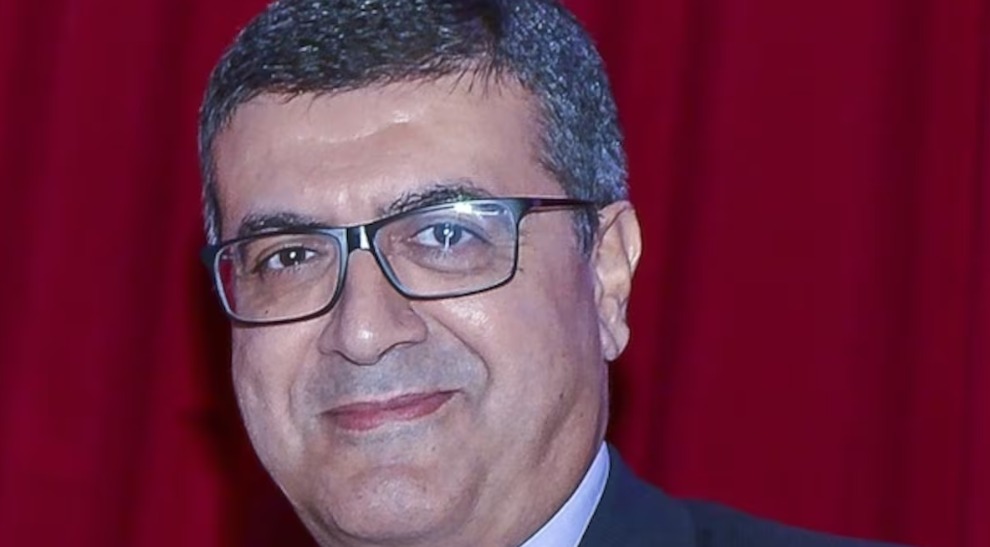
Since 2014, Fouad Brini has headed the Tanger Med Special Agency, shaping the spectacular growth of Tanger Med port while remaining largely out of the spotlight. Coming from the private sector, rooted in northern Morocco, and driven by a highly operational approach, he has established himself as one of the key figures in the country’s economic transformation. This article is based on a press review from Jeune Afrique.
Brini is about to begin his twelfth year leading the Tanger Med Special Agency, the Moroccan public entity overseeing all port, industrial, and logistics activities at the Tanger Med complex. “Under his leadership, the port has become a key player,” writes Jeune Afrique. The port, now first in Africa and the Mediterranean and ranked 17th globally, posted impressive 2024 results: 187 million tons of cargo handled, over 11 million TEUs, and revenue exceeding 11 billion dirhams. The surrounding industrial zones generate a massive 174 billion dirhams in business volume and employ around 130,000 people, significantly contributing to the rise of Tangier, now ranked among Africa’s most attractive cities.
Appointed by King Mohammed VI in 2014 as Chairman of TMSA’s supervisory board, Brini has pursued a single goal: to consolidate Tangier’s dynamism and confirm Morocco’s strategic role as a regional trade hub. Yet, the discreet executive shuns personal attention. According to those close to him, he prefers the focus to be on Tanger Med’s achievements rather than his own career, which he considers secondary to the scale of the collective project.
Unlike his predecessor Mohamed Hassad, a career administrator, Brini comes from the private sector. A graduate of the École des sciences de l’ingénieur and the Institut de l’Administration des Entreprises de Montpellier, he began his career in France at Control Data and IBM before joining Bull. This corporate experience allowed him to manage major IT projects, including for the Moroccan administration, and to build expertise that would guide his later roles.
“Brini soon felt the need to embark on an entrepreneurial journey,” notes Jeune Afrique. In 1992, he founded his first company in telecommunications and IT, then joined Intelcom, supporting its expansion in Africa and the Middle East alongside the multinational Satec. This entrepreneurial drive remains a hallmark of his professional identity.
Born in Tétouan, he has maintained strong ties to northern Morocco. In 1994, he sought to encourage regional development through Mountada Chamal, an initiative by local elites. Although the association did not achieve the expected success, his commitment to a historically marginalized region persisted. In 2006, Mohammed VI appointed him to lead the Agency for the Promotion and Development of the North, tasked with opening up a territory heavily affected, notably after the Al Hoceima earthquake.
Fluent in Berber, Arabic, French, Spanish, and English, Brini has occasionally been considered for government roles. In 2018, he was among potential candidates to head the Ministry of African Cooperation, a position eventually given to Mohcine Jazouli, reflecting his growing political and strategic influence.
He played a decisive role in reviving Tanger Tech, a massive industrial city project announced in 2016 that had stalled after its first Chinese partner withdrew. When the project was taken over by China Communications Construction Company, Tanger Med was tasked with its management. Brini’s expertise and his teams restored the project’s credibility and attracted initial investors.
Throughout his career, he has also maintained economic and civic engagement. He helped found Le Maroc Compétitif in 1996, contributed to early national IT strategies, and in 1998 became head of Apebi, the Moroccan federation of digital companies.
“Brini favors a very operational approach in his daily work,” reads Jeune Afrique. Colleagues describe a leader intimately familiar with all aspects of his responsibilities, down to the cost of a sidewalk section in an industrial zone or the number of containers leaving the port. This rigor is paired with a preference for professionals from the private sector, whom he sees as closer to investors’ expectations and better equipped to facilitate projects.
Thus emerges the portrait of a discreet but determined leader, committed to his region, focused on efficiency, and profoundly shaped by his private-sector experience. Tanger Med has become a driving force in Morocco’s economic development, a symbol of its industrial potential, and a project that Brini prefers to be recognized as a collective achievement rather than a reflection of his personal leadership.