
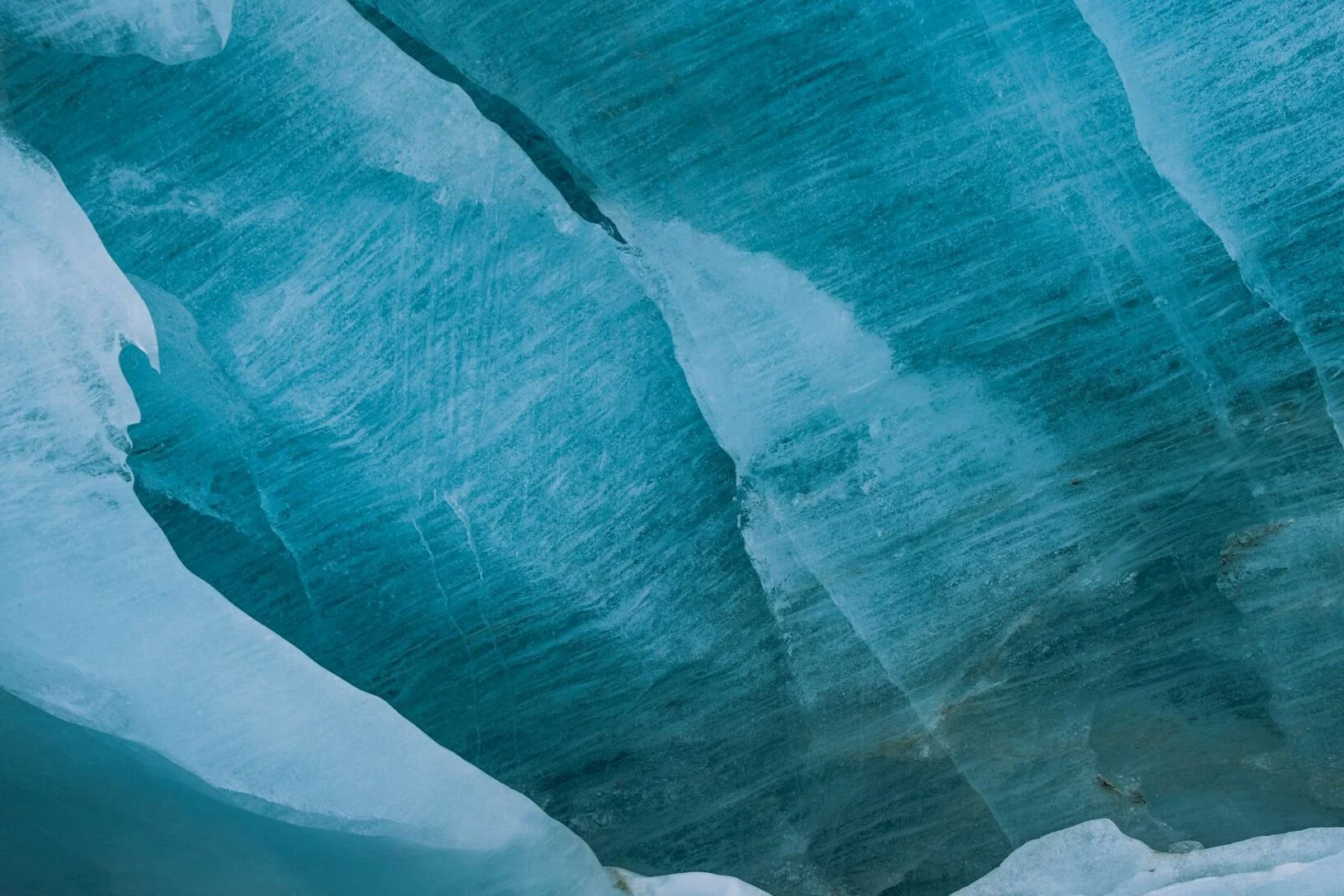
This ice monster will not survive this century, but before disappearing completely, he will have had time to confide in us an old secret that we would have gladly without.
When Andrea Fisher, a glaciologist at the Austrian Academy of Sciences, drilled the Weißenspitze, a glacial plateau in the Eastern Alps, six years ago, it was still ten meters thick. It is a somewhat peculiar glacier, it stagnates at the top of the mountain on which it is located, and like all alpine glaciers, it is seriously threatened by global warming. Today, it is only five meters thick, which led its team to analyze its glacial cores, whose chemical composition of each stratum faithfully records what floated in the atmosphere at different times.
In its most recent layers, the researchers found traces of pollution dating from the 10thcentury, evidence of human activities extremely toxic to the environment. A contamination that shows that the Austrian medieval economy was flourishing, but that there are certainly dozens of other alpine glaciers hiding similar archives that disappear, without having had the time or the idea to drill them.
The Middle Ages seen from the ice
The team mainly detected abnormal concentrations of metals in the caps: arsenic, lead, copper and silver. These four elements are the geochemical markers that are frequently found in areas where extractive metallurgy was practiced. When a mineral is melted to extract a metal, the impurities it contains (arsenic, lead, sulfur) volatilize and spread throughout the atmosphere in the form of smoke and fine particles.
Emissions that can then travel for hundreds of kilometers before settling on high-altitude snowy surfaces, where they remain trapped. Analytical results that are quite logical when we know that the Eastern Alps were experiencing precisely, at that time, a considerable boom in the mining of precious metals (silver in particular).
In addition to these metals, large amounts of carbon soot was also found in the caps, a residue that is frequently found when wood or vegetation has burned incompletely. At low temperatures, the combustion of a tree releases microsopic carbon particles that have not had time to burn, which can remain suspended in the atmosphere for days and travel very long distances before settling on high-altitude snows.
According to the team, the measured concentrations were far too high to come only from domestic fires or natural fires. The researchers therefore attributed the presence of this compound to the major clearing campaigns that took place during much of the Middle Ages. We did not really do half measures at the time: entire forests were burned all over Europe to free up space to transform them into agricultural land. Arson therefore, which has been repeated over several decades, have left their footprints in the ice.
Humans have not waited for the Industrial Revolution to pollute their environment, although this image is strongly anchored in the collective imagination. The small difference is that our ancestors of the 10th century were not aware that their activities would be read more than 1,000 years later. Moreover, Andrea Fisher’s team did not find any caps corresponding to the industrial era; they were already melted. Strata that would have informed us much better about these two centuries of crazy growth and carbon emissions. A disappearance that pushes Alison Criscitiello, a glaciologist who also participated in the study of the Weißenspitze, to review our priorities in the drilling of the caps: the glaciers that melt the fastest are perhaps the ones that must be analyzed first, before there is nothing left to be drawn from them.
source : presse citron