
Morocco can play a role as the « engine of the energy transition » of global maritime transport, thanks to its strategic geographical position, its abundant renewable energy resources and its potential to produce low-cost hydrogen, says the World Bank (WB).
The Kingdom is already positioned as a key player in maritime transport, and its ports are ready to serve as hubs for the production, storage, storage and export of green hydrogen, » underlines the BM in an article devoted to Morocco’s assets and potential in this area, published on its website.
According to the international institution, the acceleration of the development of the green hydrogen sector in Morocco will create jobs, generate additional income, improve access to drinking water and strengthen electricity supply. And to add that the surplus renewable energy generated by hydrogen production can also be used by local communities.
The authors of this study observe that the global maritime sector is at a decisive turning point, in that it must face a double challenge, namely to respond to a growing demand for maritime transport services while managing its emissions responsibly.
In this regard, green hydrogen derivatives, such as ammonia and methanol, are emerging as promising options to replace traditional fuels in maritime transport. Therefore, significant quantities of green hydrogen will be needed to supply maritime transport and other sectors, observes the WB, noting that this represents an « excellent opportunity » for some countries, such as Morocco, to take advantage of a new and growing industry.
« Morocco, thanks to its strategic geographical position, its abundant renewable energy resources and its potential for low-cost hydrogen production, is well placed to meet this demand, » says the World Bank.
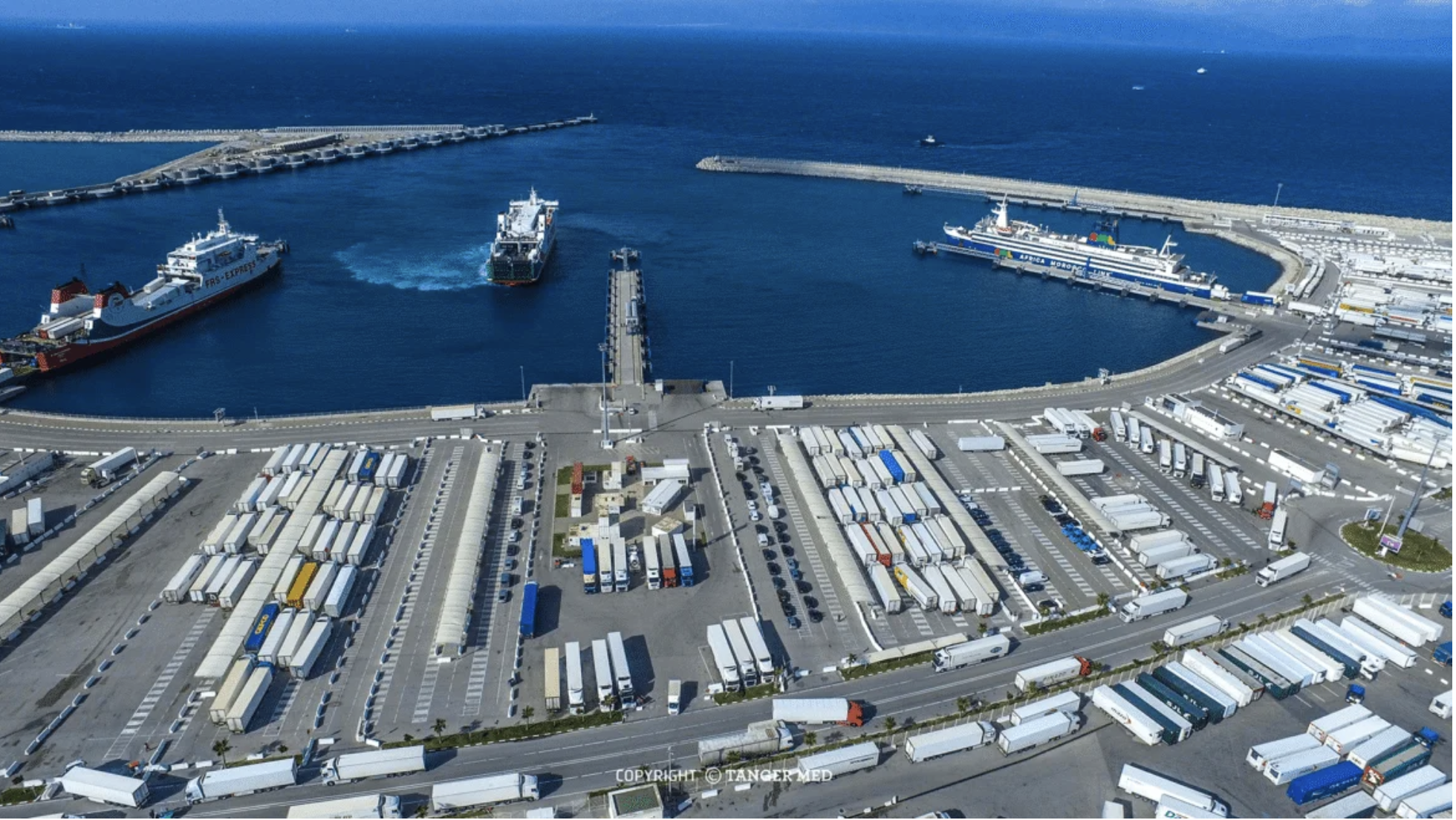
In this regard, the global institution notes that port infrastructure is a major element of the Moroccan government’s strategic framework to develop the green hydrogen sector, noting that Moroccan ports such as those of Tanger Med, Mohammedia, Jorf Lasfar and Tan-Tan could play a decisive role in achieving Morocco’s green hydrogen ambitions.
Indeed, the World Bank Group estimates that, by 2030, in a medium demand scenario, ships calling at Moroccan ports could require about 0.2 million tons of hydrogen equivalent fuel, and about 2.83 million tons by 2050. This hydrogen would be converted into green marine fuel in the form of ammonia or methanol.
Currently, Tanger Med, one of the largest container ports in the world, deals with around 1.5 million tons of fossil fuels for maritime transport each year, notes the WB, estimating that this Moroccan port is well placed to become a green fuel supply hub, capturing the demand of ships transiting through one of the busiest maritime corridors in the world.
The port of Jorf Lasfar also plays a strategic role in this transformation, already processing about two million tons of ammonia per year, it is added, noting that this makes it an ideal site to integrate green hydrogen derivatives as inputs into existing industrial processes.
« In using green ammonia to produce fertilizers, Jorf Lasfar could contribute to the decarbonization of the fertilizer sector in Morocco, » the authors of the article emphasize.
Beyond the maritime sector, Moroccan renewable energy resources form the basis for large-scale and low-cost green hydrogen production, the article argues. And to emphasize that the interest in green hydrogen is driven by the growth in global demand for energy and fuels, including alternatives to fossil fuels.
The article also notes that Europe, as part of its « REPowerEU » initiative, should import more than 10 million tons of green hydrogen per year by 2030, making Morocco a natural partner because of its proximity and production potential. The sea routes that cross the Strait of Gibraltar further strengthen Morocco’s position as a global hydrogen hub.
source : challenge