During my TEDx, I shared a conviction born in the heart of coral reefs: what if coral was not only a fragile organism that we must save, but a master of the living capable of inspiring us?
A marine biologist and photographer, I have spent more than 15 years working on tropical reefs, especially in Indonesia, alongside local communities. I co-founded the NGO Coral Guardian to protect corals by directly involving fishermen. At the time, my approach was clear: preserve an ecosystem threatened by global warming, overfishing, and ocean acidification.
What if it wasn’t up to us to protect the coral? What if he held the keys to our own survival? If you are facing a video display issue, you can see it here. © Martin Colognoli, TEDxGeneva
The figures are alarming: about 50% of coral reefs have already disappeared in a few decades, and the most pessimistic projections suggest up to 90% losses by the end of the century if warming exceeds 2°C. Reefs cover only 0.1% of the ocean’s surface, but they are home to nearly a quarter of marine biodiversity. More than 500 million people depend directly on these ecosystems for their food and economy.
Faced with this data, protection seems obvious. However, over time and immersions, an inner shift has taken place.
The Coral is an organism that is more than 500 million years old. It has gone through five major mass extinctions. What we now call « coral » is made up of thousands ofSpecies, including reef-building corals, which are able to create structures that are visible from space through the accumulation of their skeletons Limestone.
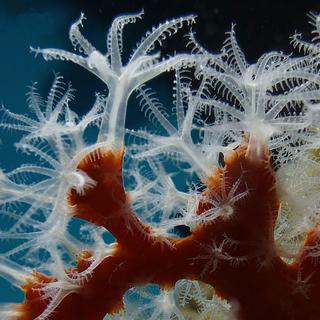
But beyond the biological performance, it was their survival strategy that struck me. Coral thrives in waters poor in Nutrients Thanks to a symbiosis with microalgae, the zooxanthellae. This close cooperation allows him to optimize theEnergy solar and Recycle resources. Diversity, interdependence, slowness: these are the pillars of its evolutionary success.
To transform nature or to let oneself be transformed by it?
I then began to ask myself an uncomfortable question: am I legitimate to claim to « protect » an organism that has such an experience of the living? Could we teach coral how to survive?
This questioning does not mean abandoning protection. It invites us to shift our gaze. Rather than considering nature only as a victim to be defended, why not also recognize it as a source of inspiration?
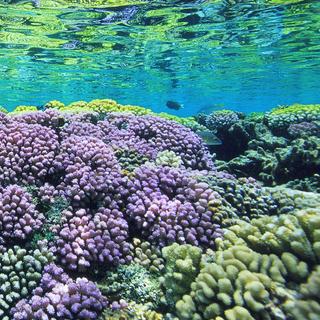
Coral teaches us cooperation rather than competition, Resilience rather than control, anchoring Local rather than limitless expansion. It shows that diversity strengthens the robustness of a system, and that slowness is not a delay, but a strategy.
Through the Photography, the exhibitions and conferences that I am developing today under the name Symbiooz, I seek to convey this idea: in the face of the ecological crisis, we need new narratives. Scientific data are essential, but they are not always enough to transform our imaginations.
Coral is not only a symbol of fragility. It is the fruit of chaos, a Construction patient and adaptive collective. Drawing inspiration from it may mean learning to inhabit our planet in a different way.
What if, in the end, the real ecological revolution was less about protecting nature than about accepting to let ourselves be transformed by it?
source : futura science