
On the occasion of the 2025 edition of World Fisheries Day—celebrated this year under the spiritually and socially engaged theme, « We took nothing; but at your word, I will cast the nets »—a new report by the EU IUU Fishing Coalition, composed of NGOs such as the Environmental Justice Foundation (EJF), The Nature Conservancy, Oceana, and WWF, highlights the weaknesses of the European system for controlling seafood products. Between 2020 and 2023, only 0.29% of catch certificates were verified during imports into the European Union, allowing potentially significant volumes of fish from IUU (Illegal, Unreported, and Unregulated) fishing to enter the EU market.
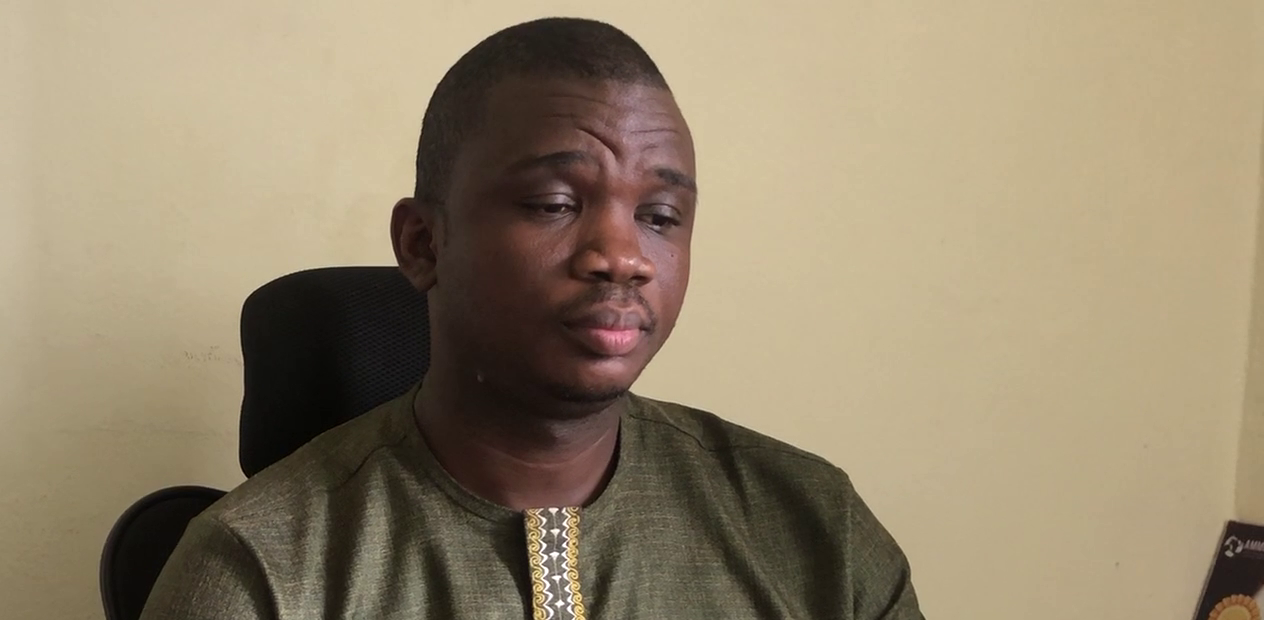
To analyze these shortcomings and their impacts on the Gulf of Guinea and the Cameroonian coasts, we interviewed Dr. Ysaac Chavely MBILE NGUEMA, an expert in combating IUU fishing and head of the IUU Fishing and Blue Economy program at AMCO.
What does this report reveal about the current shortcomings in combating illegal fishing?
The report highlights that some European countries do not systematically or rigorously verify catch certificates, which are crucial instruments to ensure traceability of seafood products. This is the case for Portugal and Italy. Between 2020 and 2023, only 0.29% of catch certificates were actually checked. This means that significant volumes of seafood circulating on the European market could originate from IUU (Illegal, Unreported, and Unregulated) fishing.
The report shows that despite the European model for combating IUU fishing remaining a global reference, some countries still have significant gaps in fulfilling their responsibilities as market states. The problem is therefore not the absence of certificates, but the lack of rigor in their control. It is essential that personnel in charge of this task strictly apply the procedures.
How can these European shortcomings contribute to worsening IUU fishing in the Gulf of Guinea and along the Cameroonian coast?
Establishing a direct link is not simple. IUU fishing in the Gulf of Guinea is a long-standing phenomenon. In the 1990s, and over a period of at least twenty years, West Africa and part of Central Africa were already facing a critical situation.
However, there is indeed an indirect link. IUU operators are motivated by profit, so any loophole in a control system—especially in such an attractive market as the EU—becomes an opportunity. If catch certificates are not sufficiently checked by certain European countries, products from illegal practices are more easily sold. This can encourage fishing vessels to engage in harmful practices in the waters of the Gulf of Guinea.
It is therefore crucial that the EU in general, and the countries specifically named, take the report’s recommendations seriously to prevent these gaps from allowing IUU fishing to thrive again in the coastal states of the Gulf of Guinea. This would have direct consequences on efforts to combat this scourge in the region.
Does Cameroon currently have the means to monitor and control its fishing zones and vessels?
Cameroon has some means, but they are not yet sufficient. Since the EU issued a “red card” on January 5, 2023, notable progress has been made:
- Adoption of a new fisheries law;
- Preparation of implementing decrees;
- Various support from partners, such as the project Stop IUU Fishing in Cameroon, financed by Ocean 5 and implemented by AMCO-EJF-MINEPIA.
However, operationally, significant needs remain:
- Sufficient and modern surveillance equipment;
- Increased frequency of maritime presence;
- Adequate control capacities for Cameroonian-flagged vessels.
Patrolling the sea is costly. Resources must be strengthened to enable Cameroon to fully assume its role as a coastal state, flag state, and port state.
What urgent solutions do you recommend to strengthen Africa–Europe cooperation against illegal fishing?
Europe–Africa cooperation in combating IUU fishing is longstanding and has achieved important progress. The European Union finances various projects, both with states and regional fisheries organizations such as:
- The Gulf of Guinea Regional Fisheries Commission (COREP);
- The Sub-Regional Fisheries Commission (CSRP);
- The Fisheries Committee for the Central-West Gulf of Guinea (CPCO).
To go further, it is important to:
- Strengthen political dialogue, notably during the next AU–EU summit;
- Continue and increase funding for Gulf of Guinea states;
- Ensure that European vessels themselves no longer engage in IUU fishing in African waters;
- Maintain the “red card” system, which has proven effective. This system has allowed Guinea, and now Cameroon, to reform their national systems for combating IUU fishing under the pressure of these sanctions.
Source: Environnementales