
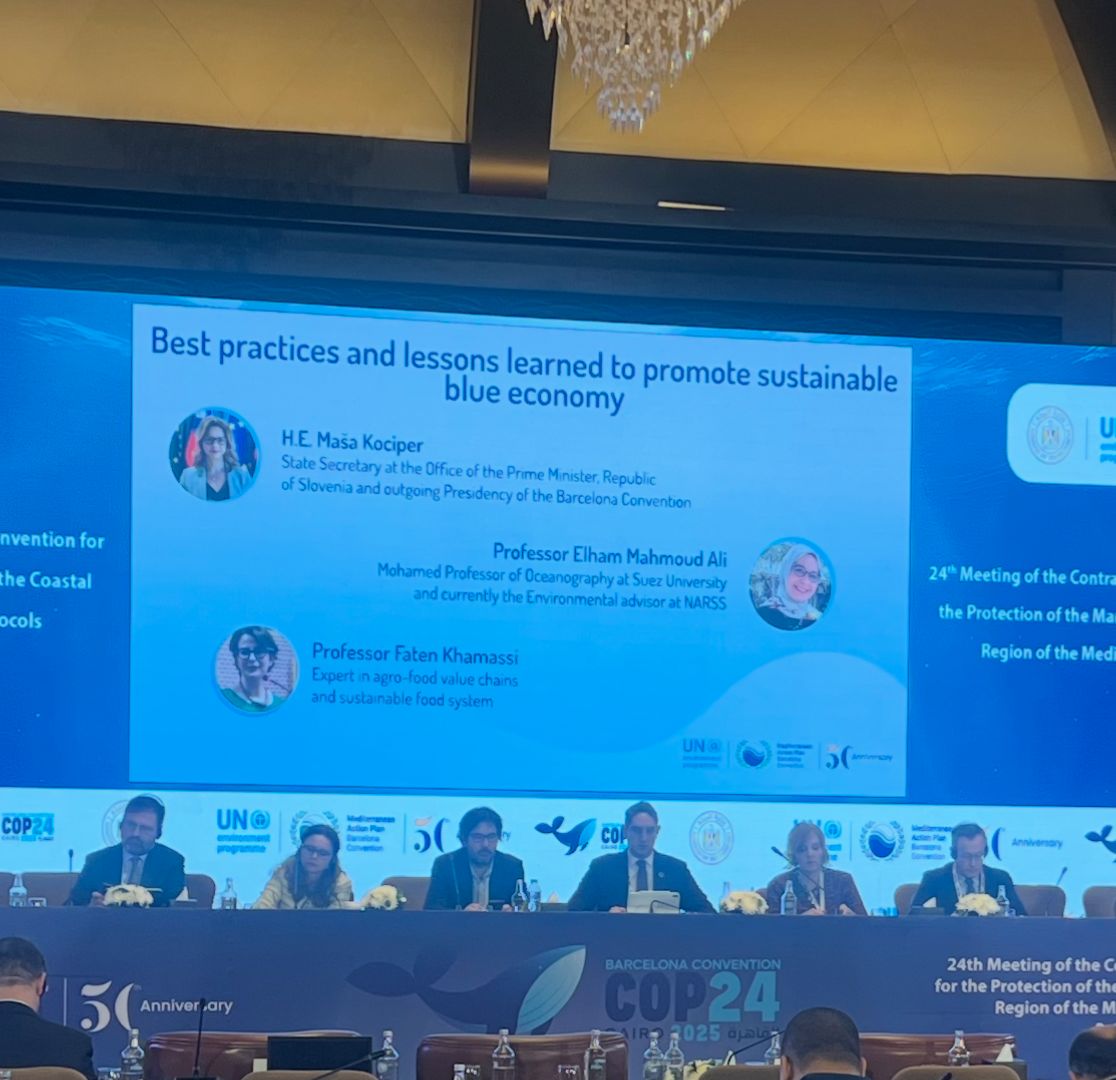
At a recent meeting focused on Mediterranean cooperation and the blue economy, Faten Khamassi highlighted Tunisia’s initiatives to reconcile economic development, environmental preservation, and social justice across the Mediterranean region.
Khamassi presented Tunisia’s experience in the blue economy, rooted in an integrated vision of climate resilience, economic prosperity, social justice, and marine ecosystem protection. In 2022, Tunisia adopted a national blue economy strategy structured around four pillars: governance, knowledge, innovation, and inclusion. This strategy led to the creation of a ministerial commission for maritime affairs and strengthened the ecosystem protection system.
Among concrete initiatives, Khamassi emphasized the DEPOLMED program, funded by the European Union, which focuses on coastal pollution reduction and modernization of the sanitation system, as well as port modernization and sector digitalization projects to improve monitoring and traceability. Innovative pilot projects, such as the WestMed project for sustainable aquaculture, sustainable tourism initiatives, and the creation of a Tunisian investment fund worth several million dollars, are also underway to support local innovation and the integration of young entrepreneurs.
The essential role of civil society in sustainable development was highlighted, with associations like La Saison Bleue leading protection and awareness-raising efforts. Khamassi concluded by stressing the importance of Mediterranean cooperation to develop solutions that protect the seas, strengthen communities, and build a more resilient future.
It was also noted that Tunisia, with support from the World Bank, has developed a blue economy development plan targeting priority sectors such as tourism, fishing, aquaculture, and maritime transport. It is important to note that Tunisian aquaculture is mainly marine, with very limited freshwater aquaculture, except for a few farms in reservoirs.