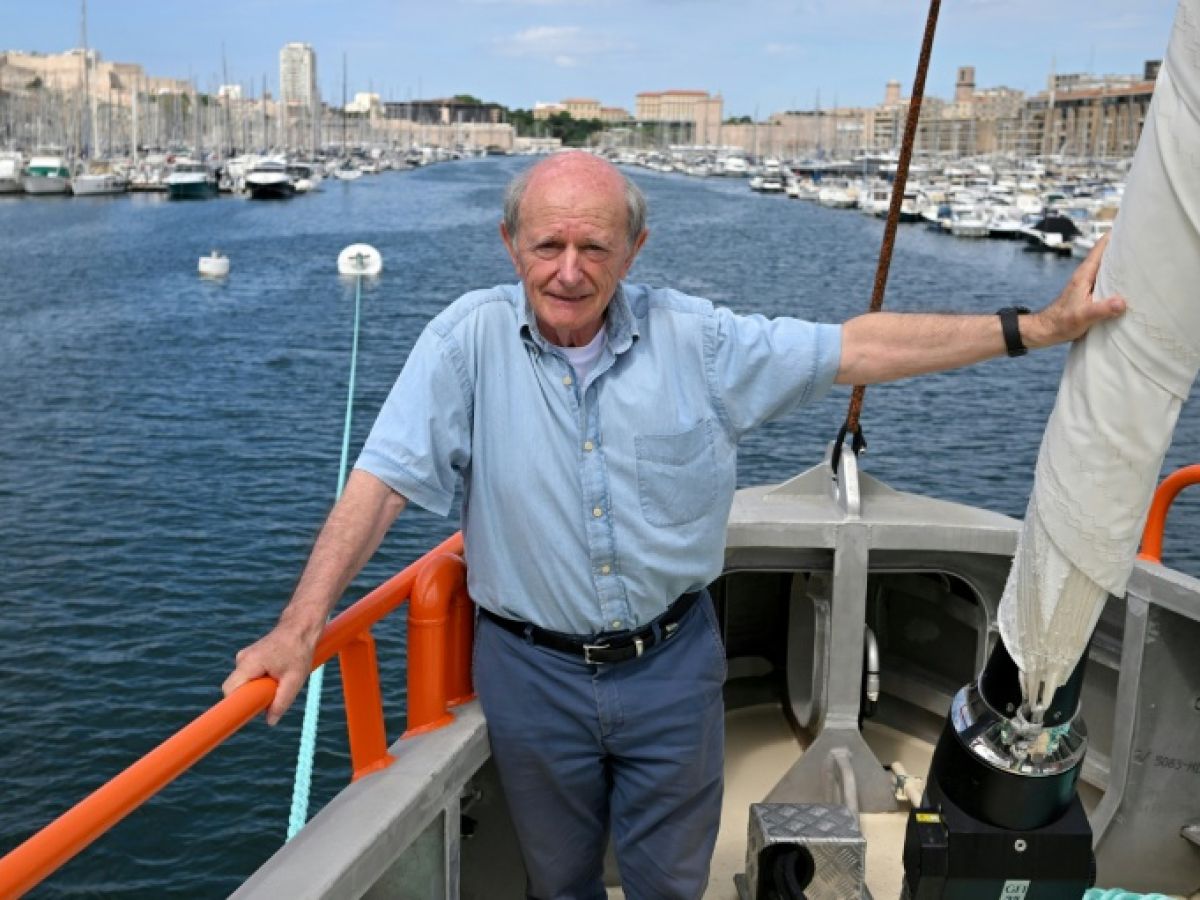
French physician and explorer Jean-Louis Étienne has launched a new scientific expedition to Antarctica to enhance knowledge of this little-known continent, which is severely threatened by human activity, and to advocate for the creation of a new marine protected area (MPA) in the region.
“The poles are witnesses to climate change,” he said, adding that MPAs “are essential; otherwise, we face the gradual disappearance” of these ecosystems, which are “precious for the planet,” speaking at a press conference on Thursday.
The “Persévérance in Antarctica” expedition will depart on 20 January from Christchurch, New Zealand, heading to the Ross Sea and then the Dumont d’Urville Sea in East Antarctica. The mission is scheduled to last until 15 March.
On board the ship, a series of advanced measurement instruments will collect meteorological data, survey marine wildlife, study atmospheric pollutants, and monitor phytoplankton levels and wave heights.
“The Antarctic continent is 28 times the size of France” and “contains 70–80% of the planet’s ice,” emphasized Étienne.
The 79-year-old explorer, who became the first person to reach the North Pole alone in 1986, previously completed a full crossing of Antarctica in 1989–1990. “The same expedition could not be repeated today,” he lamented, noting that parts of Antarctica have already been lost due to rising sea-surface temperatures and sea-level rise.
Industrial fishing poses another major threat to the continent’s biodiversity. “This is why new MPAs are needed in the region, as more and more factory ships are fishing there,” particularly for krill, a small crustacean that is “the cornerstone” of the regional food web, Étienne explained.
The Persévérance expedition will also assess the impact of the Ross Sea MPA, ten years after its establishment, as a new MPA project is being advocated by France and Australia with support from the European Union in East Antarctica.
Four additional MPA proposals are currently under negotiation within the Convention for the Conservation of Antarctic Marine Living Resources (CCAMLR).
France’s national strategy for protected areas aims to cover 30% of its territory (land and sea) with protected spaces by 2030, including 10% under strict protection.
Source: Sciences et Avenir