

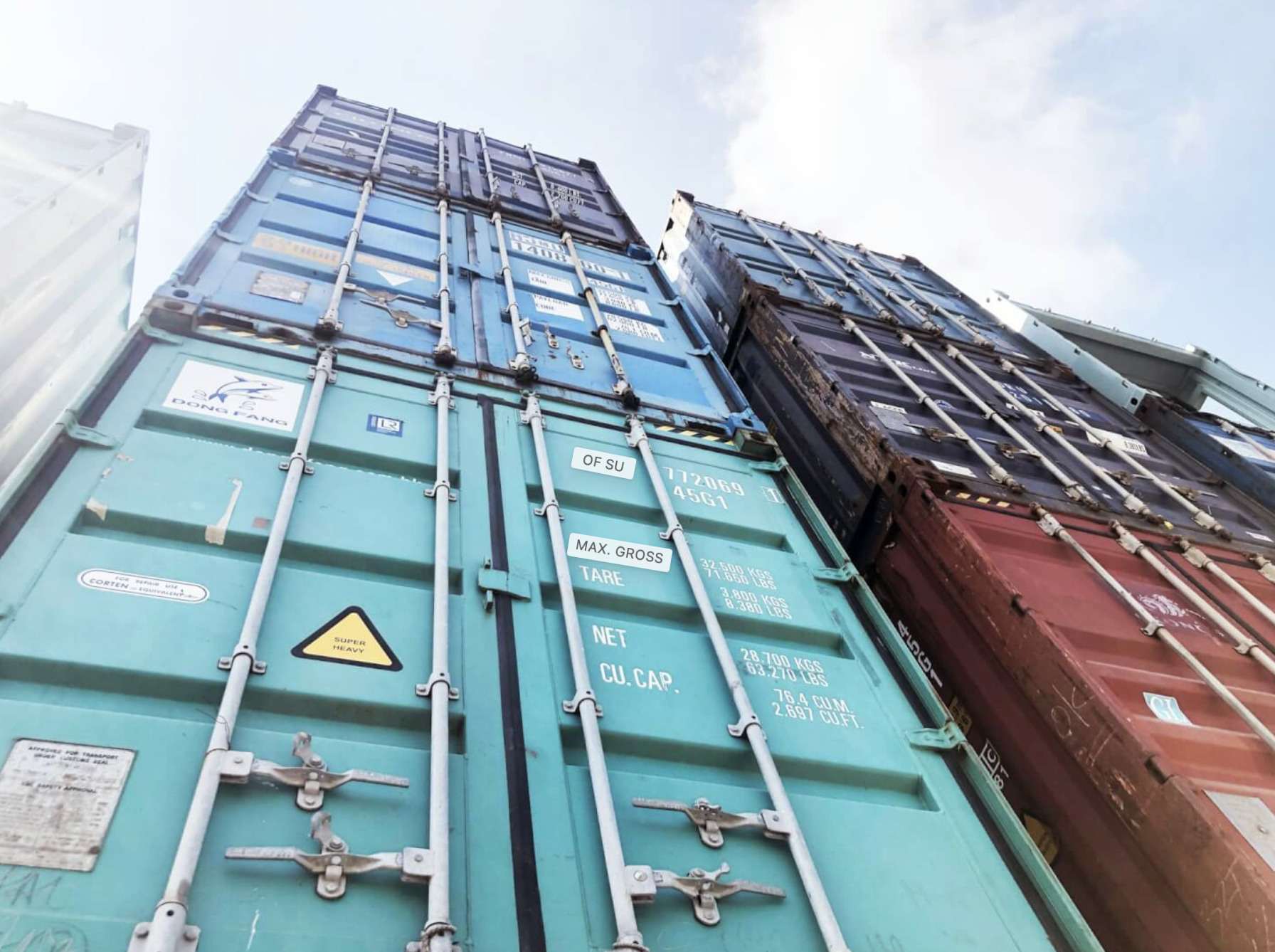
From January 2026, shipping companies will no longer be able to ignore the loss of containers at sea. A new global rule now requires the reporting of any container that has fallen overboard or spotted adrift, a measure to strengthen maritime safety, but which could also have repercussions for ports, carriers and land supply chains in Europe
Until now, reporting practices varied considerably depending on the state of the flag or the companies’ internal policies. This lack of uniformity has often left authorities and other ships unaware of the dangers posed by containers partially submerged or floating on the surface.
The new rule, adopted as part of the amendments to the SOLAS Convention by the International Maritime Organization (IMO), establishes a uniform and global reporting obligation: from January 1, 2026, any loss of containers or observation of drift containers must be reported.
Who should report and when?
The responsibility lies primarily with the master of the ship. If containers are lost overboard or if drift containers are observed at sea – even if they come from another ship – the incident must be reported without delay.
If the captain is unable to make the report, for example due to abandonment of the ship, the responsibility lies with the operating company as defined by the ISM Code.
The aim is to ensure that the information reaches the coastal authorities and other ships as quickly as possible, even if all the details are not yet known.
What information should be shared?
The regulations focus on data essential to security rather than formal completeness. Initial reports may be followed by updates as the situation clears up.
The report should include, as far as possible:
- the name of the ship and its identification details (OMI number, call code or MMSI)
- the position of the loss or observation (real or estimated)
- the date and time of the incident in UTC
- the number of lost or observed containers drifting
- the size and type of containers
- confirmation of the presence of dangerous goods on board containers, including UN numbers if available
This information is intended to allow other vessels to navigate safely and authorities to assess whether recovery or warning measures are necessary.
Why this change is crucial
Although container losses represent only a tiny fraction of global movements, their impact may be disproportionate. A container that is semi-immersed or hidden below the surface can cause serious damage if it hits a hull or propeller. When it comes to dangerous cargo, environmental risks are intensive.
Some highly publicized incidents in recent years have highlighted the lack of information available outside of those held by the shipping company. The new obligation aims to fill this gap and improve international coordination.
Impacts for ports and land logistics
For ports and operators in the hinterland, earlier and more reliable reports can help explain sudden operational disruptions. If a ship is forced to deviate, slow down or suspend operations as a result of a loss of containers at sea, subsequent delays should now be easier to trace to their cause.
Beyond maritime transport
Although the regulation is addressed directly to shipping carriers, its effects are spreading along the entire supply chain. Faster reports can lead to port alerts, temporary traffic restrictions or recovery operations — all of which can affect arrival times and subsequent land or rail transportation.
For carriers and charterers, this development does not eliminate delays, but it strengthens transparency. From 2026, container losses are less likely to remain unexplained operational problems, and more identified as true security incidents.
A trend towards real-time data sharing
In the long term, this rule is part of a broader evolution towards the sharing of real-time safety and environmental data in the maritime sector. Containers lost at sea are no longer considered a simple side effect of bad weather, but as events that must be communicated quickly for the benefit of the global transportation system.
`Source : trans.info