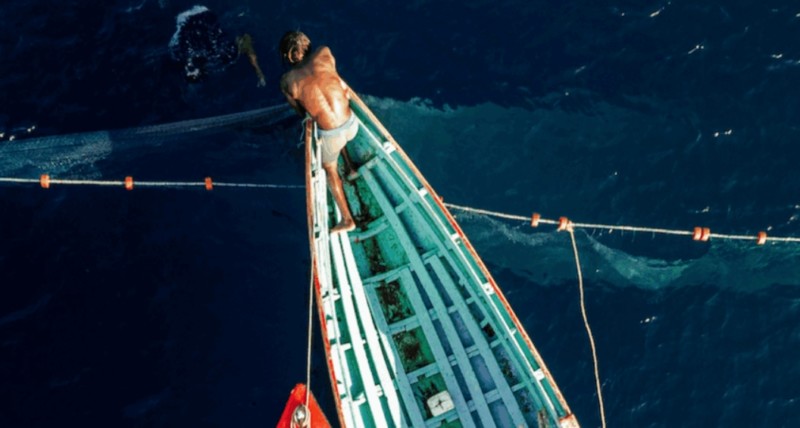

The Strait of Hormuz, the Gulf and the Gulf of Oman were classified on Thursday as a « war operations zone » by the maritime sector, granting enhanced rights to thousands of seafarers stranded in the area, including the right to request repatriation at the shipowner’s expense, but the solutions to do so seem limited.
This designation responds to « the scale of disruption and risks faced by civilian crews in the region », explained in a joint statement the trade union federation of the sector (ITF) and global shipowners.
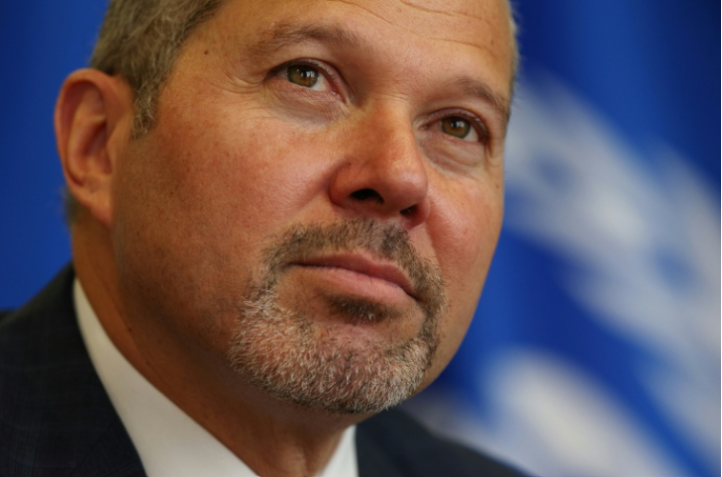
In total, « 3,000 ships » are in the area, Arsenio Dominguez, secretary-general of the International Maritime Organization (IMO), said in an interview with AFP, including « about 200 » at anchor waiting to pass the strait, and « 1,200 that operate exclusively in the region ».
Some 20,000 seafarers — but also 15,000 cruise passengers — are currently immobilized in the Gulf, adds the head of this UN agency in charge of maritime security.
The paralysis in this area follows the « total » control claimed by the Iranian Revolutionary Guards of the Strait of Hormuz, a strategic maritime corridor for the transport of hydrocarbons that links the Gulf to the Gulf of Oman.
The region had already been designated a « high-risk area » on Monday by the maritime sector, two days after the strikes by the United States and Israel on Iran and the regional extension of the conflict.
– ‘A humanitarian issue’ –
The move to the « war operations zone », a higher level, offers sailors the highest possible level of safety according to maritime standards.
With this reclassification, they also have « the right to be repatriated » and « not to sail » in this region, Stephen Cotton, general secretary of the ITF, told AFP.
But in practice, the situation could take time to unblock, he notes. « It’s not like you can press a button and immediately leave a ship. Seafarers depend on civil aviation and aircraft. And for the moment, they are not circulating either. »
In addition, « if you have a crew of 25 people, you will probably need 16 people to sail the ship safely, which is the minimum required, » he said.
The IMO says it has counted seven ship-related incidents in the Strait of Hormuz since Saturday, with a total of two dead and six injured.
« Beyond the economic impact of these alarming attacks, this is a humanitarian issue. No attack on innocent sailors is ever justified, » says Arsenio Dominguez.
– ‘Risk of pollution’ –
It calls on « shipping companies to exercise the utmost caution when operating in the region ».
In this context of extreme tension, the world’s major shipowners have already stopped their ships bound for the Gulf and are diverting their cargoes.
Traffic through the Strait of Hormuz – where about a fifth of the world’s oil and liquefied natural gas (LNG) production passes – had fallen by 90% on Wednesday, according to Kpler data.
Donald Trump had said on Tuesday that the US Navy could escort tankers « if necessary » through the strait.
« It could bring some relief, » says Dominguez, « but there needs to be guarantees on protection. »
The IMO « is ready to engage in any discussion on how maritime transport can be secured and resume normal activities, » he insisted.
In addition to the food security of the Gulf countries and global energy security, « the risk of environmental pollution is high », he stressed, as it would be « very difficult to deploy aid to contain or treat an oil spill » in the event of an oil leak caused by an attack.
According to the British maritime safety agency UKTMO, an oil tanker anchored off the coast of Kuwait suffered a « strong explosion » on Thursday: oil escaped from the boat but the crew is safe and sound.
source : boursorama