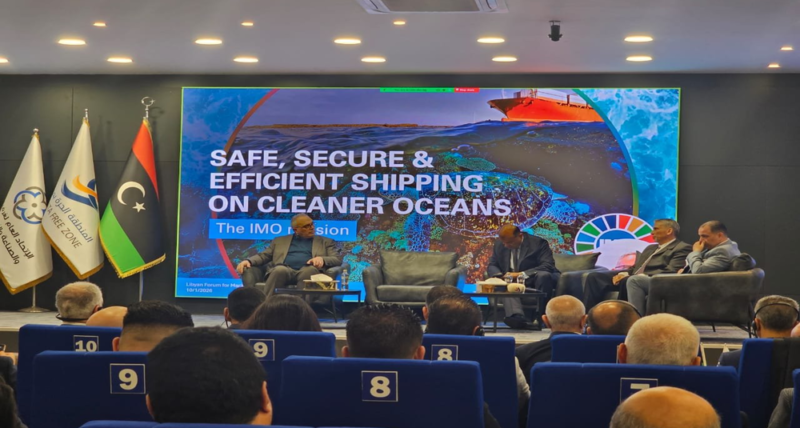

From sustainable fishing quotas to sabotage of submarine cables, issues related to the oceans will be the focus of attention in March during the European Sea Days.
Coastal communities, politicians, scientists and industry leaders will meet next week for the European Ocean Days.
In Brussels, the big question that stirs this week of events is how to move from the Ocean Pact to the Ocean Act, a new legislative text that is to be presented by the end of 2026. This is the most important new law that is looming for the marine environment, and the pressure is strong not to miss it.
Observers will be waiting for clues in the opening speech of European Commission President Ursula von der Leyen, whose presence illustrates the growing political interest in oceanic issues.
European Commissioner for Fisheries and Oceans, Costas Kadis, clearly summarizes things: « The Ocean Pact aims to establish a single strategic reference framework for all ocean-related policies, and the Ocean Act is the legal component. «
The Commission affirms that the Act will adopt « an ecosystem approach », by bringing together the various maritime legislations in an effort to « simplify ».
For activists, the challenge is whether the framework established by the Pact to protect the health of the seas, support the blue economy and strengthen security will result in an Act with real legal fangs.
« We would like it to resemble the European climate law: a single reference framework, a very high-level binding regulation, which integrates all the 30×30 objectives and the biodiversity strategy, » explains to Euronews Green Rémi Cossetti, head of marine policies at the NGO Seas at Risk.
Vanya Vulerphorst, campaign director against illegal fishing and for transparency at the NGO Oceana Europe, insists that the application of the rules remains key. « The EU has laws. They can protect marine resources, they can guarantee that fishermen live well from their profession, but the problem is that they are not implemented, « she tells Euronews Green.
European fisheries are in crisis
The debates on the common fisheries policy in Europe are not from yesterday, but again, the pressure will be strong during the Ocean Days, as the Commission prepares to present a strategy called Vision 2040, which is supposed to set the course towards a competitive, resilient and sustainable fisheries and aquaculture sector.
The sector remains in crisis in Europe for many reasons. Catch ceilings are criticized because they are set at levels considered unsustainable, post-Brexit bargaining on quotas is even more disturbing the waters, and new European rules such as the landing obligation – which prohibits the release of unwanted fish into the sea – are difficult to enforce. Add to that the Icelandic referendum on EU membership, and you get an explosive political cocktail.
However, there is now a general conviction: the only possible way is to restore ecosystems, because without a healthy nature, there is no prosperous fishing.
« It is actually a matter of rethinking the fishing sector so that it remains within the limits of the ocean, » summarizes Cossetti. Not everyone agrees on what this implies, especially industrial fishing lobbies, which have a much greater lobbying weight than that of small artisanal fishermen.
This brings us to the following question: who really works as a fisherman today?
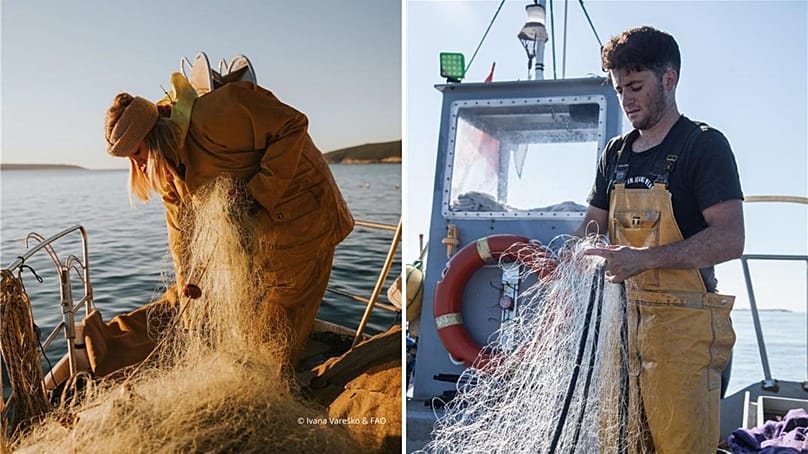
How can the fishing sector attract young people?
The European fisheries sector is going through a silent but deep crisis of its workforce. Clearly, too few young people embark on a career in fishing. The work is physically trying, really risky, and the cost of entering the profession, especially investing in a ship, is high.
A recent WWF study shows that only 17% of fishermen in the Mediterranean and Black Sea are under 25 years old, and almost half are over 40 years old. Many questions remain open about how to make the profession more attractive, while managing overcapacity in already overexploited areas such as the Mediterranean.
Vulperhorst, of Oceania, advocates for a key reform that, according to it, could give small fishermen a boost: a new rule granting preferential access to the most productive fishing areas to boats under 15 meters that do not practice trawling. « Give access to the resource to those who fish in the most sustainable way, on the environmental and social level, » she defends.
Commissioner Kadis delivers his vision: “We will succeed in renewing generations if we offer more stability and predictability to the sector, if we improve working conditions through the modernization of the fishing fleet and if we strengthen the business models of our fishermen. «
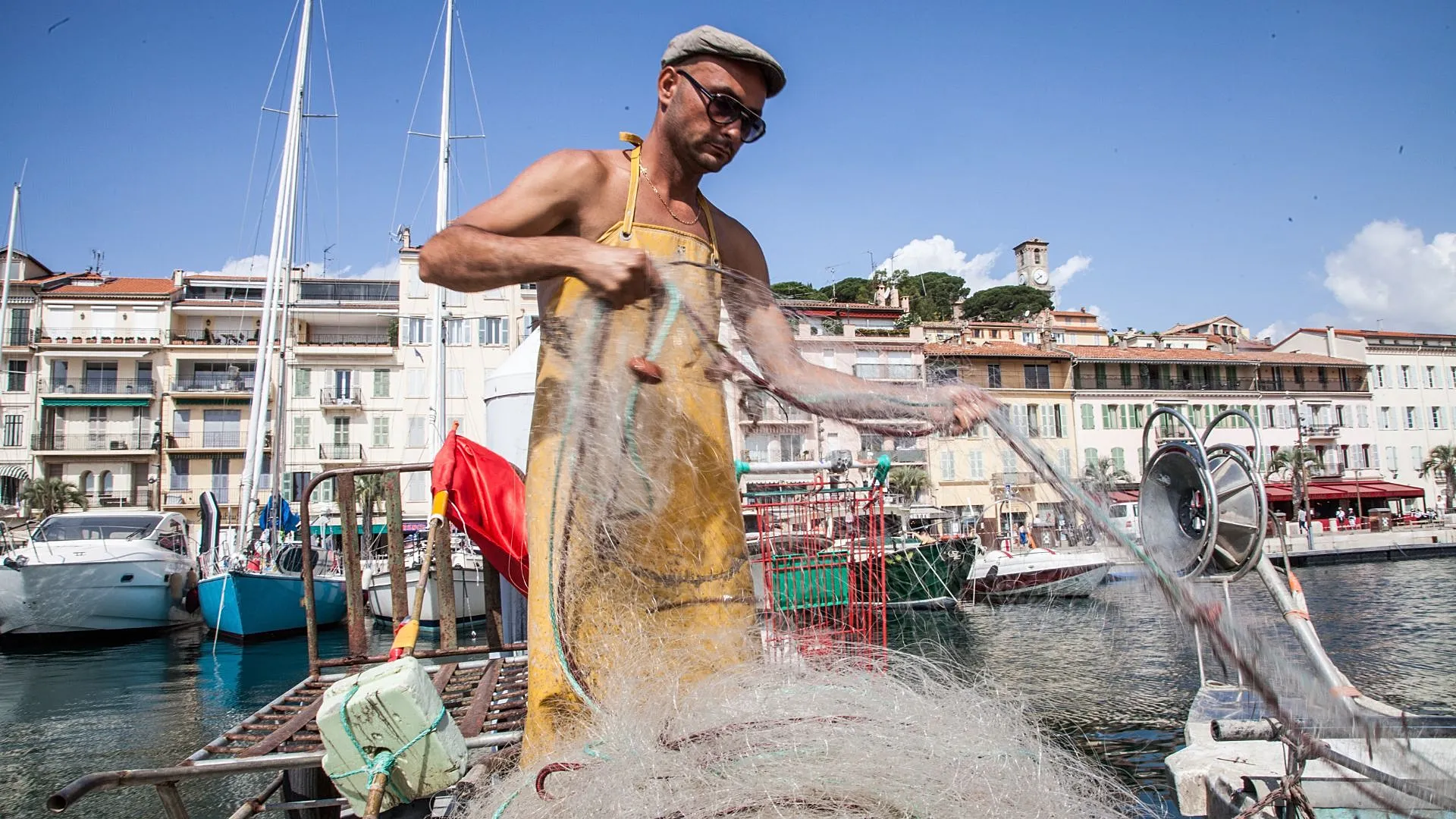
Many want small family fishing boats, which are the charm of European ports, to survive as part of our cultural heritage and continue to return to the port with an honorable catch. All the difficulty is to find the right mix of public policies and economic incentives to support the sector’s transition.
Will the EU reach the 30% target by 2030?
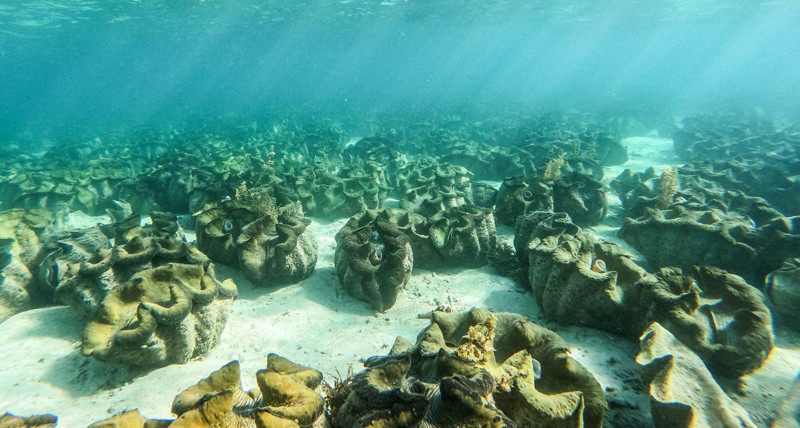
As part of its biodiversity strategy, the EU has committed to legally protecting 30% of its seas by 2030, at least 10% of which are under strict protection. But few people think that this goal will be achieved.
Even Commissioner Kadis is doubtful: « I am not very optimistic that we will reach the 30-by-30 goal, » he acknowledges. For Cossetti, the action is « too slow and not rigorous enough ».
In 2023, about 13.7% of EU marine waters were covered by designated protected areas, an improvement compared to ten years ago, but still very far from the 30% to be reached, while there are only a few years left.
The other criticism is more about quality than quantity. Many marine protected areas (AMP) are denounced as simple « parks on paper »: they appear on a map, but the rules are too lax or little applied. « There is sometimes more trawling in protected areas than outside, » laments Vulperhorst.
The European Commission has not committed to prohibit bottom-based trawling in MPS at EU level, advocating « on-case-by-case » assessments and a « targeted approach ».
Activists like Cossetti, however, believe that bottom-based towing in the AMPs could stop immediately. « It is proven that it can be replaced without harming the catches. Low-impact practices must be deployed on a large scale, « he says.
Commissioner Kadis highlights the concept of MPA co-management. « When conservation measures are supported, or at least accepted by local communities and stakeholders on the spot, these measures are much more effective, » he explains to Euronews Green.
The strongest argument in favor of the extension of truly controlled MPA remains the speed of restoration of marine ecosystems: in a few years, a protected area can regain great vitality, within a time completely compatible with electoral cycles.
How can we protect our seas?
Maritime safety is very quickly rising in the hierarchy of European political priorities and occupies a prominent place on the European Ocean Days agenda. Threats such as the sabotage of submarine cables and pipelines are now widely recognized as very real and urgent.
The EU has revised its maritime safety strategy to improve coordination and conduct real-world exercises, and there is talk of drone fleets to monitor unusual or illegal activities. The Commission also wants to identify the ships belonging to the Russian « ghost fleet » and add them to the sanctions lists.
Yet experts like Olevs Nikers, president of the Baltic Security Foundation, remain very critical. « Our coordination is extremely weak between the different actors, and we do not have clear mandates to act, » he told Euronews Green. Describing the Baltic as a kind of « NATO lake », he says that Russian and Chinese or affiliated ships « can do practically what they want, and the damage they can inflict on communications and energy is considerable ».
source : euro news