For the first time, scientists and decision-makers have a reliable compass to rigorously assess the fairness of ocean-related policies and projects. Called Ocean Equity Index (OEI), this tool has just been developed by an international team of researchers and published in the journal Nature, offering a concrete answer to a gap long felt by environmental and human rights defenders.
An abstract concept finally measurable
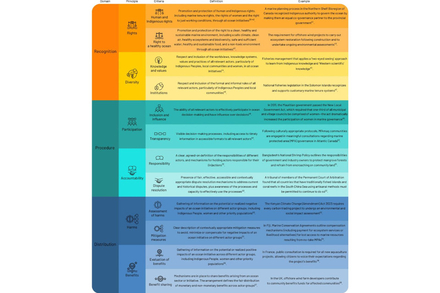
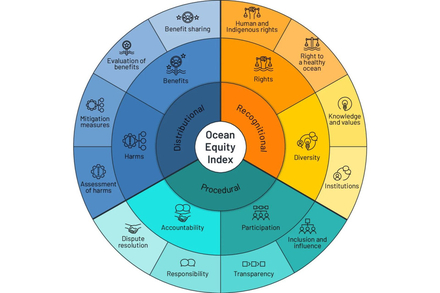
For a long time, equity – this principle that aims to fairly share the benefits and impacts of human activities – has been a difficult concept to grasp in the maritime field. How do I know if an offshore energy project or a marine protected area really benefits local communities, artisanal fishermen or indigenous peoples? Until now, no standardized method made it possible to answer this question in a transparent and comparable way on a large scale. The Ocean Equity Index is changing the game. It is based on twelve carefully defined criteria, grouped around three main areas: recognition of rights, effective participation in decisions and equitable distribution of profits. Each criterion is graded from 0 to 3, which allows for a total score expressed in percentage, easy to compare from one project to another.
A tool designed for everyone
What distinguishes the OEI is its ease of use and accessibility. Confirmed researchers or field actors without technical training can use it. Available online and in the form of a simple spreadsheet, the index is designed to be used by an NGO as well as a government, a local authority or a company involved in maritime projects. In an era where the ocean economy is developing at high speed, industrial fishing, maritime transport, offshore energy, its economic benefits remain very concentrated in the hands of a small number of actors. Meanwhile, coastal populations and marginalized groups often bear the heaviest share of negative impacts, whether it’s pollution, loss of livelihoods or exclusion from decision-making. The OEI aims to reverse this trend by giving each actor the means to evaluate and advocate for fairer governance.
Scores to compare and act
The practical application of the index has already provided surprising lessons. In the cases analyzed by the researchers, ranging from traditional governance schemes in French Polynesia to national political frameworks, the scores showed great variability in the integration of equity. Some initiatives have achieved high results on stakeholder inclusion, while others have shown significant gaps in transparency and access to information. Beyond a simple diagnosis, the tool also offers avenues for improvement for each criterion, allowing users to identify concrete actions to be implemented to bridge the equity gaps.
A call for global adoption
The scientists behind the Ocean Equity Index are launching a solemn appeal to governments, international organizations and economic actors: seize this tool today to better monitor and improve their commitments to ocean equity. In a world where climate and economic issues increase the pressure on the oceans, fair governance is no longer an option but a necessity.
source : figaronautisme