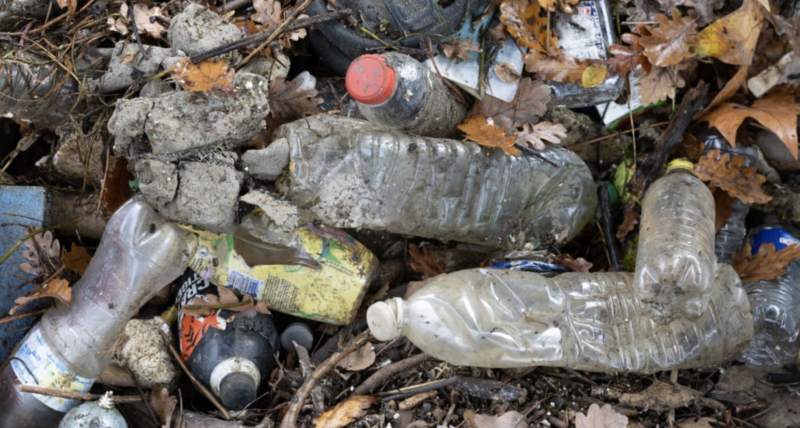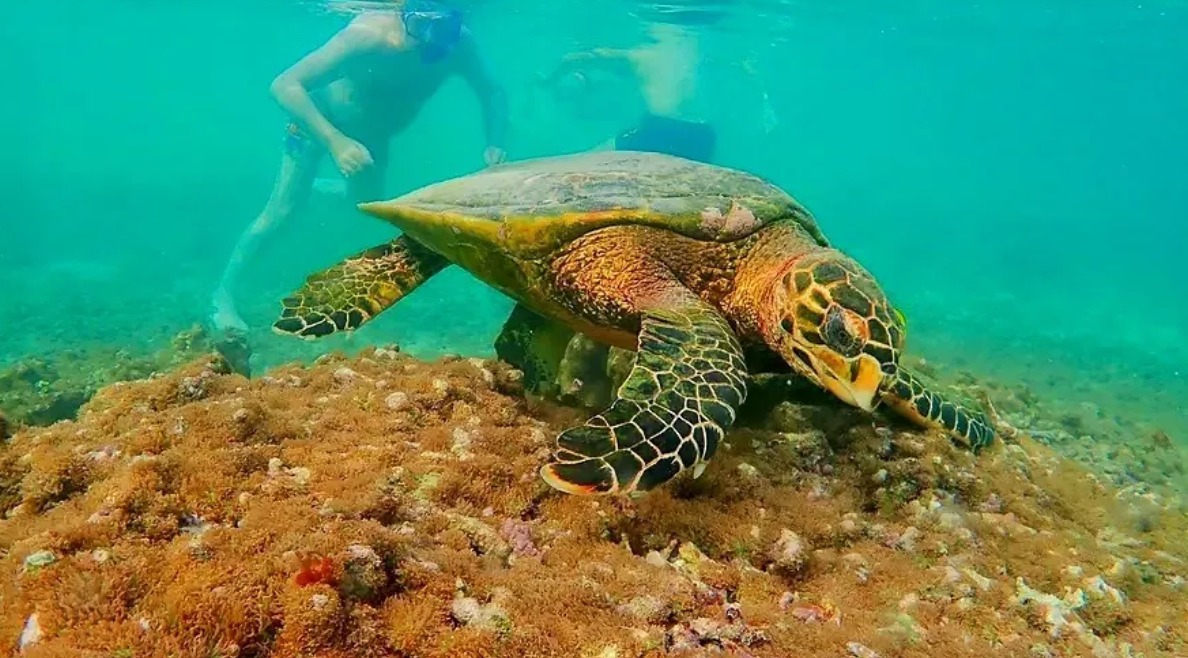
A study on plastic pollution in the Indian Ocean, published in September 2025, confirms the massive presence of waste. All ocean layers are affected. Biodiversity is threatened, as exemplified by loggerhead turtles. Biologists found plastic in the stomachs of 202 of the 266 reptiles studied.
The academic from Réunion highlighted » the impact of this pollution on marine fauna, using loggerhead turtles (Caretta Caretta) as bio-indicators » , writes L’Express de Maurice .
This study, published in September 2025 on the website sciencedirect.com , is entitled: « Does the intestinal content of loggerhead turtles (Caretta caretta) reflect the types, colors and sources of plastic pollution in the southwest Indian Ocean? ».
Margot Thibaul (a marine biologist and researcher at UMRAnthropi, University of Reunion Island) published a study in September 2025, along with numerous researchers from the region, confirming the increase in plastic pollution in the Western Indian Ocean.
Margot Thibaul (a marine biologist and researcher at UMRAnthropi, University of Reunion Island) published a study in September 2025, along with numerous researchers from the region, confirming the increase in plastic pollution in the Western Indian Ocean.
Unfortunately, the answer is: yes! The study, conducted between 2007 and 2021 on the stomach contents of 266 loggerhead turtles accidentally captured in the Southwest Indian Ocean, reveals that 202 reptiles had ingested « hard » and « white » plastics, explains the researcher.
One of the reasons for this pollution in the Indian Ocean stems from the difficulty of accessing drinking water, explains Margot Thibault: » This leads to a massive production of plastic bottles, but an imbalance persists between their importation, their manufacture, their distribution and their management. As this management is not uniform, these bottles end up in the environment, in the ocean, and even inside the turtles I studied. »
The scientist benefited from the presence of the Plastic Odyssey in the Indian Ocean, which allowed for the accumulation of plastic pollution in a vortex located south of Rodrigues Island. ©Screenshot archives Réunion la 1ère (Plastic Odyssey)
The scientist benefited from the presence of the Plastic Odyssey in the Indian Ocean, which allowed for the accumulation of plastic pollution in a vortex located south of Rodrigues Island. ©Screenshot archives Réunion la 1ère (Plastic Odyssey)
An accumulation of plastic waste in the South of Rodrigues
Plastic pollution affects all seas, rivers, and oceans. To raise awareness of this major risk to biodiversity and ultimately to humans, the Plastic Odyssey vessel travels the globe to report on the urgency of the situation and share solutions being implemented in various locations.
During her voyage in the Indian Ocean, the researcher took advantage of the ship to observe the accumulation of plastic waste in a vortex (a whirlpool caused by ocean currents): « I observed a ‘garbage patch’ located south of Rodrigues and off the coast of Durban at latitude 33 degrees South. » The scientist clarifies that this accumulation of waste is not comparable to the Great Pacific Garbage Patch, but it is larger than that discovered in the Atlantic Ocean.
There is therefore an urgent need for action. The researcher hopes to strengthen inter-island cooperation to improve waste recovery and recycling. At the same time, she calls on all stakeholders to work together to improve access to drinking water.