
On March 9, 2026, the 5th International Conference on Pollution, Restoration and Environmental Management (ICEPORM) was held in the city of Quy Nhon. Among the main topics addressed are microplastic pollution and its impacts on natural ecosystems, a global issue of particular concern to Southeast Asia.
While some cities such as Ho Chi Minh City are experiencing worrying pollution episodes, scientists and decision-makers are calling for strengthening environmental protection policies and sustainable solutions.
Organized jointly by the Vietnam Meetings Association, the International Center for Interdisciplinary Science and Education (ICISE), the Society for Environmental Ecotoxicology and Chemistry for Asia-Pacific (SETAC AP), the University of Auburn (United States) and the Vietnamese Academy of Science and Technology, the conference brought together nearly 90 environmental delegates, scientists and managers.
International Pollution Conference
Experts, from universities, research institutes, companies and public bodies in 22 countries, exchanged about the many issues related to environmental protection today. The main discussions included global environmental pollution, ecotoxicology, public health, environmental risk assessment, treatment and restoration technologies and solutions, as well as environmental management and policies.
On the sidelines of the conference, which will continue until March 12, short-term training courses were organized for doctoral students and young Vietnamese and international researchers. They focused on the assessment of environmental risks and the analysis of microplastics in water.
Rising pollution rates
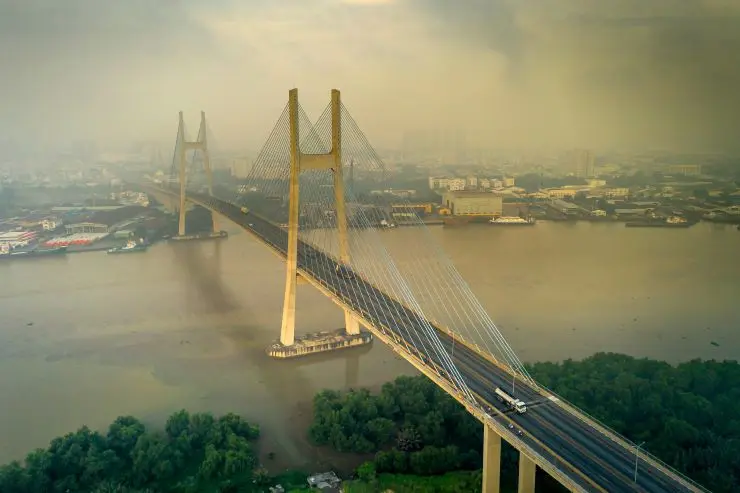
In recent years, air pollution has become a major issue in Vietnam, especially in large cities. At certain times, Ho Chi Minh City was ranked among the 10 most polluted cities in the world, with concentrations of fine particles (PM2.5) close to 95 µg/m³, almost four times the recommended thresholds.
In recent years, episodes of intense pollution have also multiplied. In 2025, the city recorded 65 days when air quality exceeded levels considered safe, with an air quality index classified as hazardous to health by the World Health Organization.
The most affected areas in Vietnam are the cities of Hanoi and Ho Chi Minh City, which regularly experience episodes of dangerous air pollution, but also the Mekong Delta, where water quality is gradually deteriorating.
The causes of higher pollution rates in Vietnam
According to experts, the main sources of pollution come from road traffic, industrial activities and construction sites, which generate large amounts of dust. Domestic emissions, such as open fires, also contribute to the degradation of air quality. In Ho Chi Minh City, the 14 million inhabitants and nearly 12.7 million cars and motorcycles also exert strong pressure on the transportation system and the environment.
Vietnam’s specific weather conditions also favor the stagnation of pollutants near the ground, which accentuates pollution problems.
Beyond its health impacts, this pollution also represents a significant economic cost, due to the increase in health spending and the decrease in the quality of life in the country’s major metropolises.
Attempts at change by public authorities
Issues related to global warming and environmental protection are among the priorities of Vietnamese leaders. These themes were discussed in particular at the first Congress of the Party organization in Ho Chi Minh City by Secretary General Tô Lâm, or in the documents of the XIV Congress of the Communist Party of Vietnam, held in January 2026 in Hanoi. The latter reaffirm the goal of rapid and sustainable development, based on science, innovation and better management of natural resources.
As part of the Natural Resources and Environment Monitoring Program 2026, the Ho Chi Minh City authorities are implementing several measures to better assess the effectiveness of environmental policies and improve the management of ecological incidents. In December 2025, the city proposed the installation of about 160 air quality monitoring stations, in order to more accurately monitor pollution and strengthen warning systems. This strategy also includes vehicle emissions control and the creation of low-emission zones to respond to air quality degradation.
At the same time, Ho Chi Minh City plans to set up more than 250 surface water monitoring stations, as well as several sites to monitor subsidence of soils, seawater quality and the state of aquatic ecosystems.
One of the Party’s priorities is to strengthen the institutional framework and create a favorable legal environment for new sectors, such as the green economy, the circular economy and the carbon market. Faced with the challenges of the new development phase, green growth now appears as an essential way to reconcile economic development, environmental protection and improvement of the quality of life of the population.
source : Le petit journal