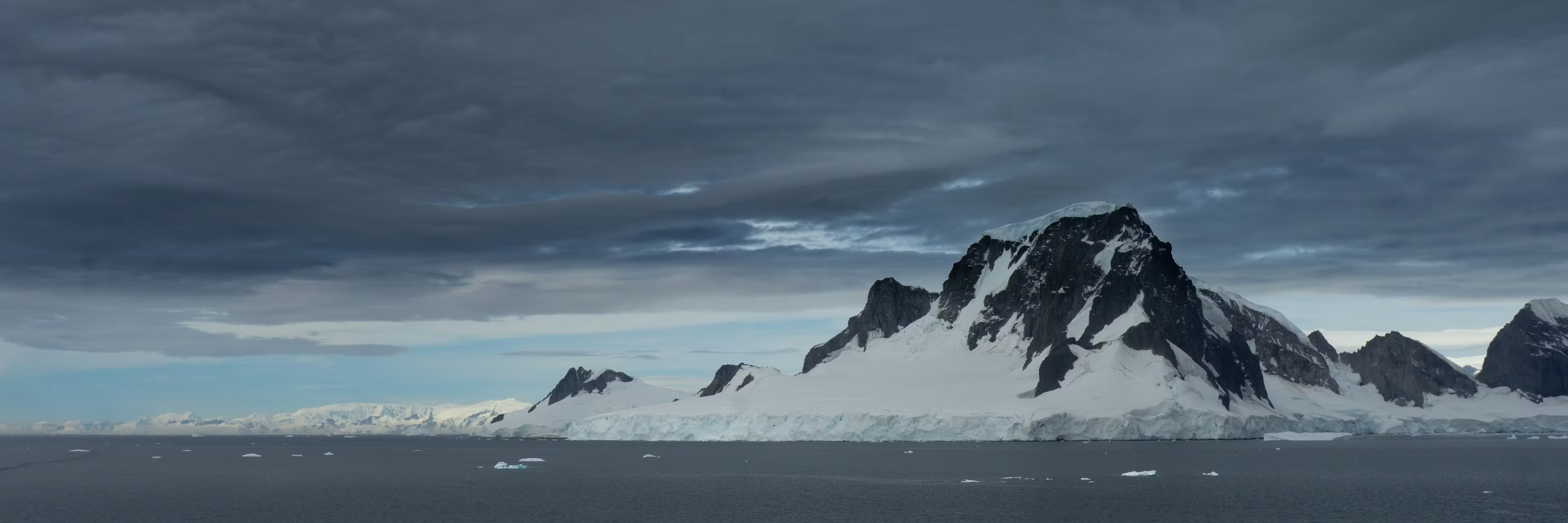
Usually rare in Antarctica, rain is increasingly replacing snow, especially on the peninsula. This is not good news for glaciers, penguins and even scientists who work in the field.
Rain is usually rare in Antarctica. The scientists who work there dress to face the cold and glare (linked to the vast white expanses that reflect sunlight, editor’s note) and not to face humid weather conditions: quilted jackets, snow pants, goggles, sunscreen, etc. The planes land on gravel runways that are rarely frozen, for lack of precipitation that could freeze. The historic huts remain well preserved in the dry air.
But it’s starting to change.
It already rains more often than before on the narrow and mountainous Antarctic Peninsula, which is the northernmost point of the continent and points towards South America. This peninsula is the hottest part of Antarctica and is warming faster than the rest of the continent, and also faster than the world average. It gives an overview of what the Antarctic coast, especially the fragile ice sheet of West Antarctica, could experience over the next few decades.
I recently led a team of scientists responsible for studying the evolution of the Antarctic Peninsula by 2100 according to three greenhouse gas emission scenarios: high, medium and low. We have seen that with the warming of the peninsula the precipitation will increase a little.
Above all, they will increasingly appear in the form of rain rather than snow. Days when the temperature exceeds 0 °C will become more frequent, and this precipitation will fundamentally change the peninsula.
When heat and rain go hand in hand
Extreme weather conditions are already causing problems. In February 2020, a heat wave had raised temperatures to 18.6 °C in the northern peninsula, allowing only a t-shirt to be worn – a first in Antarctica. Meanwhile, the ice shelves melted at a record rate.

Atmospheric rivers – long narrow corridors of warm, humid air that originate in warmer latitudes – play an increasingly important role. In February 2022, one of them led to a record melting of ice on the surface. Another, in July 2023, brought precipitation and a rise in temperatures of + 2.7 °C to the peninsula in the heart of winter. These events are occurring more and more frequently, bringing rain and thaw in areas where neither of these two phenomena had been observed before.
What rain does to snow and ice
Snow doesn’t like rain. We have all seen snow melt quickly when it rains.
In the Antarctic Peninsula, rain is accompanied by a rise in temperatures that melts and washes the snow, and thus deprives the glaciers of precious snow. Melting water can also reach the glacier bed, lubricating its base and accelerating slipping. This increases the production of icebergs and the mass of ice lost in the ocean.
On ice platforms, rain compacts snow falling to the surface, where water quickly forms ponds. This accumulated meltwater then heats up faster, because it is less reflective than the surrounding snow and ice and can melt across the glacial plateau into the ocean. This leads to a weakening of the ice and gives rise to more icebergs.
This can destabilize these platforms. The formation of meltwater ponds was involved in the collapse of the Larsen A and B ice shelves in the early 2000s.
Sea ice (consisting of frozen seawater, and which forms the pack ice, editor’s note) is also vulnerable. Rain reduces the snow cover and the reflectivity of the surface, which also accelerates the melting of the ice. However, sea ice is normally a natural buffer that cushions waves and helps prevent the ends of glaciers from detaching and turning into icebergs. It is also the habitat of algae and krill as well as the breeding sites of penguins and seals.
Ecosystems at risk
A rainier climate will therefore have many ecological impacts in Antarctica.
Water can thus flood penguin nesting sites. The latter have evolved in a polar desert and are not suitable for rain. The fluffy feathers of their chicks are not waterproof, so heavy rains soak them, sometimes leading to hypothermia and then death.

Combined with ocean warming, shrinking ice surface and krill scarcity, this pressure will affect penguins throughout the continent. Species emblematic of Antarctica, such as the Adélie penguin (Pygoscelis adeliae) and the chin penguin (Pygoscelis antarcticus), which depend on ice, are likely to be replaced by the more adaptable Papuan penguins (Pygoscelis papua, which are increasingly found in the South.
Rainfall also changes life on a smaller scale. When they melt the snow layer, they disrupt snow algae, microscopic plants that contribute to the terrestrial ecosystems of Antarctica. These algae feed on microbes and tiny invertebrates and can darken the surface of the snow, thus increasing solar absorption and accelerating melting.
Snow normally insulates the soil, which cushions variations in outside temperatures and protects organisms that live below. The surfaces now exposed are now subject to harsher and more variable conditions.
At the same time, warming seas can facilitate the colonization of the region by invasive marine species, such as some mussels or crabs.
New challenges for scientists
Humans are also not immune to the challenges posed by a rainier Antarctic peninsula.
With the growing geopolitical interest in Antarctica, human infrastructure is likely to develop, with new colonies and potential bases to serve emerging industries, such as tourism or krill fishing. However, the current research infrastructure was designed for snow, not for heavy rains. Rain freezes on the landing strips and can make them unusable until the ice has melted.
Melted snow and melt water can damage buildings, tents, instruments and vehicles. It may also be necessary to rethink clothing and equipment.
Some entire search sites may need to be moved. On Alexander Island, the increase in surface melt has already disrupted long-standing ecological research at Mars Oasis, which has been the subject of continuous study since the late 1990s, resulting in gaps in scientific data.
A heritage in danger
Historic sites are particularly vulnerable.
Antarctica has 92 historical sites and monuments, the result of two centuries of exploration and research. Many of these wooden huts, the first scientific facilities and equipment warehouses, are grouped on the peninsula.
In a warmer and wetter climate, the thawing of permafrost and more abundant rainfall threaten the structural integrity of these sites. The wood will deteriorate more quickly. The foundations will sag. These sites will require more frequent maintenance, in a part of the world where conservation work is already difficult logistically.
The Antarctic Peninsula is already undergoing rapid changes. If global warming reaches 2°C or 3°C during this century, extreme weather conditions, precipitation and surface melting will intensify. Damage to ecosystems, infrastructure, glaciers and heritage sites could be serious and potentially irreversible.
Rain, once rare in Antarctica, becomes a force capable of reshaping life on the peninsula. Limiting warming to below 1.5°C will not completely prevent these changes. But it could slow down the speed at which precipitation transforms the frozen continent.
source : the conversation