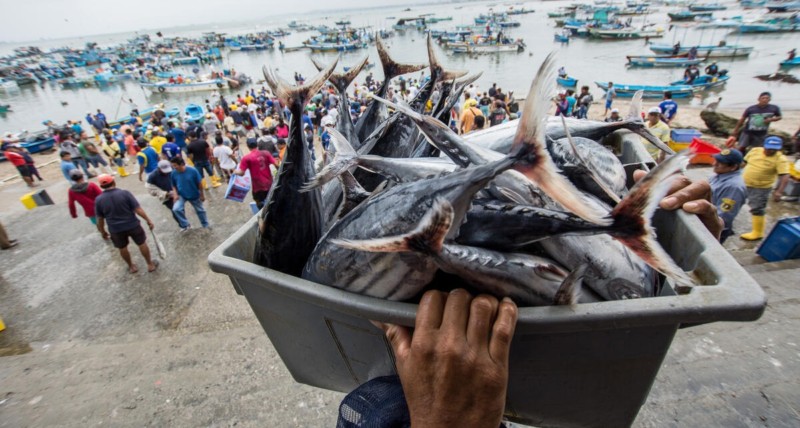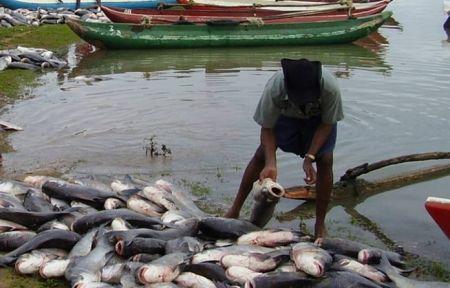
In Rwanda, fish is becoming an increasingly popular source of animal protein, although it remains marginal compared to meat. Annual production comes 80% from inland fisheries, with the remainder supplied by aquaculture.
In 2025, national fish production from both aquaculture and fishing increased by 9% year-on-year, reaching 52,439 tonnes, according to the annual report published by the Ministry of Agriculture and Animal Resources on December 31. This growth continues a rising trend that began in 2020, when production stood at 32,756 tonnes, with volumes steadily increasing since then, reflecting the gradual strengthening of production capacities.
Authorities attribute this growth to investments in aquaculture, particularly the expansion of hatchery capacities, the organization of producers into cooperatives, and improved access to inputs. Fry production for fish farming reached 71.6 million in 2025, up 36% from 52.8 million the previous year.
At the same time, training programs have enhanced fish farmers’ technical skills in fish feeding, disease prevention, and marketing. The report notes that 1,737 fish farmers (57 facilitators and 1,680 cooperative members) were trained in best aquaculture practices, and 26 farmers were introduced to the use of black soldier flies for fish feed formulation.
This momentum positions Rwanda’s fisheries industry on track to achieve government ambitions. Under the 5th Strategic Plan for Agricultural Transformation (PSTA 5), Kigali aims for an annual fish production of 77,700 tonnes by 2029. The goal is to reduce reliance on imports while meeting growing demand for animal protein. Annual per capita fish consumption has already increased by 53%, rising from 2.62 kg in 2018 to 4 kg in 2023.