
Vietnam’s seafood sector aims to reach $11.5 billion in exports in 2026, while reducing pressure on wild-capture fisheries and developing sustainable, climate-resilient, and more competitive aquaculture, according to Trân Dinh Luân, Director of the Department of Fisheries and Fisheries Resources Surveillance.
The priority is to shift from a production-focused mindset to an integrated fisheries economy, moving from single-value growth to multi-value development, while successfully implementing digital transformation. Despite a challenging international context, the sector intends to anticipate constraints and strengthen coordination in public policy implementation.
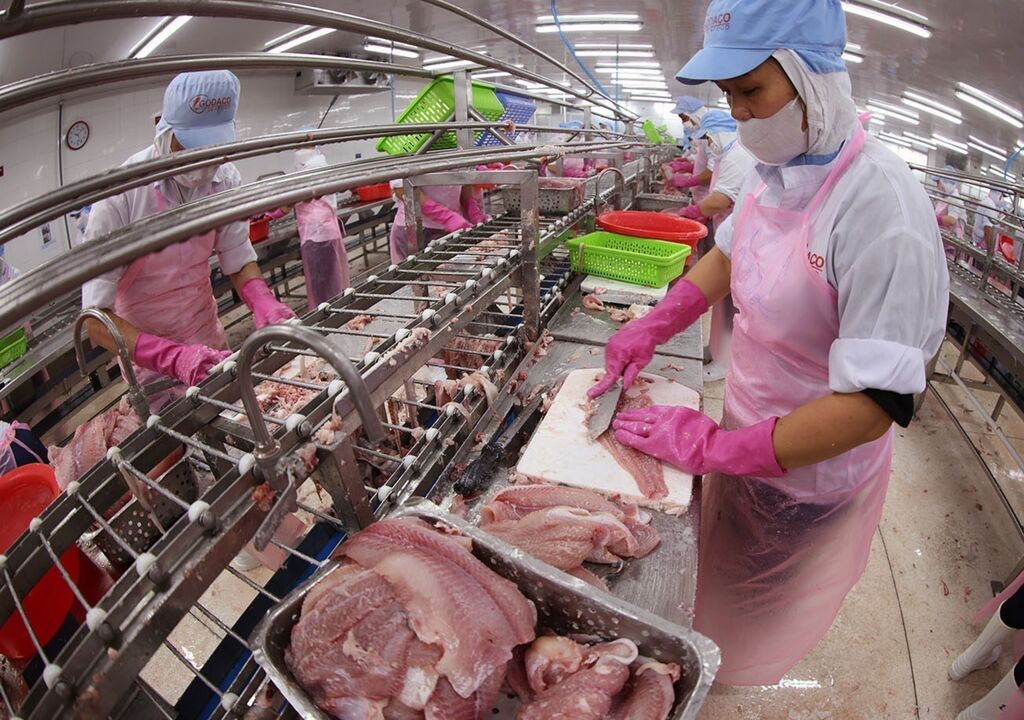
This year, total production is projected to exceed 10 million tonnes (+0.6%), including 3.75 million tonnes from capture fisheries (-2.1%) and 6.25 million tonnes from aquaculture (+2.2%). Focus will be on key species, particularly shrimp and pangasius, as well as the development of industrial marine aquaculture, adoption of green technologies, product safety, and traceability.
In parallel, the sector is revising and classifying fishing port systems and shelter zones according to their size, functions, and compliance with vessel management, traceability, and the fight against illegal, unreported, and unregulated (IUU) fishing. It is also assessing port reception capacity, landings, and volume monitoring at designated ports, while piloting smart fishing port models integrated with digital fisheries management.
In 2025, total seafood production reached 9.95 million tonnes, up 3% from 2024. Capture fisheries totaled 3.83 million tonnes, representing 99.8% of the previous year’s level, while aquaculture reached 6.1 million tonnes, up 5.1%. Export revenue from seafood products is estimated at over $11 billion, an increase of 12.7% year-on-year.
Source: Le Courrier