
Renewables, network expansion… By 2030, the public utility, currently transforming into a joint-stock company, plans to invest nearly €20 billion to support Morocco’s strong socio-economic growth.
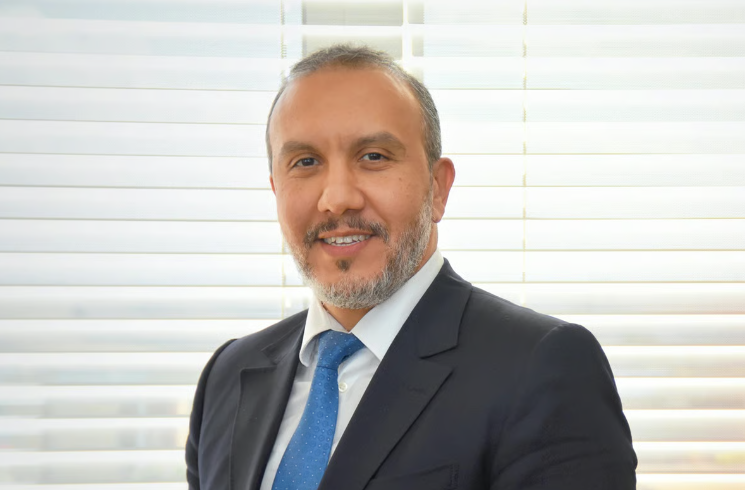
Less than six months after signing a €12 billion mega-deal with the Emirati giant Taqa Morocco, Nareva, and the Mohammed VI Investment Fund, Morocco’s National Office of Electricity and Drinking Water (ONEE) is partnering with the Moroccan Agency for Sustainable Energy (MASEN) and the State to install 5 gigawatts of green electricity capacity by 2030. A cornerstone of the country’s energy sector, the institution led by Tarik Hamane, former head of MASEN, is spearheading large-scale projects to ensure Morocco’s energy sovereignty. “We are entering an unprecedented acceleration in the history of the sector,” says the former director of Total Eren’s North Africa subsidiaries.
Facing structural challenges
Since the outbreak of the war in Ukraine, ONEE has faced deficits totaling 46 billion dirhams over three years (€4.3 billion). To achieve its ambitious plans, the institution must reform, starting with its transformation into a joint-stock company. The Competition Council has recommended a “comprehensive overhaul of the existing model based on a long-term vision, from 20 to 40 years, to make the market more efficient.”
Spoken with during the 2025 Africa Financial Summit (AFIS) held on November 3–4 in Casablanca, Tarik Hamane outlines ONEE’s strategy and the key elements of the ongoing reform.
Jeune Afrique: You were appointed CEO of ONEE in June 2024 under challenging circumstances, including volatile fuel prices and structural water stress. How is the utility addressing these challenges?
Tarik Hamane: We are at a pivotal moment in all energy sectors, particularly electricity, both in Morocco and globally. The surge in raw material prices (gas, coal, oil) triggered by the war in Ukraine is a major issue for ONEE.
The 2007 crisis already prompted Morocco to turn to renewable energy, in line with the King’s vision of 42% renewables in the electricity mix—now increased to 52%. This situation drives us to redouble efforts to achieve real energy sovereignty by producing as much renewable energy as possible.
Decarbonization is central to our strategy. We plan to expand and upgrade the grid to absorb maximum renewable output. The plan includes more than 15,000 MW of additional capacity, including over 12,400 MW from renewable energy and storage.
Transforming ONEE into a joint-stock company
We must rise to Morocco’s energy and water challenges, which requires a more agile organization, modern governance, and appropriate tools. The transformation of ONEE into a structured, transparent joint-stock company is being carried out in close consultation with the National Agency for Strategic State Holdings and the relevant ministries.
Early reforms include governance modernization, accounting separation of activities, strengthened project management for renewable energy, storage, and the transmission network, as well as the gradual integration of water-energy systems. Our goal is clear: ensure supply security, tariff control, energy transition, and equitable access to essential services.
Expanding electricity capacity
ONEE plans investments of 177 billion dirhams in electricity, adding around 15,000 MW to the current 12,000 MW. Isn’t this too ambitious?
The plan anticipates Morocco’s strong socio-economic growth and major infrastructure projects, such as large-scale desalination plants and new industrial ecosystems like gigafactories. These energy needs require a rapidly evolving electrical system with controllable capacity and enhanced flexibility to maintain stability. Natural gas will serve as a transitional fuel, while storage systems—battery energy storage systems (BESS) and pumped storage stations (PHS)—will play a central role in integrating large-scale renewables. By 2030, more than 15,000 MW of additional capacity is planned, including over 12,400 MW from renewables and storage, with a total investment of 100 billion dirhams. Additional natural gas thermal capacity will exceed 3,000 MW.
Financing new projects
The private sector will provide nearly 80% of total investment. This reflects a clear desire to accelerate project deployment through structured public-private partnerships (PPP). The strategy also relies on innovative and diversified financing, combining bank markets, capital markets, and international partners.
Notable projects include the Al Wahda gas plant (4.2 billion dirhams), financed with 20% equity, 48% specialized debt funds (Flexenergy and Nord Energy), and 32% from a banking consortium (Attijariwafa Bank and Bank of Africa). The battery storage system (2.1 billion dirhams for EPC) is funded through capital markets using debt funds.
Water sector investments
ONEE plans a 43-billion-dirham water program by 2030, with 21 billion dirhams mobilized via PPP. This will enable an additional flow of about 3 million m³ per day, 80% from seawater desalination. Total desalination capacity will exceed 1.3 billion m³ annually by 2030, covering 63% of national drinking water needs (up from 9% today).
The private sector will play a key role in financing, building, and operating five of the nine planned large-scale desalination plants, representing roughly 50% of the program’s total cost. Africa’s largest desalination project, the Casablanca plant—scheduled for early 2027—will produce 300 million m³ per year, powered entirely by clean energy.
Financial sustainability
ONEE’s revenue rose 3% to 42.5 billion dirhams, but the utility remains in deficit and exposed to fuel price volatility, with no margin on regulated electricity tariffs. How do you view this situation?
This reflects the sector’s overall challenges in Morocco. I would like to stress that ONEE provides a public service with outstanding results, particularly in electrification (over 99.9% in rural areas) and drinking water access (over 98% nationwide). To continue fulfilling its mission at the highest standards, ONEE must be structured and reformed—hence the ongoing transformation.
Source : Jeunes Afrique