
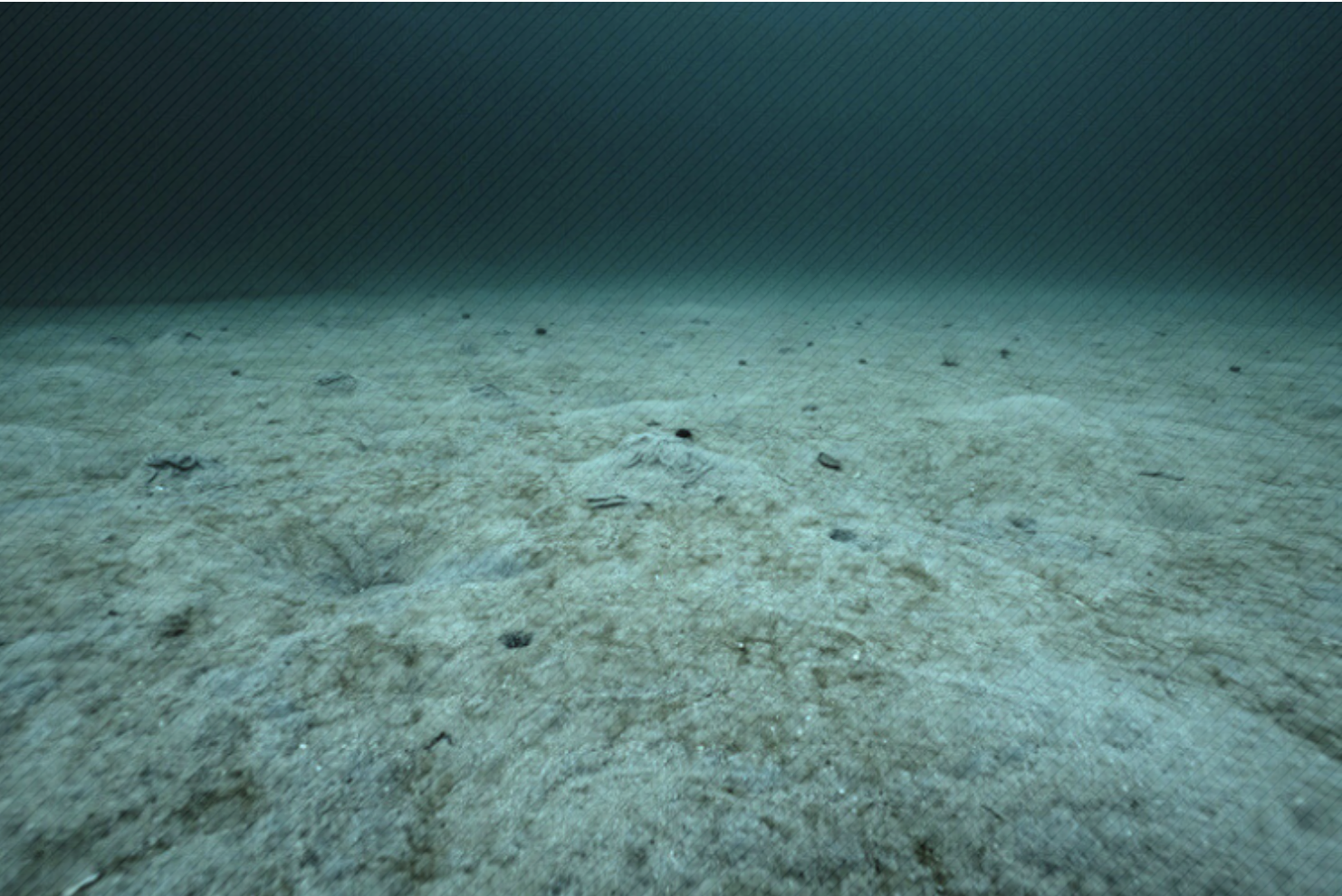
The bottoms of the abysses are rich in mineral deposits, coveted by States as part of their energy transition. While the deep seabed and the biodiversity it houses are still largely unknown, their exploitation is the subject of international debate and worries environmental defenders.
Oceanic ridges, abysmal valleys, mysterious ecosystems… The deep seabed spread over a billion cubic kilometers, for the moment largely unexplored by humanity. « The abyssal begins 200 meters deep, where light no longer pierces, » says Françoise Gaill, oceanographer and specialist in deep marine ecosystems and adaptation to extreme environments. Vice-president of the Ocean and Climate platform in charge of science, she was invited to participate in a webinar on the subject organized in February by the Sea Foundation.
Today, scientists estimate that about 25% of the seabed is mapped. An unknown who makes the exploration of these spaces a major scientific challenge.
A WEALTH OF MINERALS THAT AROUSE LUST
« It is important to develop explorations to improve scientific knowledge before doing anything, » argues Françoise Gaill. If the deep seabed is attracting so much interest today, it is not only out of a desire to better know the depths of the blue planet, but more for economic reasons.
At the bottom of the sea, the abyssal plains have mineral formations such as polymetallic nodules, hydrothermal sulfides and cobaltiferous crusts. These deposits are made up of minerals exploitable by modern industry: manganese, nickel, copper, cobalt, zinc, titanium, rare earths, etc.
Materials all the more valuable as States are looking for them as part of their energy transition, especially to build electric motors, wind turbines or electronic devices. In this context, their exploitation awakens the appetites of companies, such as The Metals Company. This Canadian company created specifically for this activity applied for a commercial exploitation authorization for minerals on the high seas in the United States in 2025.
A RICH AND UNKNOWN BIODIVERSITY
However, the environmental consequences of such activities are unknown, several actors warn. Despite their extreme conditions, the seabed is home to a rich biodiversity. « There are different types of chiomiosynthetic ecosystems, that is, they do not depend on sunlight but on the energy of the earth. The coexistence with bacteria allows life, « says Françoise Gail.
By degrading at the bottom of the sea, the corpse of a whale can, for example, become the source of such an ecosystem, capable of developing despite the high concentration of CO2, temperatures of up to more than 300 degrees and a high level of pressure.
Within these ecosystems, rare species evolve and we know almost nothing about them. According to a study published in 2025 in the journal Science Advances, only 0.001% of the deep seabed were observed by humans. However, these ecosystems play an essential role « for the planet and humanity, from oxygen generation to climate regulation, » argue the authors of the study, who advocate for the scientific exploration of the funds.
A LEGAL FRAMEWORK UNDER CONSTRUCTION
To protect the deep seabed and their biodiversity, the question of the legal framework is crucial.About forty states, including France, are calling for a moratorium of at least ten years on their exploitation, while others, such as the United States, China and Japan, have already expressed their willingness to start extractive activities. Norway had announced a plan for mining the seabed until 2029 but postponed the granting of licenses and paused its public funding at the end of 2025, under the effect of political pressure.
Two years ago, the International Seabed Authority (IAFM) set itself the goal of finalizing the development of a mining code in 2025, intended to regulate the exploitation of mineral resources present in these areas. The discussions held last summer in Jamaica did not allow this code to be born.
« The work of the AIFM takes time. At this stage, there is no failure of negotiations, « says Virginie Tassin Campanella, a lawyer specializing in international law of the sea. Created under the United Nations Convention on the Law of the Sea (UNCTCM), the AIFM plays an unprecedented role for an international organization. It is responsible for adopting the rules governing the operation of the deep seabed, but also for distributing the resulting income.
Indeed, according to the UNCMUC, the seabed belongs to the common heritage of humanity. This implies that « the financial benefits and other economic benefits derived from the activities carried out in the [Editor’s note: seabed] area » must be « equitably shared » between all States.
When adopting operating rules, the AIFM must also ensure that the seabed is protected from the harmful effects of potential human activities, as well as natural resources, and prevent damage to marine flora and fauna.The United States, absent from the AIFM
The International Seabed Authority (IAFM) has 168 Member States, plus the European Union. The United States signed the United Nations Convention on the Law of the Sea, but did not ratify it. They are therefore not subject to the rules enacted by the AIFM.
« The United States remains subject to customary law. In this context, the precautionary principle could be recognized, « defends Master Virginie Tassin Campanelle.
The transport of heavy metals in the water column would have an effect on the food chain, could permanently change the ecological balance on a large scale and weigh on human health«
Alexandre Iaschine, General Manager of the Sea Foundation.
CASCADING RISKS ON THE OCEAN
« The mandate of the AIFM is broad and may seem paradoxical: to combine environmental protection and the promotion of underwater mining activities (in particular through its normative activity). Two major interests, sometimes difficult to reconcile, are at stake: the environment and the economy, » analyzes the Sea Foundation.
Together with other environmental protection associations, it advocates for more transparency within the international organization. It also supports the moratorium defended by France and calls for « a thoughtful adoption of a mining code taking into account the evolution of science« .
« To date, no solid study shows that exploitation of the deep seabed is profitable, » argues Alexandre Iaschine, the Director General of the Sea Foundation. He also relies on « irreversible destruction on a human scale » – the formation of minerals requiring millions of years -, which would cause « a lasting loss of biodiversity and undiscovered species« .
« The deep sea is connected to the rest of the ocean. The transport of heavy metals in the water column would have an effect on the food chain, could permanently change large-scale ecological balances and weigh on human health, « he says.
A MORATORIUM ON THE CONTINENTAL FRENCH PLATES?
While international discussions are still ongoing, the director of the Sea Foundation relies on the parallel need to protect the seabed of the continental shelf, which depends on the jurisdictions of the States. « In the short term, we are convinced that the fight will be played out here, » he says.
The Sea Foundation calls on France « to move from words to deeds« , by adopting a moratorium on its entire continental shelf. For now, only the local governments of New Caledonia and French Polynesia have taken action in this direction. New Caledonia has adopted a 50-year moratorium on the exploitation of the deep seabed of its entire exclusive economic zone, while French Polynesia has banned the mining of its deep seabed in 2022, without a fixed duration.
source : care news