
As ocean waters infiltrate under the Antarctic cap, an international project aims to stop their advance by a huge floating barrier submerged several hundred meters deep.
When ice melts on the scale of a continent, coastal lines around the world are at stake. In the heart of Western Antarctica, a huge frozen mass now plays a disproportionate role in this fragile planetary balance. The Thwaites glacier is now attracting all the attention. Faced with a worrying withdrawal dynamic, scientists are considering a radical solution: installing a giant curtain on the seabed to block the intrusion of warm waters. An unprecedented technical and diplomatic bet.
A giant glacier ready to tip over in the ocean
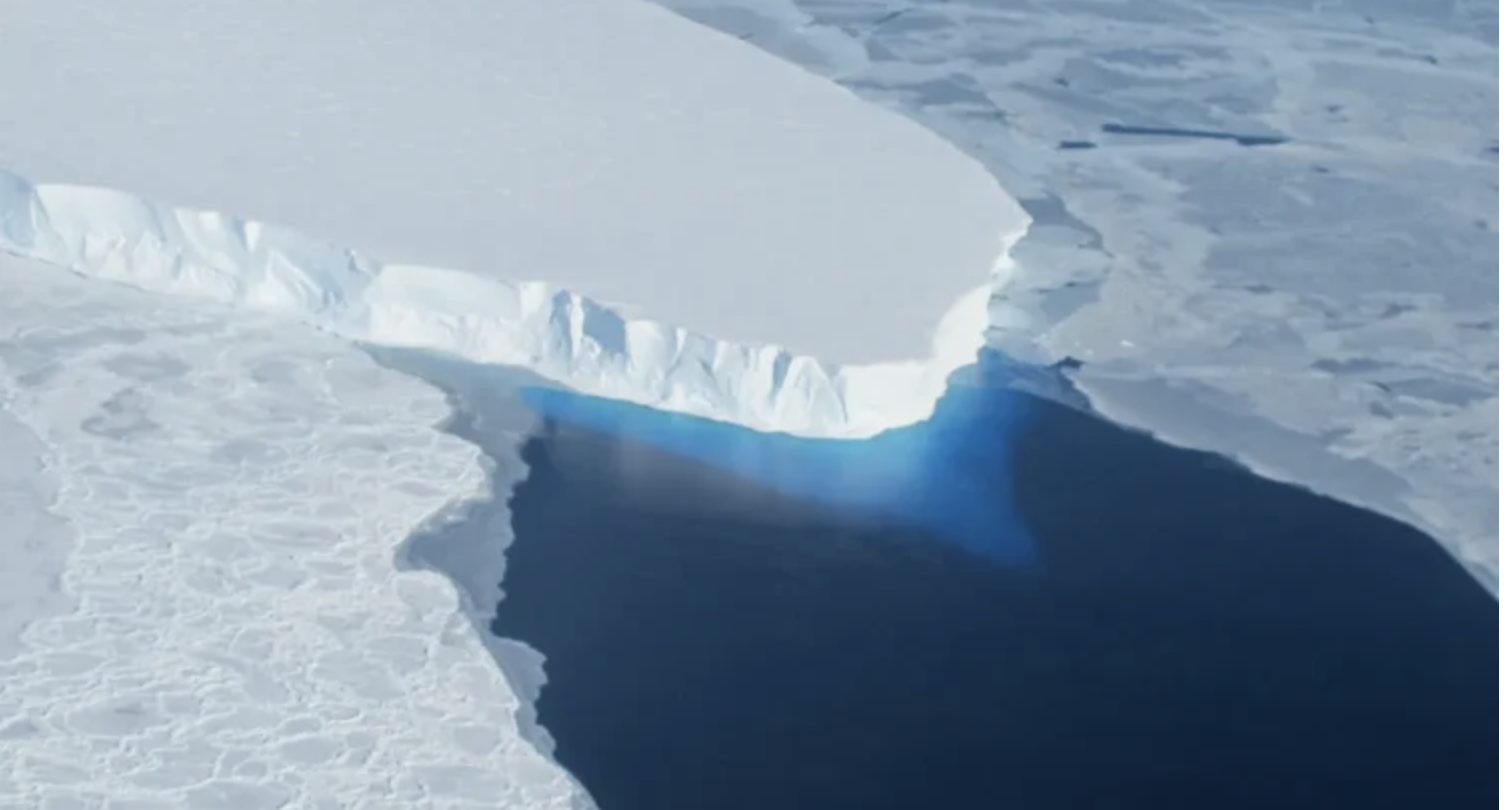
120 kilometers wide, more than 2000 meters thick in places, the Thwaites Glacier represents the largest glacial tongue on the planet. Its strategic position on the edge of Western Antarctica makes it a natural lock for the ice cap of the entire region. From the sky, researchers from the British Antarctic Survey have been observing its decline for several decades. What they see there alarms them.
According to data from the International Thwaites Glacier Collaboration, the volume of ice flowing into the ocean more than doubled between the 1990s and 2010. The glacier now contributes 8% of the current rise in sea level. This phenomenon is all the more worrying as hot water now manages to infiltrate under the ice, gnawing the glacier through its base. The whole rests on a base inclined towards the interior of the continent, a geophysical configuration that makes the system particularly unstable. The simulations presented by the British team led by Rob Larter indicate an inevitable acceleration of the melt in the coming decades.
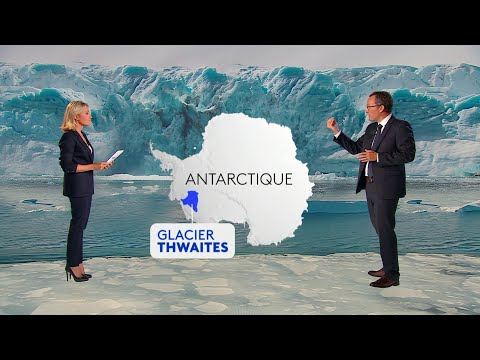
An underwater curtain to protect the Thwaites glacier from warming waters
Faced with this dynamic already underway, researchers and engineers propose to act directly on the marine environment of the glacier. The Seabed Curtain project plans to install a huge flexible curtain fixed to the bottom of the ocean. This system aims to slow down the arrival of hot currents that attack the ice through its base.
This barrier is carried by Marianne Hagen, former Norwegian minister and co-initiator of the project. It could extend over more than 80 kilometers. Its height would reach 150 meters, with a base fixed at 650 meters deep. Engineers are studying two options. The first provides for a continuous curtain. The second relies on spaced segments, more flexible against tidal movements.
Before considering any construction near Thwaites, the teams are testing the device in the Norwegian fjords. An experimental curtain has already been submerged in the north of the country, in collaboration with the Arctic University of Norway. Another natural test site has been identified at Van Mijenfjorden, a fjord in the Svalbard archipelago. Naturally protected by an island, this polar site makes it possible to study the hydrological effects of an obstacle similar to the curtain envisaged.
If ambition may seem crazy, it responds to a simple logic. As Marianne Hagen explained to IFLScience, blocking up to 65 centimeters of rising water at the source could represent a massive overall benefit. From an economic point of view, the cost of the curtain, estimated at billions, remains much lower than the damage caused by the flooding of megacities and the disappearance of inhabited islands.
A project with global governance under high tension
Antarctica belongs to no one. This is precisely what complicates the implementation of an engineering project of this magnitude. The Thwaites Glacier area is located in Marie Byrd Land, a region without formal territorial claim. The signatories of the Antarctic Treaty, concluded in 1959, prohibited all military and commercial activity and encouraged scientific cooperation.
Any permanent construction in this region would immediately expose its initiators to geopolitical interpretations. A study published in 2025 on the strategic implications of such a project warns of the possibility of militarization. A giant underwater curtain would attract hostile groups or raise fears of an attempt to extend sovereignty.
However, Marianne Hagen insists on the urgency of shared governance, based on information and consensus. For it, such a project can only exist if it is collectively carried out by a sufficient number of countries, as part of a transparent process.
The last word may be to science. The study published in Environmental Research Letters in 2021 recalls that more than 99% of scientific publications validate the role of human emissions in global warming. Such unanimity places the reduction of greenhouse gases at the heart of the priorities. Any geo-engineering intervention, even if spectacular, cannot be diverted. The curtain is not a miracle solution. It embodies the symptom of an era forced to devise extreme measures to compensate for its delays.
source : science et vie