Geopolitical tensions currently pose a major challenge to international shipping. In particular, the situation in the Persian Gulf has worsened since the start of the war in Iran in late February. Currently, more than 2,000 merchant ships with approximately 20,000 crew members are stranded in the region, including at least 50 vessels belonging to German shipping companies. The only safe passage out of the Gulf is through the Strait of Hormuz, which is currently considered dangerous. According to reports, around 20 merchant ships have already been attacked, resulting in injuries and deaths among the crew.
“The war in Iran highlights the close link between geopolitical conflicts and global supply chains,” said Gaby Bornheim, president of the German Shipowners’ Association (VDR), at the annual press conference in Hamburg. She emphasized the strategic importance of protecting maritime transport for Germany, as an exporting nation, and expressed her concern for seafarers working in difficult conditions. Martin Kröger, managing director of the VDR, added that the federal government must carefully assess possible measures in this critical situation to ensure the safety of shipping lanes and crews.
The German commercial fleet in international comparison
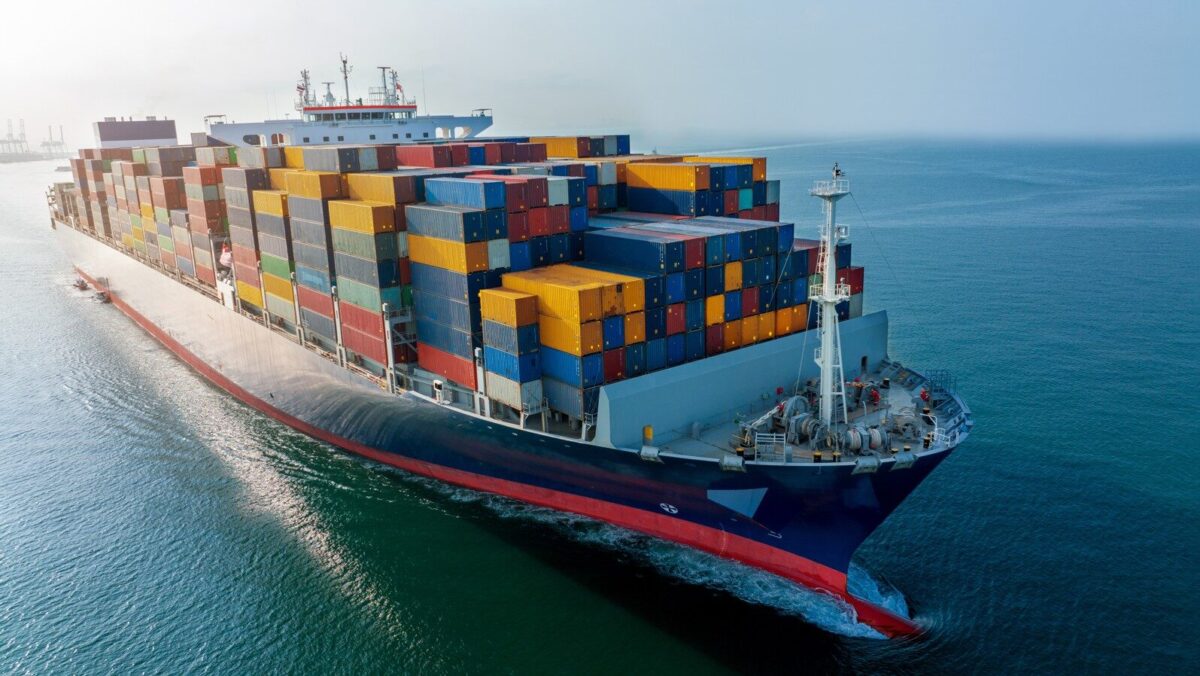
The German merchant fleet remains one of the largest in the world, currently comprising 1,716 vessels with a gross tonnage (GT) of 46.7 million. This places Germany seventh internationally, behind countries such as Greece and China. Particularly noteworthy is that the German container fleet, with 30.4 million GT, now ranks second globally, surpassing China’s 30.2 million GT. Only Switzerland, with 41.2 million GT, still surpasses Germany.
Kröger described the merchant fleet as a « strategic treasure, » which not only ensures the supply of the economy and the population, but also allows for military and humanitarian interventions when needed.
Proposal to strengthen maritime competence
To guarantee the operational capability of the merchant fleet in crisis situations, the VDR proposes the introduction of a maritime service within the framework of the new military service. This maritime service should help establish a civilian maritime reserve, whose members could, in an emergency, contribute to maintaining maritime supplies. At the same time, the maritime service would offer young people the opportunity to gain practical experience at sea and training content that could be recognized in subsequent vocational training.
Kröger emphasized the need for a larger national personnel base to be prepared for crisis situations. Maritime service could also serve as a civilian alternative to military service, should the latter become compulsory again. The VDR also advocates for a return to the proven practices that were in place until the suspension of compulsory military service in 2011, when active seafarers could be exempted from military service due to their unavailability.
Positive development in the number of young people entering the maritime sector
The sector is also seeing an increase in new entrants. In 2023, the number of new entrants to seafaring rose from 418 to 537, an increase of approximately 30% and the highest figure since 2012. There is a particularly strong interest in careers as nautical and technical officers, as well as in the training of ship engineers.
“The positive developments in the number of new entrants are an encouraging sign for the future of our maritime site,” said Bornheim. This trend shows that more and more young people are recognizing and seizing the opportunities in the maritime sector.
source : loginfo24