
On March 17 in Washington, the World Bank Group approved a total financing of $240 million, or 136 billion FCFA, to launch the first phase of the WACA+ program
(Regional Program for the Blue Economy and Resilience of Coastal Zones in West
Africa), an ambitious regional initiative that aims to combine climate resilience,
development of marine resources and job creation.
This package combines $207 million in support from the International Development Association (IDA), $5 million from the PROBLUE Trust Fund, and $28 million raised from the private sector. This arrangement reflects a strategic shift among international donors, who are now focused on mechanisms that catalyze private investment in high-potential ecosystems.
Coastal areas under pressure but at the heart of growth
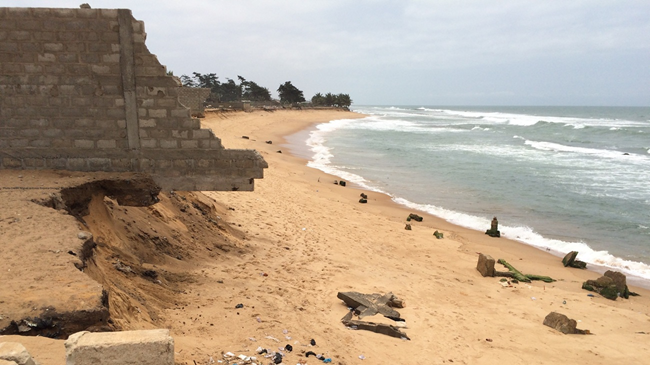
The coastal areas of West Africa are the focus of major economic activity. They are home to more than 360 million people and support key activities such as fishing, aquaculture, tourism, and port services. However, these areas are now threatened by increased erosion, rising sea levels, and ecosystem degradation.
Faced with these vulnerabilities, WACA+ positions itself as an integrated intervention tool. Its objective is twofold: to protect economic and natural assets while stimulating value chains that generate sustainable jobs. More than 530,000 people are expected to see their exposure to coastal risks significantly reduced.
Benin and Mauritania on the tront line
The first phase of the program primarily targets Benin and Mauritania, two countries particularly exposed to climate hazards.
In Benin, investments will focus on stabilizing the Bouche du Roy estuary and the
mouth of the Mono River. These natural infrastructures play a critical role in
protecting homes, agricultural land, and transport routes.
In Mauritania, the stakes are just as strategic. Strengthening the dune barrier
protecting Nouakchott aims to contain the risks of flooding that weigh on densely
populated urban areas and vital economic infrastructure.
Restoring ecosystems to revive economic activity
Beyond physical infrastructure, WACA+ is focusing on a large-scale ecological
approach. Up to 3,000 hectares of mangroves and wetlands will be restored. This
choice is driven by a specific economic rationale: these ecosystems act as natural
buffers against climate shocks while supporting fisheries productivity.
This strategy also opens up opportunities in ecotourism and aquaculture, two high
value-added sectors. It is part of a broader vision of the blue economy, where the
preservation of natural capital becomes a direct factor in competitiveness.
A deliberate bet on the private sector and employment
One of the program’s key structural elements is support for micro, small, and
medium-sized enterprises. Training, technical assistance, and targeted financial
mechanisms are intended to strengthen local entrepreneurial capacities.
In Mauritania, the introduction of a partial credit guarantee should facilitate access to financing and generate up to $20 million in additional loans, particularly in the
processing of fishery products.
By 2031, more than 31,000 people will benefit from skills development programs. In this first phase alone, approximately 13,000 better-paying jobs are expected in
sectors as diverse as fishing, logistics, hospitality, and eco-friendly catering. Women and young people are priority targets, reflecting a commitment to greater social inclusion.
The next phases should extend the scheme to other countries in the region, with a
goal of protecting more than 1.3 million hectares of marine areas.
source : Sika finance