
The project « Tunisia around 30×30 » aimed at strengthening and expanding the network of Marine and Coastal Protected Areas (AMCP) in Tunisia, was officially launched on Friday by the Centre for Cooperation for the Mediterranean of the International Union for Conservation of Nature (IUCN Med) and the Centre d’Activités Régionales pour les Ares Especially Protected (SPA/RAC).
At the national level, the Ministry of the Environment, a government member of the IUCN, and the Coastal Protection and Planning Agency (APAL) will coordinate the implementation of this project.
This initiative aims to accelerate the national contribution to the 30×30 objective of the Global Biodiversity Framework, which aims to protect at least 30% of the planet’s land, fresh water and oceans by 2030.
The initiative plans to identify and secure areas of high biological and ecological value in Tunisia in order to lay the foundations for new potential protected areas, while improving the management efficiency of existing sites. It also aims to promote the autonomy of local communities and ensure the contribution of civil society to conservation objectives.
With a duration of three and a half years (2026-2029), the project will support Tunisia in strengthening a coherent network of legally recognized protected areas, effectively managed and anchored in their socio-economic context.
Tunisia is home to a rich marine and coastal biodiversity that supports coastal resilience, fisheries and local livelihoods. With current coverage of protected areas of less than 3% of its marine territory, Tunisia has considerable potential to strengthen its protection network and contribute to the 30×30 objective of the Global Framework for Biodiversity.
Protected areas are an essential pillar of biodiversity conservation strategies, including the National Biodiversity Strategy and Action Plan (SPANB) 2018-2030, aligned with the Kunming-Montreal Global Biodiversity Framework. The national target defined in the SPANB aims to strengthen the Marine and Coastal Protected Areas (AMCP) network in order to improve their territorial coverage, through the creation of new areas of ecological interest and strong biological diversity. This action should be associated with the development of management plans for all existing CPMAs and ensure their monitoring and evaluation.
Tunisia has a significant number of marine protected areas or managed with a marine component (18 sites). The majority of them are classified as Ramsar sites (15 sites), while three are designated as Specially Protected Areas of Mediterranean Importance (ASPIM). In addition, six sites are being created as AMCP: the Kneiss Islands, the La Galite archipelago, the Kuriat, Zembra and Zembretta Islands, the Northern Islets of Kerkennah and Ras R’mel in Djerba.
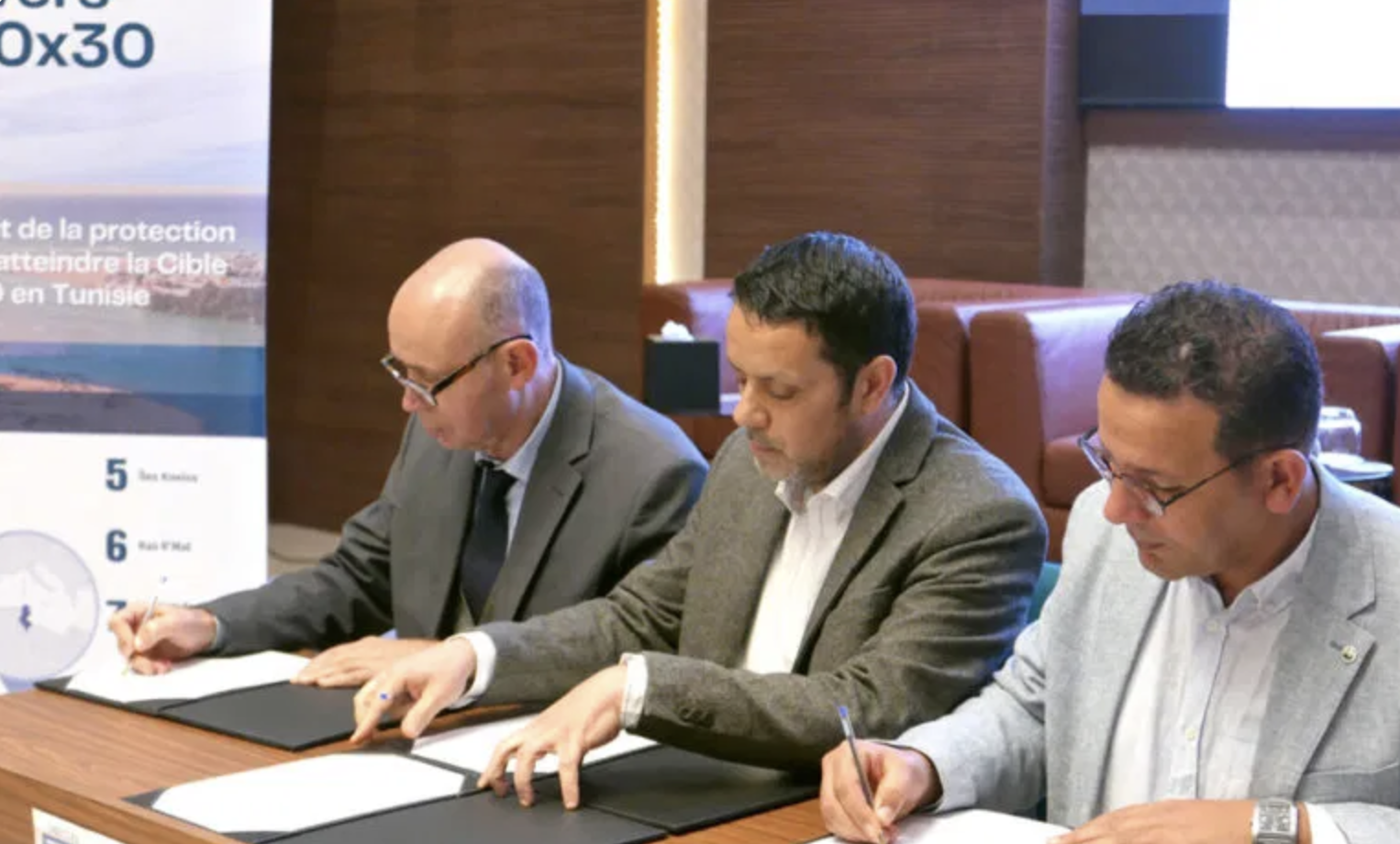
On this occasion, a partnership agreement was signed between SPA/RAC, IUCN Med and WWF North Africa, marking the operational start of the project and consolidating strategic cooperation in favor of Tunisian marine biodiversity.
source : la presse