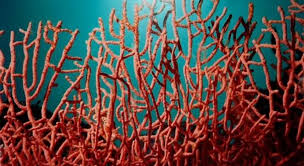
Corals are essential organisms for life in the oceans in many ways: they provide refuge for biodiversity, serve as a food source, and also mitigate the impact of storms and tsunamis on coastlines by acting as natural wave barriers. But the extraordinary properties of these organisms continue to surprise scientists: corals also play a fundamental role in climate regulation—but only during major catastrophes!
A study published in the scientific journal Proceedings of the National Academy of Sciences reveals that the rise and decline of shallow-water corals determine how quickly the planet recovers from large fluctuations in carbon dioxide (CO₂).
To understand this mechanism, researchers from Université Grenoble Alpes and the University of Sydney studied reconstructions of plate tectonics and simulations of climate and biodiversity. Their conclusion: “Coral reefs do not just respond to climate change; they play a role in recovery,” says lead author Tristan Salles.
Stressed Corals Activate a Repair Mechanism
By examining past variations, the researchers identified two different scenarios:
- When continental plates are large and coral reefs thrive, carbonate accumulates in shallow seas, reducing chemical exchanges with the deep ocean. This weakens the biological pump—the process by which marine organisms absorb carbon—and slows the planet’s recovery after climatic shocks.
- When coral reefs collapse due to tectonic changes or falling sea levels, calcium and alkalinity accumulate in the ocean. Carbonate burial shifts to deeper waters, stimulating nanoplankton productivity and accelerating climate recovery.
In practical terms, this means that when corals are stressed, as is currently the case in our oceans, they trigger a repair mechanism: they are not “passive witnesses of environmental change” but “active modulators”, as highlighted by the University of Sydney in a study summary.
Corals can modify the oceanic biological pump and, consequently, the climate and its capacity to recover from global disturbances. When the planet undergoes major upheavals—tectonic or climatic—corals act as stabilizers.
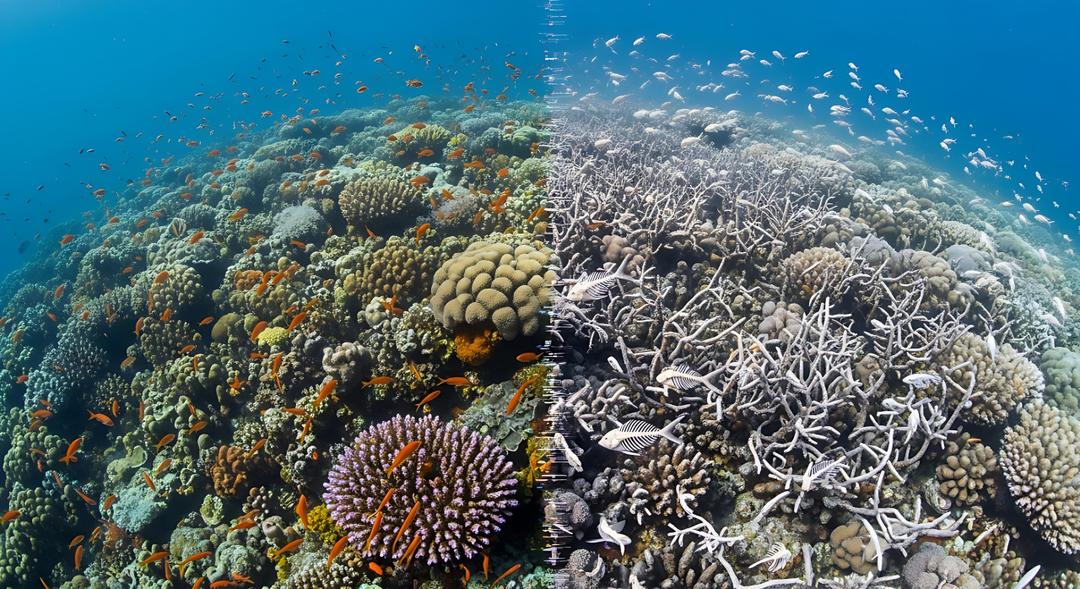
Recovery Doesn’t Happen on a Human Timescale
So, will corals be able to save us from the consequences of contemporary climate warming? Not necessarily, explains the University of Sydney, because corals rely on other organisms to have a real impact: “the very organisms responsible for burying carbonates in deep waters—plankton and other calcifying species—are themselves increasingly threatened by ocean acidification and ongoing CO₂ emissions.”
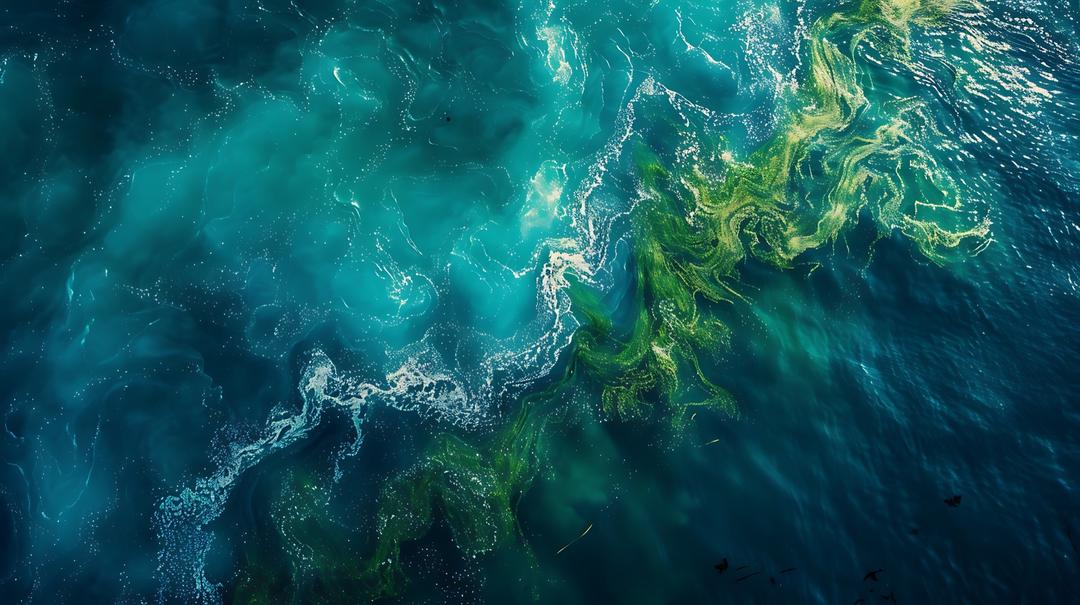
There is still a note of hope, but on a very long timescale: “From our perspective over the past 250 million years, we know that the Earth system will eventually recover from the massive carbon disruption we are currently entering. But this recovery will not occur on a human timescale. Our study shows that geological recovery requires thousands, or even hundreds of thousands, of years.”
Source: futura