
At a time when the sea is often reduced to a leisure area or an overexploited resource, some maritime cultures continue to live on a daily basis. Food fishing, traditional navigation, transmission of ancestral knowledge: across the globe, coastal communities maintain a direct, vital and deeply cultural link with the ocean. A relationship to the sea that illuminates the history of peoples as much as contemporary sustainability issues.
The sea as a condition of life, not as a decor
In many parts of the world, the sea is not a choice but a necessity. It structures food, the local economy, social organization and even the way of thinking about time. Unlike industrialized societies, where the ocean is often perceived as a leisure space, these maritime cultures still live to the rhythm of tides, seasons and fish migrations. « Here, we don’t decide to fish, we respond to the sea, » explains a former fisherman from the Malagasy west coast. This direct dependence involves a fine knowledge of winds, currents, seabeds and species behaviors. An empirical expertise, transmitted orally, which constitutes a real intangible heritage.
The Vezo of Madagascar, fishermen by nature
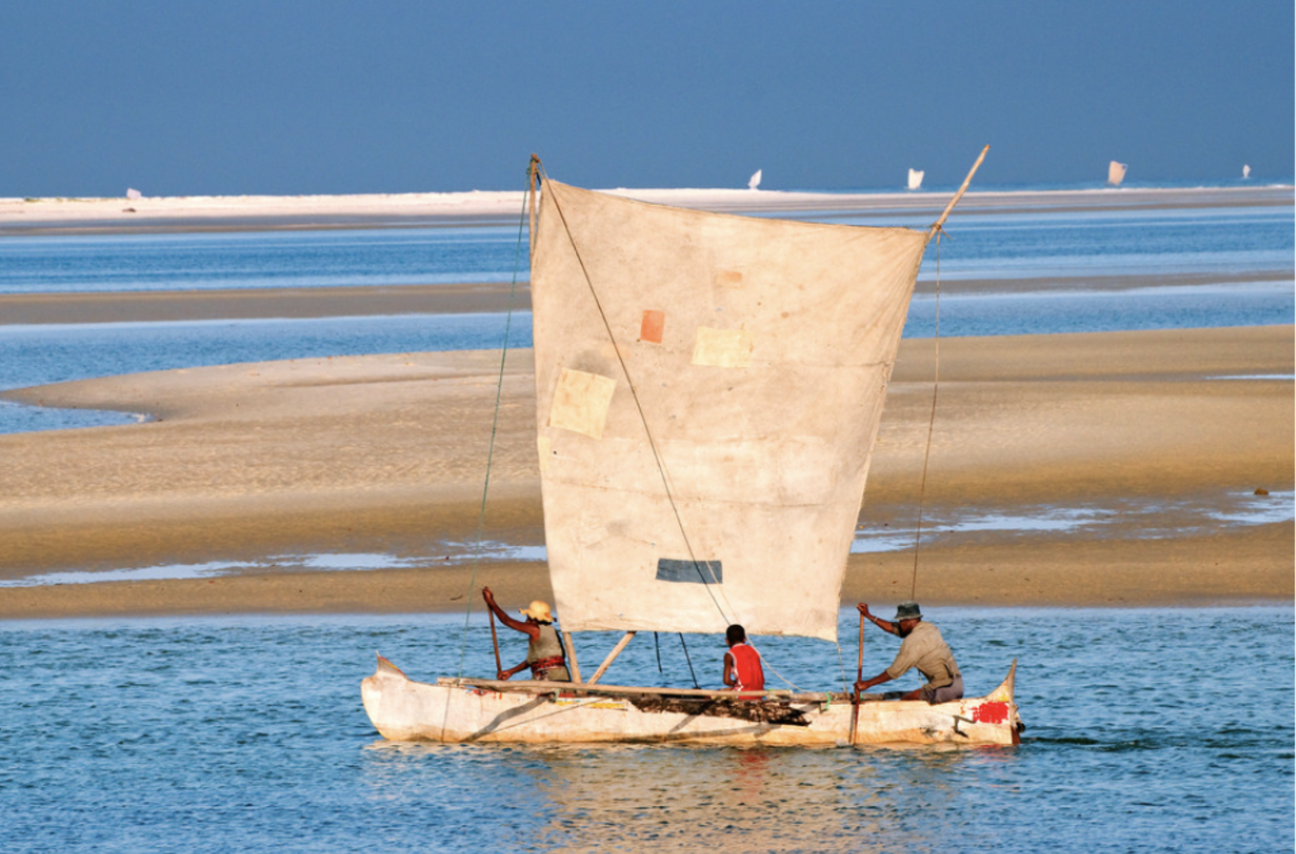
On the coasts of southwestern Madagascar, the Vezo embody one of the most emblematic examples of people still living directly from the sea. Their very identity is based on artisanal fishing, practiced on board light sailing canoes, without engine, adapted to a fragile environment. Among the Vezo, being a fisherman is not a job but a state: you become one through daily practice, not through birth. Children learn very early to read the color of the water, to recognize reefs, to anticipate the wind. The sea shapes education as much as survival. But this close relationship also makes these communities extremely vulnerable. The pressure of industrial fishing, the scarcity of resources and the erosion of the coasts profoundly change their balance. To cope with this, some families develop complementary activities related to the sea, such as the cultivation of algae or the reasoned collection of shellfish, without breaking with their maritime identity.
Navigate to trade, transmit and connect the worlds
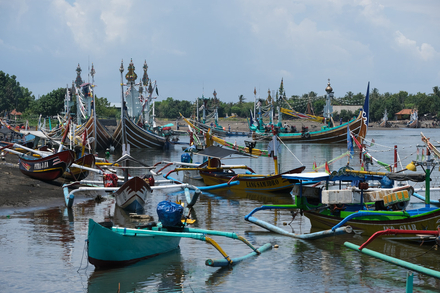
In Southeast Asia, the sea has long been a cultural and commercial highway. The marine peoples of Indonesia, including the Bugis, have built their reputation on long-course navigation. Long before modern roads, they crisscrossed the archipelago and the surrounding seas aboard large wooden sailboats, carrying spices, rice, dried fish and know-how. « A boat is not just wood, » says an Indonesian ship carpenter. « It’s a floating memory. Traditional shipbuilding remains a cultural pillar today, even if the uses are changing. Some boats are still used for fishing or coastal transport, others find a second life in maritime tourism, thus extending an ancient legacy. On the coasts of the African Indian Ocean, the tradition of dhows plays a similar role. These sailboats, built without written plans, testify to an intimate knowledge of the sea and the wind. Their presence reminds us that navigation has long been a vector of cultural exchanges much more than a simple economic activity.
Fishing to feed, process and share
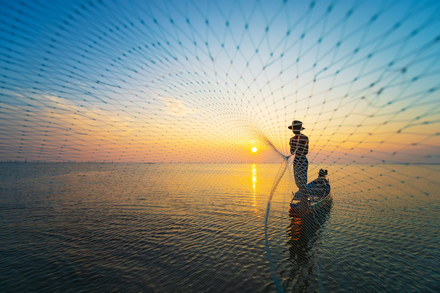
In Mauritania, Imraguens have been living for centuries from artisanal fishing, especially yellow mullet. Their relationship with the sea goes far beyond the act of fishing: it encompasses the processing of fish, its conservation and its local marketing. Each step mobilizes the community, from fishermen to women in charge of drying and preparation. « When the fish arrives, the whole village lives, » says a resident of the Banc d’Arguin coast. The sea then becomes a space of cooperation, transmission and solidarity. This model, which was long stable, is now weakened by the competition of industrial fleets and the decrease in fish stocks.
Maritime Europe, between heritage and rebirth
In Europe, the direct relationship with the sea has partly relaxed, but some regions are trying to reconnect with their maritime roots. In Brittany, Galicia or Scotland, artisanal fishing, traditional shipyards and port crops remain perennial, often supported by a strong local identity. In some ports, practices are reinventing themselves: valorization of local species, short circuits, transmission of marine knowledge to the younger generations. « The sea is not dominated, it is respected, » summarizes a Breton fishing boss, aware that the survival of his profession requires a measured exploitation.
A relationship to the sea that resists globalization
What connects all these maritime cultures, despite their geographical differences, is a direct, daily and respectful relationship with the ocean. The sea is perceived as a living entity, sometimes generous, sometimes unpredictable, but never abstract. At a time when globalization tends to standardize lifestyles, these communities remind us that really living from the sea remains possible. Provided that you accept its constraints, transmit knowledge and consider the ocean not as an unlimited resource, but as a life partner. In this ancient link between man and the sea, perhaps valuable avenues are emerging for thinking about the future of coastal societies, between cultural preservation and adaptation to climate changes.
source : figaronautisme