

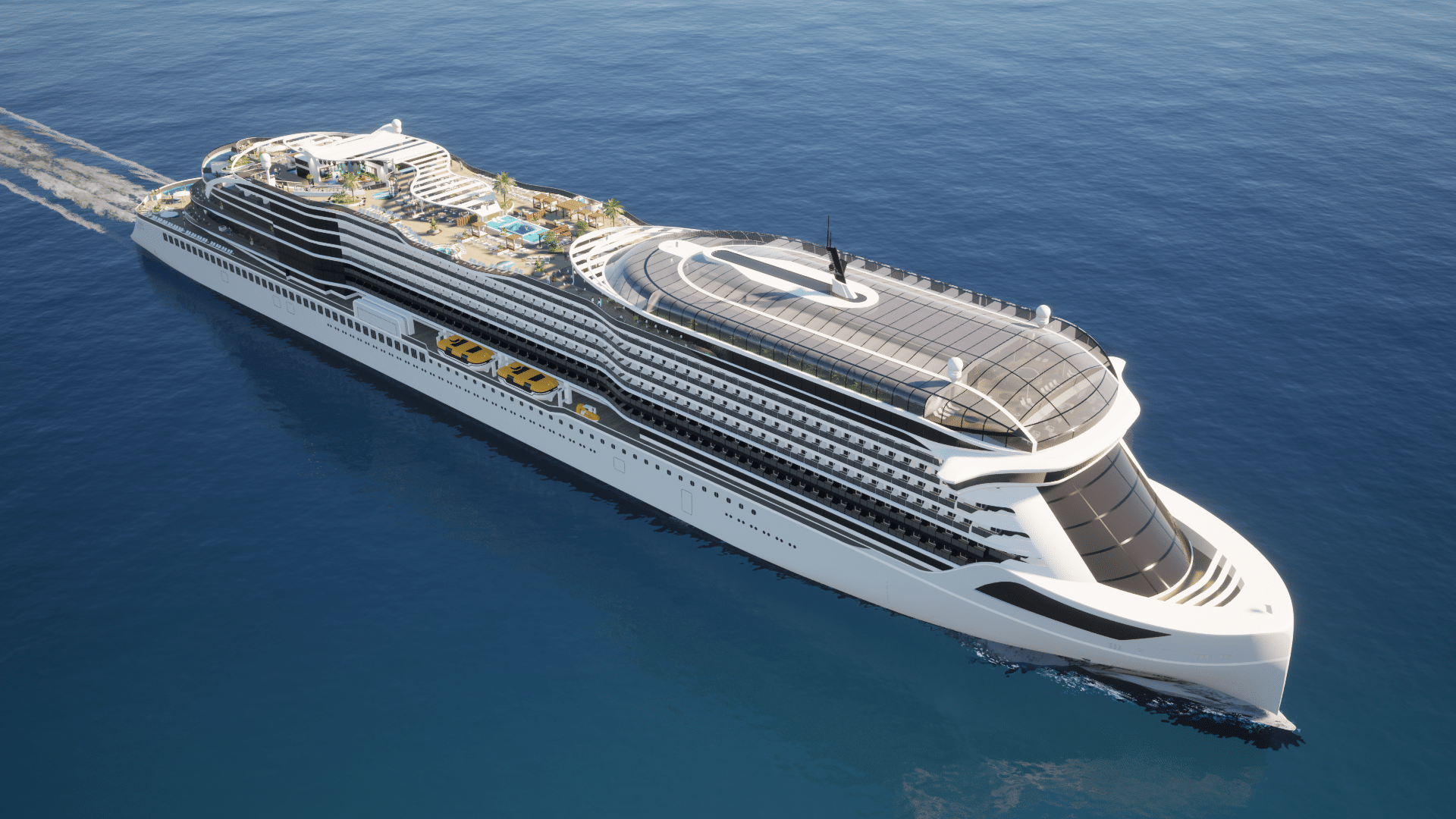
The cruise industry is facing a colossal challenge to reduce its huge carbon footprint before the deadline. While the giants of the seas burn thousands of tons of heavy fuel oil, a German manufacturer has just presented a project that will upset the maritime market. Forget about sun sails or unrealizable prototypes. This new generation of colossal ships relies on radically different engineering to completely remove its direct emissions, thus redefining our vision of tourism.
The crazy bet of a one hundred percent electric behoth
The famous Meyer Werft shipyard has just struck a big blow at a major maritime show. The company has unveiled a staggering model for a building claiming zero emissions. This steel behemoth will stretch over nearly two hundred and seventy-five meters in length. Its objective is to comfortably welcome nearly two thousand vacationers during each commercial crossing.
Unlike today’s ships that spit thick smoke, this model will be fully powered by a giant battery system. Norwegian expert Corvus Energy is responsible for providing this monumental food. The ambition displayed is astonishing since it would reduce harmful pollution by about ninety-five percent. A real technical feat on this titanic scale.
The unexpected advantage of industrial pragmatism
The real strength of this announcement lies in the pragmatism of German engineers. Instead of straying into risky innovations, they decided to assemble electrical components already widely tested by the industry. This strategic choice ensures immediate reliability and simplified maintenance. This is the promise of a quick energy transition and without bad technical surprises.
Thanks to this pragmatic approach, the deployment schedule promises to be particularly aggressive. The designers believe that if shipping companies validate their orders this year, the first liner could take to the sea in the next decade. A commissioning planned for 2031 represents an extraordinarily short time for a construction site of such magnitude.
Redesigned logistics around the European docks
The exploitation of these floating palaces will require a massive adaptation of the port infrastructures of our continent. The targeted routes will initially focus on traditional European routes. Ships will dock at high-capacity terminals to recharge their huge accumulators during stopovers. Projections estimate that a hundred coastal facilities will be equipped very soon.
source : science post