While the end of open-net salmon farming is due to take place by 2029 in British Columbia, could terrestrial aquaculture become a solution? According to an expert and an entrepreneur who tried the adventure, there are many obstacles.
Fisheries and Oceans Canada lists 70 land-based aquaculture facilities(new window) in the province, of which 31 allow the breeding of salmon, mainly in hatchery
.
In the 2024 transition plan(new window), we could read that a coordinated approach
must make it possible tosupport the testing and adoption of innovative and clean aquaculture technologies, including livestock in enclosed parks at sea and on land
. Two ministries (MPOAndISDE) did not answer our questions about the future of terrestrial aquaculture in the province.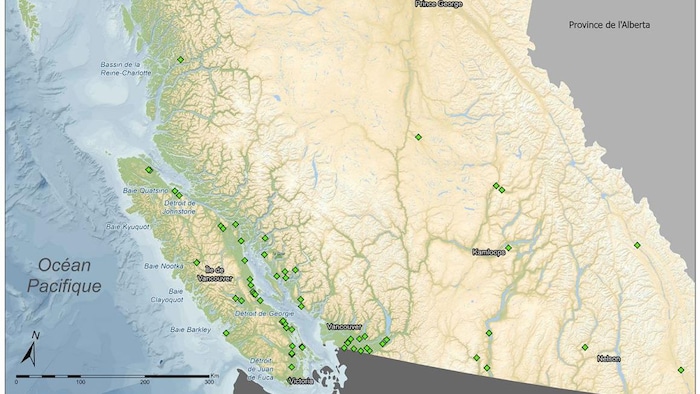
Land aquaculture facilities in southern British Columbia. PHOTO: PROVIDED BY THE MPO
Steve Atkinson, founder of Taste of BC, which owns a rainbow salmon aquaculture farm created in 2012 in Nanaimo, believes that terrestrial aquaculture has no future
in British Columbia.
Things are happening in some places in the world, it’s just not the case in British Columbia. To date, no land-based installation, of any kind, is profitable. »A quote from Steve
Atkinson, founder, Taste of BC
If he assures that scientific data now exist and that terrestrial aquaculture will be very successful, he thinks that China will probably be the main production center
.
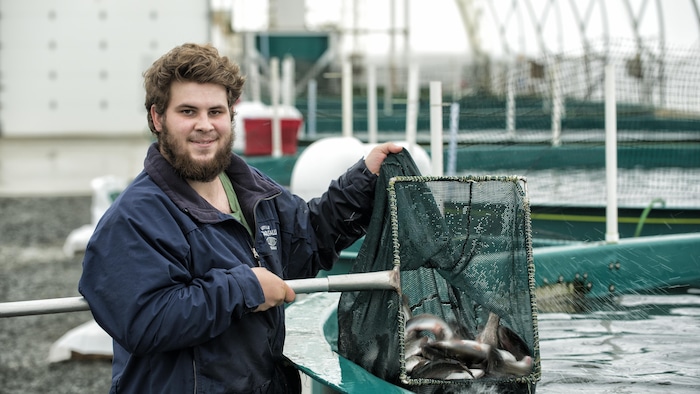
An employee of Little Cedar Falls, a farm launched by Taste of BC, with rainbow salmon. PHOTO: PROVIDED BY STEVE ATKINSON/DIRK HEYDEMANN
Temporary madness
In 2012, when Steve Atkinson embarked on salmon farming on land, it was under a temporary madness
, he says laughing. Eight years later, the farm produces118 tonnes of fish destined for the market
and generates a profit.
However, learning was hard, between the early maturation of salmon because of the spill of hormones into the water, a sometimes unpleasant taste, and raising these fish in a closed environment.
Every time we learned something and solved a problem, three more appeared.A quote from Steve Atkinson, founder, Taste of BC
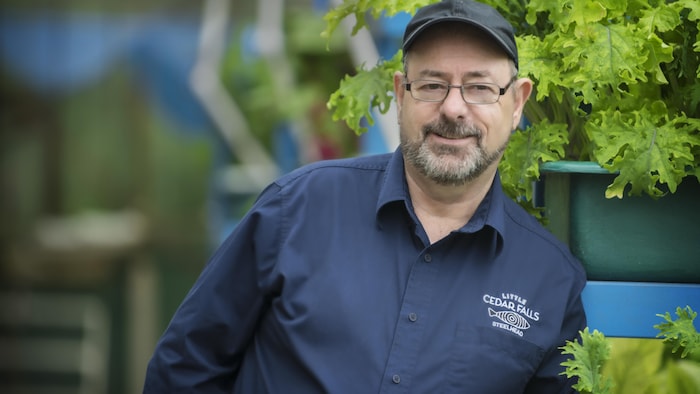
However, Steve Atkinson had chosen a species that he thought was « easier than all the others ». He assures that his experience « has proven that the breeding of salmon on land throughout their life cycle was much more difficult than could have been predicted ». PHOTO: PROVIDED BY STEVE ATKINSON/DIRK HEYDEMANN
In his eyes, there are two almost insurmountable
obstacles: the regulatory regime and electricity.
Steve Atkinson believes that theMPOis not able to regulate terrestrial aquaculture which is closer, he says, to agriculture. On the electricity side, the network on Vancouver Island is insufficient to power more than two or three farms, he says.
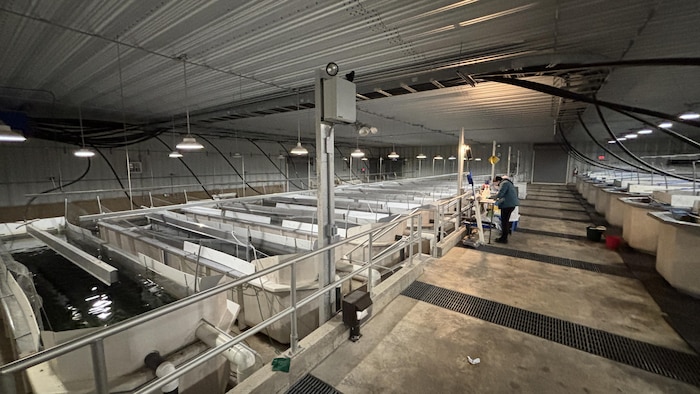
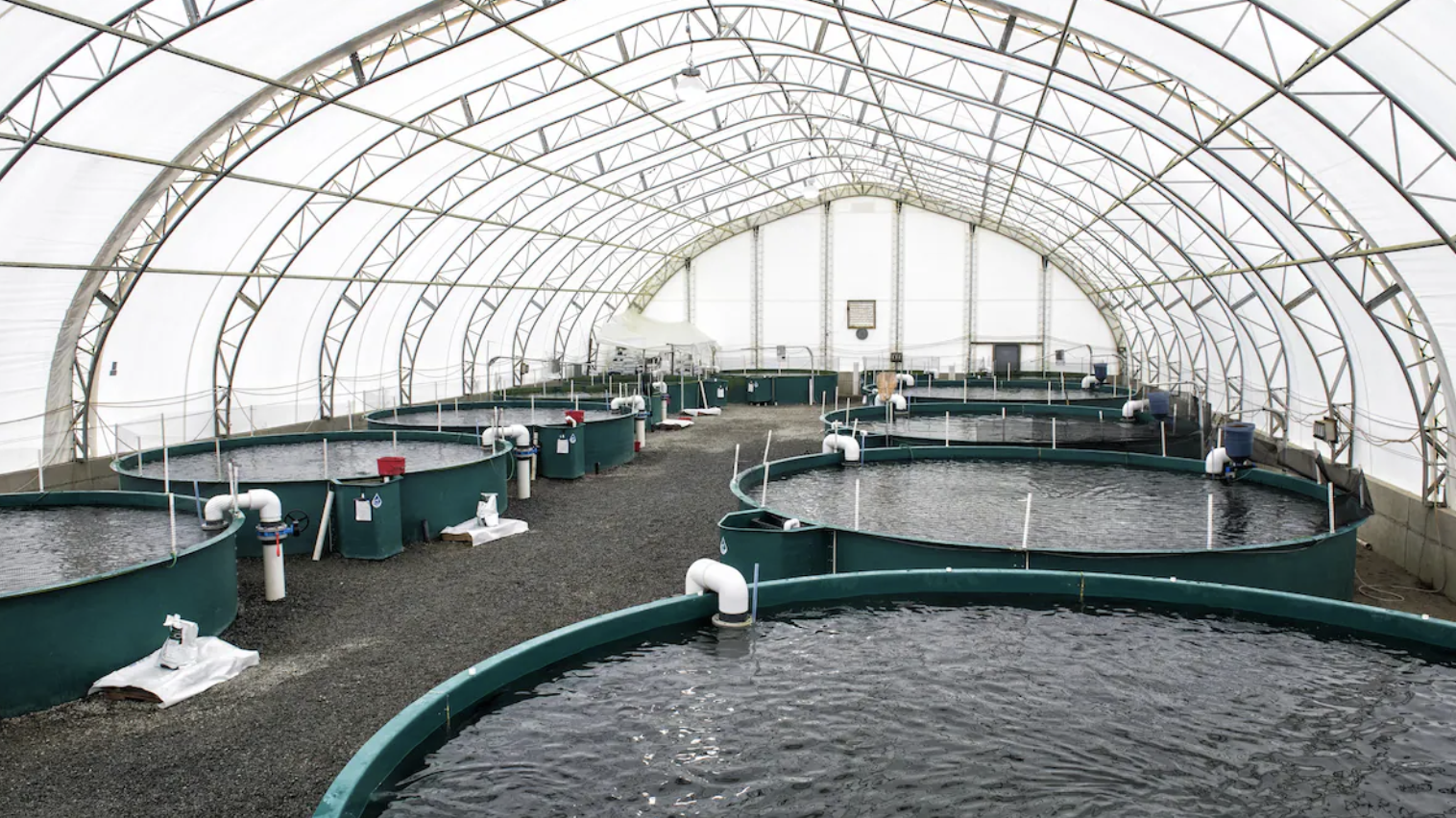
A terrestrial aquaculture facility. PHOTO: PROVIDED BY DAVID HUYBEN
David Huyben, an assistant professor of aquaculture at the University of Guelph, adds that a lot of water is needed, drawn from the sea or an aquifer, even in a recirculation aquaculture system (SAR), and while farms are increasingly asked to save water.
Land installations can be located anywhere, usually near the markets where the fish will be consumed. It is therefore preferable to install them near Vancouver, Toronto or New York, these large urban centers, in order to reduce the costs of transporting fish to these markets. » A quote from David Huyben, Assistant Professor of Aquaculture, University of Guelph
A niche industry
David Huyben says that land aquaculture is quite difficult in Canada, and that in Ontario, for example, there are mainly small facilities, or even aquaponic systems where fish farming and vegetable cultivation are intertwined.
For David Huyben, cost remains the main reason that slows down the expansion of the industry. We need an investor with significant capital.
However, he says, the industry no longer has much confidence in this process because of the involvement of the political sector.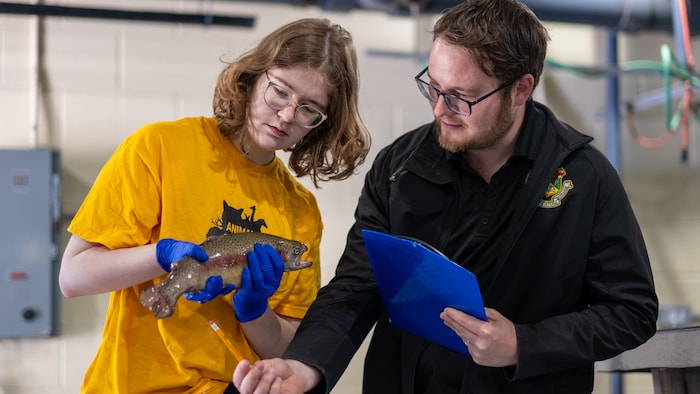
« [The government] should support the sector more, as has been seen in cases of resounding success, for example in Japan, Chile and Norway, where significant sums from oil or other investments, especially technology, have been invested in aquaculture, » says David Huyben (right). PHOTO: PROVIDED BY DAVID HUYBEN
David Huyben believes that there will still be investments in British Columbia, that some farms will settle, but that many farms will disappear and that they will not be transferred to land, because it is simply not profitable
.
Terrestrial aquaculture is not perfect
and sometimes thousands of fish die in accidents, he says. This sector of activity remainsA niche
.
There are many costs, and they are usually too high compared to the price obtained per kilo or per pound for these fish, which makes the farm unprofitable. This is why land aquaculture farms focus on species such as Atlantic salmon, salmon or rainbow trout, because they sell more expensive per kilo or per pound, even if their production remains very expensive.A quote from David Huyben, Assistant Professor of Aquaculture, University of Guelph
To produce a single fish farm in an open net enclosure, it would take a land almost as large as an aircraft hangar, with dozens and dozens of tanks to produce as many fish as this farm.
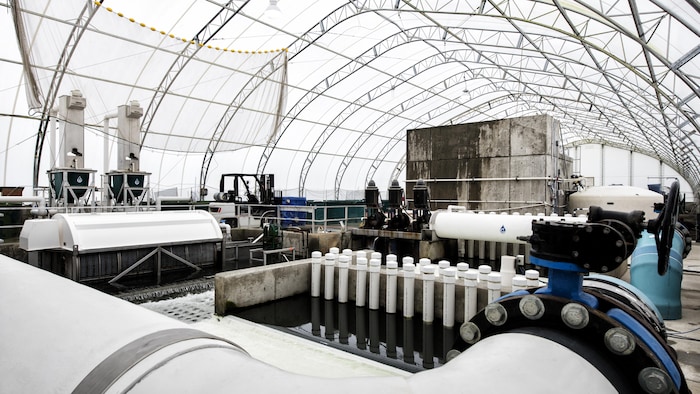
Maintenance costs are also to be taken into account, with huge pumps, heaters, coolers, lighting systems, sensors, requiring uninterrupted electricity, according to David Huyben.
Selling shares rather than raising fish
Steve Atkinson points out that the land available on Vancouver Island is often that of old sawmills that left many chemicals in the environment. It is unlikely that a fish that tastes good will be produced.
ADVERTISING
While Taste of BC merged with an American company and this approach ended in a fish tail, Steve Atkinson believes that many actors want to sell shares rather than raise fish.
However, he does not regret having tried the adventure and contributed to science.
We have established a collaboration with people from all over the world. […] We have published a large part of our results. […] We proved that it was possible.
source : radio canada