
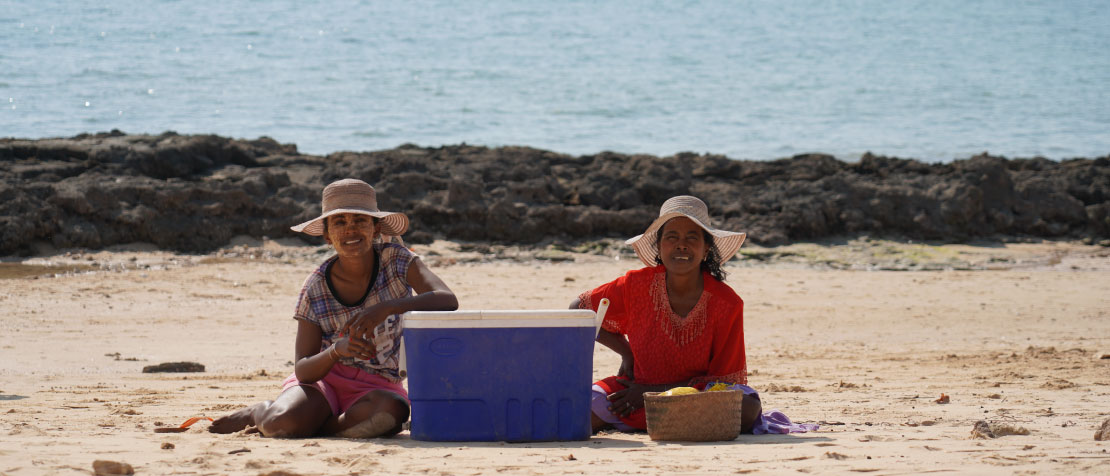
On the beach at Toliara, Madagascar, women wait patiently in the sun, coolers at the ready. The first pirogues are approaching, and this time, their fish will remain fresh enough to sell at a fair price.
Small-scale fishing is the mainstay of coastal livelihoods in Madagascar, feeding and providing income for thousands of families. But this vital sector faces numerous challenges: post-harvest losses, limited market access… all obstacles that threaten food security and community incomes.
To support this activity, Madagascar has implemented a National Action Plan for Artisanal Fisheries, in line with the Voluntary Guidelines for Sustainable Artisanal Fisheries (SSF Guidelines). This plan sets key objectives: promoting gender equality, ensuring decent working conditions for all, and strengthening the productivity and resilience of the artisanal fisheries value chain—from post-harvest activities to trade, including reducing post-capture losses.
At the heart of this effort, RENAFEP, the National Network of Women in Fisheries, stands out for its commitment. For years, its members have been working to improve product quality, reduce waste, and secure better incomes for their communities.
“For years, we watched our products spoil in the sun. Today, thanks to RENAFEP and our partnership with the FAO, women have access to ice, and with it comes dignity, better prices, new markets and the hope of a better future,” says Viviane Givène, Secretary General of RENAFEP.
With FAO support, through the project “Implementation of the Guidelines for Sustainable Small-Scale Fisheries for Gender-Sensitive and Climate-Resilient Food Systems and Livelihoods – Phase 2”, an ice machine has been installed in a new building in Toliara. This strategically located site serves the surrounding fishing villages and has already begun to produce concrete results, made possible through collaboration between FAO and local partners.
source : FAO