
Tunisia must accelerate the development of its yachting sector to enhance a potential that is still largely underexploited, says Anis Zarrouk, Secretary General of the National Chamber of Managers of Ports, Industries, Services and Yachting Water Activities, in an interview with RTCI and conducted by Mehdi El Kantaoui. According to him, the country has major assets with 1,300 kilometers of coastline, a strategic position in the Mediterranean and a favorable climate all year round, but remains behind its regional and European competitors.
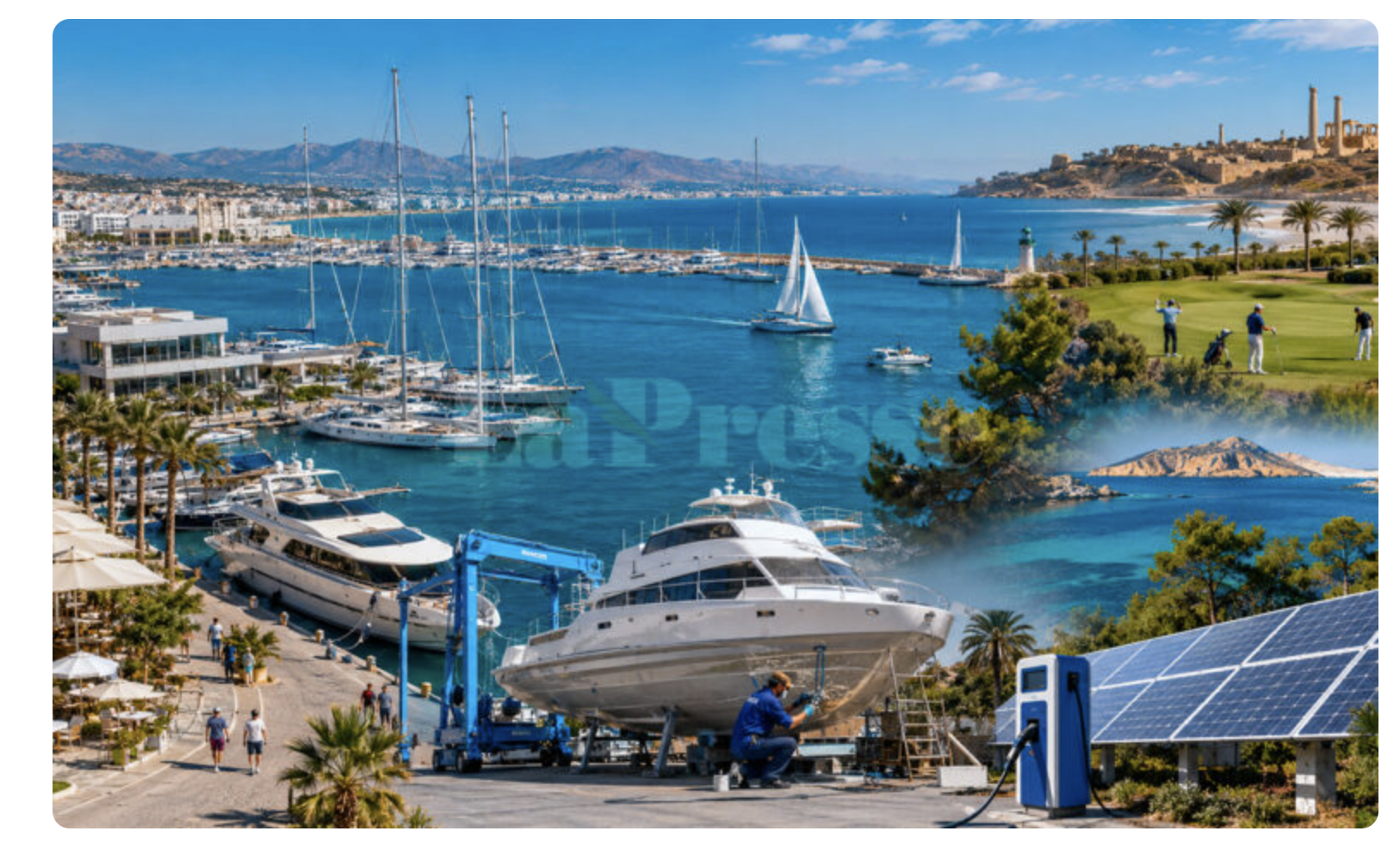
The manager first highlights the limitations of port infrastructure. If Tunisian ports prepare every year for the summer season through maintenance operations and team reinforcement, several shortcomings persist. He cites in particular the lack of basic services such as restaurants or kiosks in some ports, the lack of fairing areas for the maintenance of boats and the insufficiency of spaces capable of accommodating large units. For him, the development of the sector requires a structuring investment inspired by international models, already observed during exchanges with European actors and nautical shows.
In terms of attractiveness, Anis Zarrouk highlights an important competitive advantage, namely prices significantly lower than those charged in Europe. It also evokes the diversity of the Tunisian territory, between the coast, northern forest areas and southern desert regions, as well as an ancient maritime heritage of several millennia. These elements above all make it possible to attract today a clientele of medium-sized boaters, while the large yachting remains limited to technical stops for mega yachts, without a real tourist stay.
However, the infrastructure deficit remains a major brake. In the north of the country, only the Bizerte marina offers significant capacity, while areas such as Mahdia, Sfax or Zarzis do not yet have adequate equipment. Anis Zarrouk compares this situation to that of other Mediterranean destinations such as Sicily or Malta, which have a dense network of marinas despite comparable or smaller coastlines. He concludes that Tunisia must rapidly increase its number of ports to hope to become a regional hub.
The speaker also emphasizes the economic role of boating as a gateway to integrated tourism.
Boaters are a clientele with high purchasing power likely to consume in other sectors such as thalassotherapy, golf, padel or cultural and ecological tourism. It calls for a strengthening of cooperation between ports and travel agencies in order to better direct these visitors towards the national tourist offer.
The rise in the sector also requires certification and environmental standards. Anis Zarrouk cites in particular the ISO 14001, clean port or blue flag labels as essential tools to strengthen international competitiveness. The port of Monastir is already ISO 14001 certified, while other steps are underway.
He also mentions a project to create a Tunisian label intended to be valued internationally thanks to digital technology.
On the environmental front, he insists on the need to reconcile development and coastal protection. All port projects are subject to impact studies, and he recommends favoring light and removable structures rather than concrete constructions. He also believes that marinas are not the cause of coastal pollution, which comes mainly from external sources transported by sea currents. According to him, the main challenge for ports remains the reduction of carbon emissions via the energy transition.
Finally, Anis Zarrouk identifies three major areas of trade related to the sector, namely naval maintenance with specialized mechanics and electricians, operational management of ports and reception and administrative services. He believes that the development of yachting would both strengthen tourist attractiveness and create qualified jobs.
He calls for a strategic vision for the 2030 horizon structured around four axes, the reform of the regulatory framework to encourage investment and local production, the extension and creation of ports, the strengthening of vocational training and finally the priority given to the cleanliness of the country, an essential condition for any sustainable ambition in the sector.
source : la presse