This week, as governments of various coastal states gather in Mombasa, Kenya, for the Our Ocean Conference, Africa must demand an end to industrial krill fishing in the Southern Ocean before irreversible damage is done to Antarctica and the ocean systems upon which our continent depends. A clear call from Africa would bolster international calls for a ban on industrial krill fishing and support positive leadership developments like the European Parliament’s recent call for a moratorium on krill fishing.
The Southern Ocean regulates global ocean circulation, absorbs enormous quantities of heat and carbon dioxide, and sustains marine life across the planet. At the center of this system is Antarctic krill (Euphausia superba), the tiny crustacean that feeds whales, penguins, seals and seabirds while helping lock carbon into the deep ocean.
Industrial krill fishing has expanded rapidly over the last few years, with the largest share of this extraction controlled by fleets linked to certain European and Asian countries. Most concerningly, fishing is intensifying precisely where Antarctic wildlife is most vulnerable: critical feeding grounds for whales, penguins and seals are actively targeted by the industry.

A single adult Antarctic krill (Euphausia superba) is usually just five centimeters long, but the importance of its massive populations to marine food chains, and the millions of people who depend on ocean protein as part of their daily diet, is major. Image courtesy of Uwe Kils via Wikimedia Commons.
The damage is already visible. In April, the International Union for Conservation of Nature (IUCN) classified both the emperor penguin and the Antarctic fur seal as endangered species, citing climate change and collapsing Antarctic ecosystem conditions, including declining krill availability.
Continuing to intensify industrial krill extraction while the species that depend on krill are entering higher categories of extinction risk is not precautionary management. It is ecological recklessness.
And all for what? To feed hungry populations? To make essential products for human livelihoods? No. Most of the krill fished in Antarctica is for industrial purposes, turned into omega-3 dietary supplements, pet food and feed for industrial aquaculture including farmed salmon.
African nations can no longer remain observers while one of the planet’s last great wildernesses is being opened to escalating industrial exploitation by a handful of companies. Our continent already lives on the frontlines of climate change, and we understand fully what ecosystem collapse means for food security, coastal livelihoods and economic resilience.
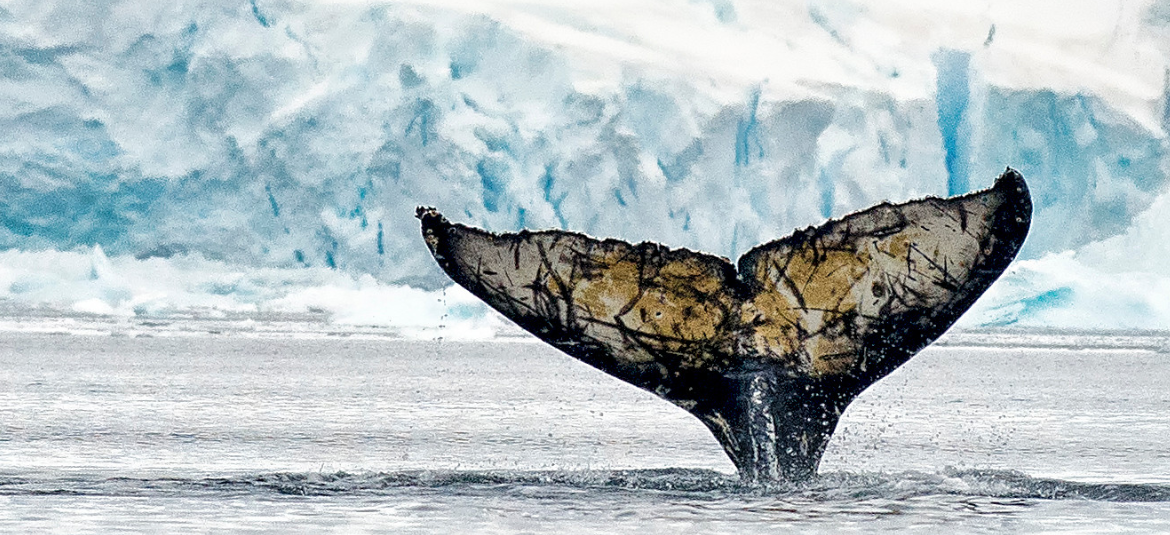
In Angola, the Benguela Current sustains one of the richest marine ecosystems on Earth. Humpback whales that feed on Antarctic krill migrate along the coasts of Angola, Namibia, Gabon and South Africa. These migrations support African economies and coastal livelihoods across Africa. Whale watching alone generates millions of dollars annually across southern and eastern Africa, while healthy whale populations strengthen ocean ecosystems through nutrient cycling and carbon storage.

An industrial fishing vessel hauls in a trawl full of pink krill in Antarctic waters. Image courtesy of Daniel Beltrá/Greenpeace.
The international body responsible for protecting Antarctic marine life, the Convention on the Conservation of Antarctic Marine Living Resources (CCAMLR), was created to safeguard one of Earth’s last great wildernesses. Instead, for nearly a decade, its member states have failed to establish new marine protected areas while industrial krill fishing continues to exponentially expand in some of Antarctica’s most ecologically sensitive waters.
It is clear CCAMLR is facing a real challenge towards implementing effective measures and taking actions, and Member States are prioritizing extraction and industry interests over conservation.
The future of Antarctica should not be decided solely by the countries profiting from its extraction. African States have a powerful voice in this debate. What happens in Antarctica affects the global ocean. That means the whales migrating along African shores, the resilience of our coastal communities, and the health and livelihoods of our coastal communities all depend on decisions being made in rooms far from the ice itself.
Africa has a stake in Antarctica’s survival, and we must now use our collective voice. Protecting Antarctica is an act of collective self-preservation.
Please join me in calling for an end to krill fishing now.
source : mongabay