
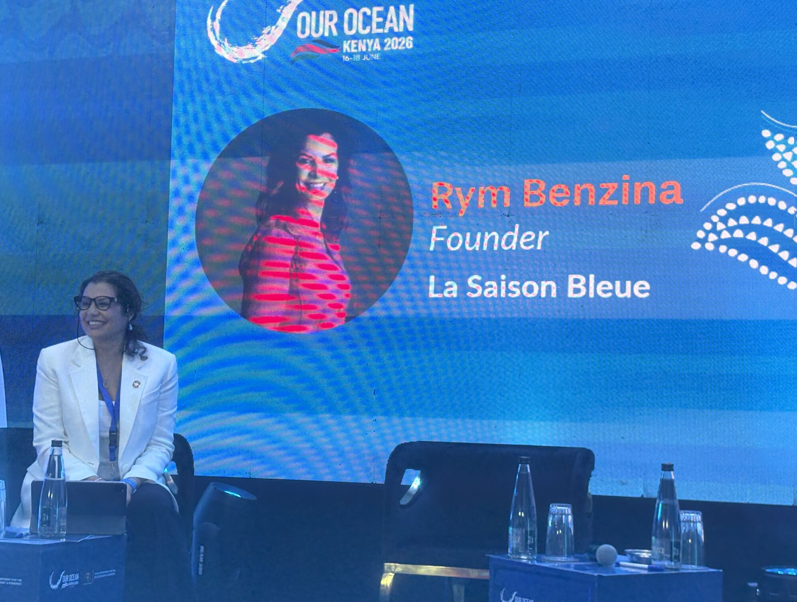
As Chair of La Saison Bleue, I was delighted to speak at this side event of the 11th Our Ocean Conference, « Investing in African Women to Evolve African Seafood and Aquaculture, » held on June 16, to share these crucial issues.
The barriers are not about talent but about structure: « These are structural problems, » says Astrid Bergmål (State Secretary for International Development, Norway). Across Africa, women are already proposing concrete and sustainable solutions—local processing of seaweed (Stella Paul Kileo, Seamoss from Zanzibar by Care Cove), valorization of waste into omega-3 oil and fish leather (Daniela Nairita, YARSI Aquacycle), and « impact accounting » to include nature in the balance sheet (Antoinette Vermilye, SHE Changes Ocean).
As I said, « Women are not motivated by the exploitation of resources; they are committed to preservation. »
Women Actions For The Ocean (WAO) connects women from around the world who offer tried, tested, scalable and innovative solutions, sharing proven approaches and practical answers to protect and restore the ocean.
At the Blue Africa Summit, through the Africa Blue Compass (ABC) — a continental “compass” anchored in science, civil society, the blue economy and finance, as well as governance — we are highlighting female leadership, strengthening local solutions and aligning investments and policies for a truly inclusive and sustainable blue future.
Voices from the ground matter: Maarten Derksen (Stichting DOEN) and Mercy Thomas Ndunguru (MTI Investment) remind us that financing must be tailored (repayable grants, flexible debt, guarantees, long-term support) — many blue economy businesses still receive little support, and women often request less funding due to multiple pressures. Farah Obaidullah (The Ocean and Us) urged breaking down silos and building cross-sectoral platforms that support women on the ground in accessing public policy and leadership positions, so that local solutions reach decision-making spaces.
Key figures to keep in mind: according to the FAO, cited by Olivier Poivre d’Arvor, only 27% of workers in the primary sector are women (compared to 56% in the processing sector). While progress has been made, significant gaps remain in technical and port-related roles. In conclusion, he reminded us: “Never give up.” The momentum is definitely there for women in the ocean sector, and it is our collective responsibility to translate this momentum into concrete actions.
My reservations and call to action:
• Place women at the center of decision-making and funding.
• Invest in local capacity: training, market access, and local transformation.
• Deploy blended finance mechanisms with sustainable support.
• Reduce the burden of care through concrete policies and partnerships so that women have time to lead.
Join WAO / Africa Blue Compass or contact me. Let’s transform visibility into capital, markets, and policies that empower ocean women to thrive, building resilient communities and a healthy ocean.
With sincere thanks to Hatch Blue, Shamim Wasii Nyanda and Cristina Tebar Less.