
The 2026-2027 Budget places the blue economy among the five strategic pillars of the country’s development, with the ambition to better enhance marine resources while strengthening food security. Among the announced measures is the creation of an International Center for Ocean Studies (ICOS) within the University of Mauritius. The government is also planning incentives to support fish production, including the development of fish barries, the deployment of intelligent fish concentration devices, and the strengthening of the semi-industrial fleet.
Particular attention is also paid to industrial tuna fishing, which is considered an important lever for growth. In the same dynamic, artisanal fishermen will benefit from support to facilitate their transition to higher yield fishing areas. Calls for expressions of interest will also be launched for the development of 28 aquaculture areas, including 20 in the lagoon and eight outside the lagoon, as well as six barachois. This initiative aims to diversify local production and strengthen the supply of seafood.
However, despite these announcements, the fishing community believes that the measures do not fully meet the expectations of the sector. Judex Rampaul, spokesman for the fishermen’s union, indicates that professionals are waiting for the announced incentive measures, but judges that the first proposals have not sufficiently taken their recommendations into account. He recalls that, in a letter sent on April 28 to the Prime Minister, the Mauritius Offshore Fishermen Cooperative Federation, in collaboration with the Fishermen Trade Union Movement, had set out the difficulties encountered by professionals whose livelihoods depend directly on the sea.
The sector, according to them, continues to deteriorate in a context marked by international pressures and persistent internal fragilities. Geopolitical tensions in the Middle East disrupt several links in the chain, affecting fuel delivery, maritime trade, certain food imports and, in turn, prices on the local market.
An emergency support mechanism
Beyond these cyclical factors, the actors in the sector evoke persistent structural constraints: difficulties in accessing financing, increased maintenance and renewal costs for boats, declining profitability for cooperatives operating on the high seas, as well as increasingly unpredictable climatic conditions.
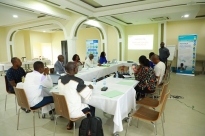
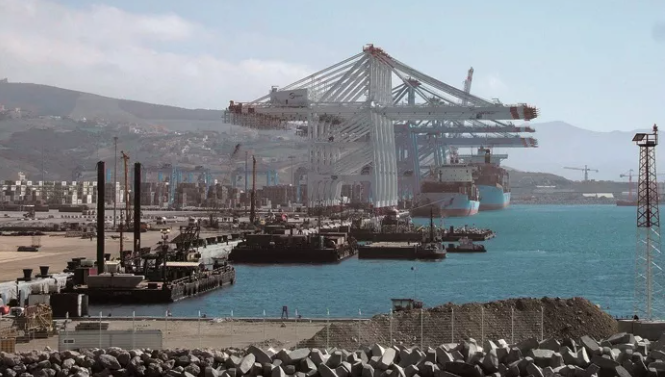
Fishermen’s representatives therefore call for the establishment of an emergency support mechanism that can be activated in the event of an international shock. They also stress the need to strengthen the capacity of the local fleet and improve port infrastructure, while calling for increased support for local production in order to reduce dependence on imports. They insist on the need for a framework for regular consultation with the authorities, as well as on a simplification and decentralization of administrative procedures.
The spokesman for the fishermen’s union says: « We are calling for decentralization. The fishing community must also be given the opportunity to contribute to the management of the sector. We could also have contributed to the training to strengthen the capacity of semi-industrial boats. Training is essential. Fishermen are in difficulty and the price of fish remains high while we are surrounded by the sea. The sector must be developed in order to be able to supply fish at an affordable price to consumers, while creating jobs. »