
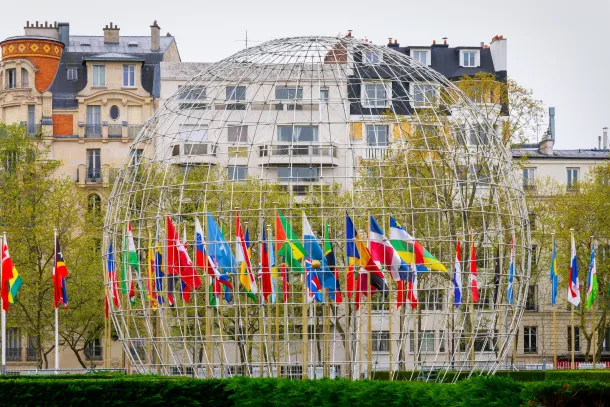
The meeting brought together IOC Member States to review progress across the Commission’s programmes and agree on priorities and governance arrangements for the coming year.
The 59th session of the Executive Council of the Intergovernmental Oceanographic Commission (IOC) of UNESCO concluded on 3 July 2026, after 3.5 days of deliberations, adopting a series of decisions and resolutions aimed at advancing global ocean science, strengthening early warning systems, improving ocean observations and data-sharing, and supporting implementation of the Agreement on Biodiversity Beyond National Jurisdiction (BBNJ). The session brought together Member States, observers, experts and partners to address some of the most pressing challenges facing the ocean and the communities that depend on it.
Throughout the session, delegates reaffirmed the central role of IOC as the United Nations’ specialized body for ocean science, ocean observations, tsunami warning systems, ocean data exchange, capacity development and ocean literacy. Discussions reflected the growing need for international cooperation to address climate change, biodiversity loss, sea-level rise and increasing pressures on marine ecosystems.
Progress across IOC programmes
The Executive Council reviewed developments across several of IOC’s core programmes and mechanisms. Member States discussed the ongoing reform of the Global Ocean Observing System (GOOS), progress in implementing the Global Sea Level Observing System (GLOSS) Implementation Plan 2026–2030, and efforts to build a more integrated IOC data architecture to improve access to and interoperability of ocean data. Delegates also examined collaboration with the World Meteorological Organization (WMO) through the Joint WMO–IOC Collaborative Board, particularly in the areas of ocean observations, forecasting services and data exchange.
The session also highlighted continued advances in tsunami warning and mitigation systems. Member States welcomed progress in strengthening regional warning capabilities, expanding preparedness efforts through the UNESCO-IOC Tsunami Ready Recognition Programme, and enhancing coordination to support coastal resilience and disaster risk reduction.
In addition, the Council welcomed progress in the joint work of the IOC Groups of Experts on Capacity Development and Ocean Literacy, encouraging continued collaboration while recognizing the importance of maintaining ocean literacy as a dedicated area of work within the Commission and strengthening links with broader UNESCO initiatives.

IOC – UNESCO
Contributing to the implementation of the BBNJ Agreement
A significant item on the agenda was the implementation of the Agreement on Biodiversity Beyond National Jurisdiction (BBNJ), which entered into force earlier this year. The Executive Council reviewed the work of the IOC Working Group on BBNJ and recognized the Commission’s technical expertise and experience in ocean data, information systems and capacity development.
Member States supported IOC’s engagement as a technical partner in advancing the development of the Clearing-House Mechanism under the Agreement, and emphasised the importance of ensuring consultations with IOC Member States on future IOC contributions to this process. The Council also encouraged voluntary financial and in-kind support for IOC’s engagement and endorsed continued participation in preparations for the first Conference of the Parties to the Agreement in 2027.
Celebrating scientific excellence
The session also featured the Roger Revelle Memorial Lecture, delivered by Professor Philip Woodworth, who was presented with the IOC Roger Revelle Medal in recognition of his outstanding contributions to sea-level science and oceanography.

Vidar Helgesen, Executive Secretary of IOC, Prof.Philip Woodworth, Yutaka Michida, Chair of IOCIOC – UNESCO
A session marked by collaboration
Closing the meeting, the Chair noted that the Executive Council had considered 19 agenda items and benefited from three side events, five regional information meetings and nine meetings of sessional committees and drafting groups. Delegates expressed appreciation for the leadership of Executive Secretary Vidar Helgesen and the work of the Commission’s experts, officers and Secretariat.
As the session concluded, Member States reaffirmed their commitment to strengthening international cooperation in ocean science and to advancing the collective action needed to achieve a healthy, resilient and sustainably managed ocean for future generations.
Looking ahead to 2027
The Executive Council agreed on arrangements for future governance meetings, including preparations for the 34th session of the IOC Assembly, which is expected to take place at UNESCO Headquarters in Paris from 28 June to 2 July 2027. Member States also discussed arrangements for an extraordinary session of the Executive Council in January 2027 as part of the consultation process related to the appointment of the next IOC Executive Secretary.
source : unesco