
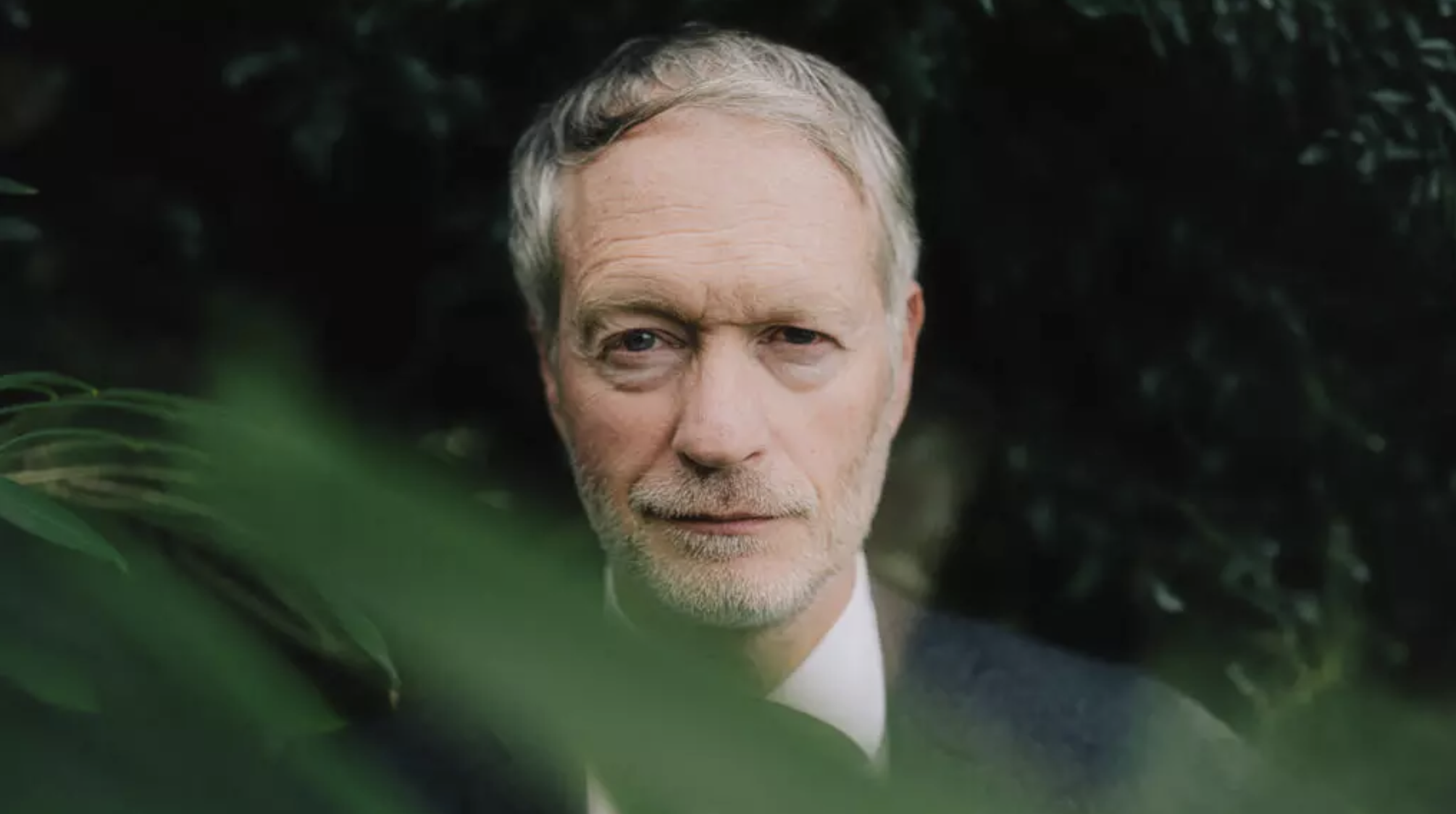
A biologist with a precise verb and a formidable pedagogy, Marc-André Selosse is not in the nuance when it comes to biodiversity. In his latest essay, De la biodiversité comme un humanisme (Seuil, 2026), the professor at the National Museum of Natural History demonstrates, with supporting figures, that the disappearance of the living is already very expensive. And that if politicians do not make it a priority, it is first of all because citizens allow it.
In January, the British intelligence services MI5 and MI6 published an alarming report on the collapse of global ecosystems such as the Amazon, boreal forests, mangroves, the Congo basin… A report that Keir Starmer’s government had initially refused to publish, considered « too negative« . Does it surprise you?
Marc-André Selosse: Not really. We can castigate politicians for a carelessness that is beginning to be worrying, but they have an excuse: they are trained in political, sociological, commercial schools, where it is believed that life does not exist. They haven’t met a biologist for ages. But above all, they reflect their time. It is a general, systemic indifference. Politicians are just sending us our own image.
However, the cost of inaction is already very high…
It’s not me who says it, it’s the French Court of Auditors, last September: every euro invested in the ecological transition saves three in the long run. If we do nothing, it will be 11.2 points of GDP less in France by 2050. And American economists have just shown that environmental degradation since the 1980s has already erased twenty points of GDP worldwide. Twenty points that no one has seen disappear! It’s a money story, that’s all. For example, in East-Central France, in Burgundy, blackcurrant producers must now raise osmia, pollinating insects themselves, because wild insect populations have fallen by 98% in forty years in this region. We manage to increase production, but at a higher cost. We are putting patches because we no longer have the services that biodiversity rendered free of charge.
Can you define biodiversity, which is not limited to whales, tigers and other mammals that we love?
It’s infinitely more than that. In addition to three million animal species and half a million plant species, the planet is home to between 30 and 100 million species of fungi, hundreds of millions of species of bacteria, billions of virus species. Biodiversity is also the genetic diversity within species, their ability to adapt to the world to come. And the diversity of ecosystems, landscapes. But there is something that we almost always forget: biodiversity also lives in us. Our microbiota has as many cells as our own body: 10 trillion! Between 5,000 and 10,000 species of microbes per human being. Put 100 people in a room, you also gather 50,000 species! These microbiota make our health, regulate our metabolism, support our immune system, influence our mood. However, in our highly Westernized societies, this microbiota is one to three times less rich in species than that of our ancestors. And some of the diseases of modernity (diabetes, obesity, Alzheimer’s, Parkinson’s, asthma, allergies…) find there one of its causes.
We are experiencing the sixth mass extinction of biodiversity. In your book, you nuance this observation.
We are only at the beginning. Since the appearance of man, the speed of extinction of animals has been multiplied by at least 5000, that of plants by 500. We lost 5% of the species of vertebrates, 7% of the mollusks. Nothing comparable yet to the end of the Permian [-252 million years], when 95% of the species had disappeared. But where it is really worrying is the loss of genetic diversity. When numbers decrease (and they decrease: 80% of insects have disappeared in thirty years in Europe, 30% of birds in fifteen years, 70% of vertebrates in fifty years on a global scale) we amputate the species of their adaptability. It is in this genetic diversity that the individuals potentially capable of surviving after a new pesticide, after a degree more at the thermometer, after microplastics, hide. By destroying it, we weaken life in depth. And the process is already running 100,000 times faster than in previous extinctions.

A bumblebee, a pollinating insect, passes from one poppy to another, in a field in front of Frankfurt (Germany), in May 2024. AP – Michael Probst
You give a striking example of the link between biodiversity and human health: Lyme disease.
Yes and he reverses intuition. Human populations are less affected by Lyme disease where mammal diversity is greater.
The mechanism is as follows: ticks transmit the Borrelia bacterium responsible for Lyme only if they have previously stinged a contaminated rodent. The fewer species of mammals (sign of environmental degradation) the more rodents proliferate. The probability that the tick that bites you first bit a contaminated rodent is mechanically increasing. The presence of squirrels reduces the contamination rate by 60%: contaminating rodents dilute in the mass.
The examples of this type are legion. In American counties where bats have disappeared, farmers use 31% more insecticides. Result: infant mortality increased by 8%, due to malformations at birth and juvenile cancers related to pesticides. When biodiversity disappears, it is health that disappears with it.

A tick warning sign in an undergrowth. Getty Images/iStockphoto – 24K-Production
Among the threats you list are the next generation GMOs, NTGs (New Genomic Techniques). The European Union seeks to deregulate them(1). Are you up to it?
I even refuse the term NTG. It’s smoking. They are GMOs, period. We have created a legal category, GT2 plants, which, because it is called differently, escapes the legislation on GMOs. But they are GMOs! We are replayed the same scenario as twenty years ago: in Brazil, in the United States, we were promised that GMOs would eradicate hunger in the world and reduce pesticides. The result was exactly the opposite: seeds resistant to Roundup, and an increasing use of pesticides.
Today we are told that this time it is different, that the techniques are great, that there are no more side effects. This means that the previous ones that we had been sold as great… had side effects? And those who told us yesterday that there was no problem ask us today to trust them again. I say no.
Especially since we can do otherwise: in France, multi-resistant vines to powdery mildew and mildew, obtained by classic crossings, without genetic manipulation, make it possible to divide the use of pesticides by six to eight. I want that!
Behind GMOs, there is the question of who controls seeds. Three groups – Corteva, Bayer and Limagrain – concentrate a considerable share of world production.
And this concentration translates directly into public policies. Look at the Reach regulation, this European text that was supposed to drastically limit the use of dangerous chemicals. It was postponed sine die under pressure from Bayer and BASF. Recently, the European Commission has reversed the deadlines for the implementation of good chemical practices in cosmetics. It doesn’t stop. I’m not talking about an abstract environment, I’m talking about our direct, daily health. And somewhere, citizens admit too passively that they are sold anything. That’s precisely why I write books: because I don’t think people are stupid. Please, worry about all this!
Your book is called Biodiversity as a humanism. This is a provocative formulation since humanism usually places the human being at the center of everything. By associating it with biodiversity, you seem to say that defending the living also means defending the human.
This is a necessary formulation. We have this strange idea that defending biodiversity is defending whales against humans, nature against the economy. No. Maintaining biodiversity is maintaining human activities. Mackerel fishing, the traditions of fishermen, their cultural identity, their livelihoods, all depend on fish stocks. The European Union procrastinated on quotas, the United Kingdom and Norway refused to reduce their catches by 70% as the scientific data required to save stocks.
And the consequences do not stop at the European coasts: on the African coasts, canoes become migrant boats, because there is nothing left to fish, often because of European companies. Cultural heritage is not independent of natural heritage. Biodiversity is not an environmentalist’s luxury. This is the foundation of everything else.
source : RFI