

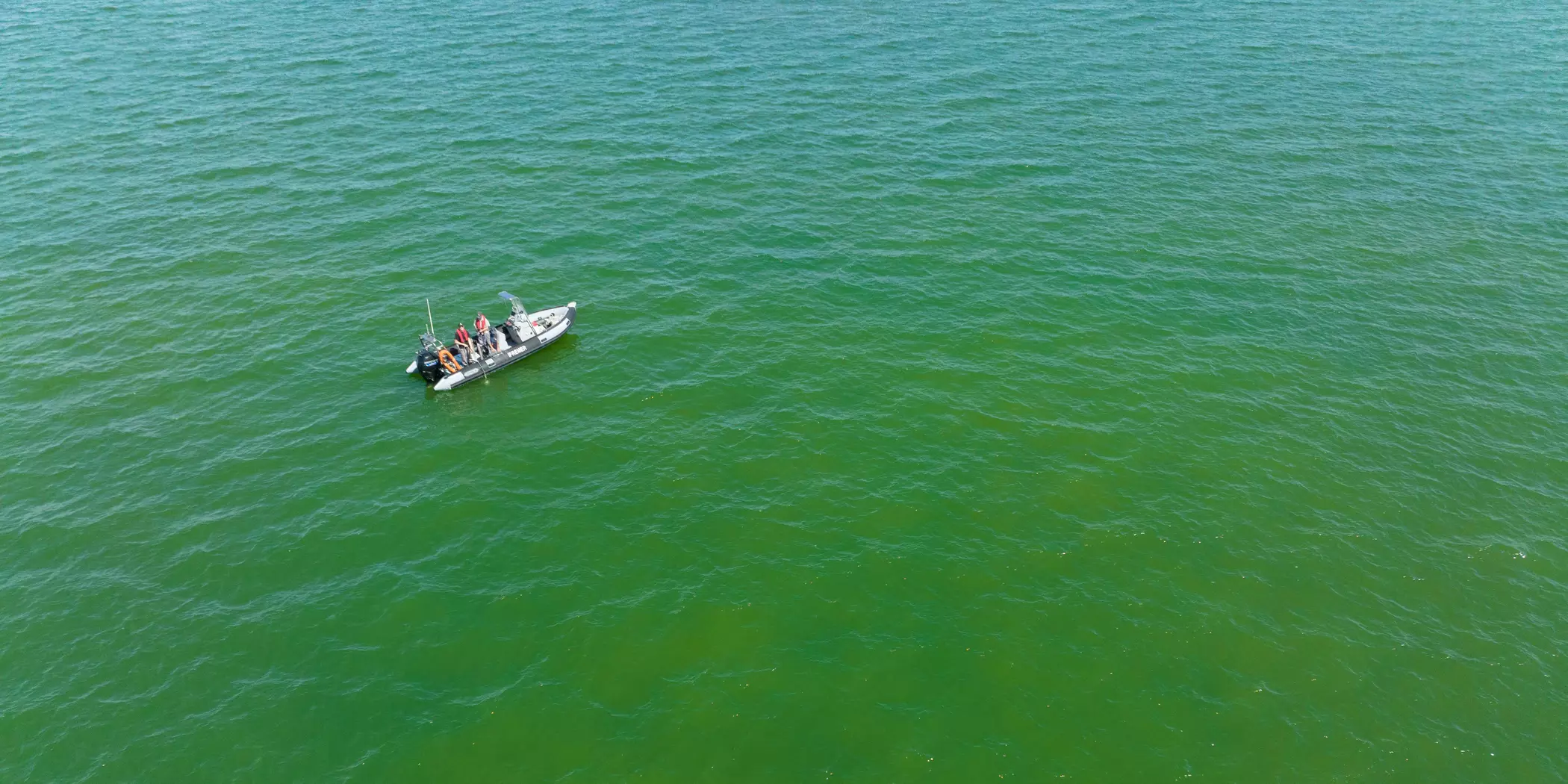
The Phenomer participatory science program is taking a new step. With Phenomer 2.0, the monitoring of microalgae proliferations on the French coast is now enriched with an alert system based on satellite imagery. Thanks to this new feature, citizens can be informed of the possible appearance of colored waters in progress near their homes and contribute directly to field observations. A major advance to improve the detection of phytoplankton blooms and better understand these natural phenomena.
Observe phytoplankton blooms
Under certain favorable conditions of light, temperature or availability of nutrients, phytoplankton can multiply rapidly. These microscopic organisms then form massive proliferations, called « blooms », sometimes visible to the naked eye when they color the sea or make it bioluminescent.
Natural, these blooms are nevertheless subject to close monitoring. Some may have impacts on marine ecosystems, aquaculture or recreational activities. When they become frequent or unusual, they can also indicate environmental imbalances.
For several years, the Phenomer program has allowed citizens to report these phenomena by transmitting photographs and the location of the colored waters observed. These reports effectively complement existing scientific surveillance devices, including REPHY, the Phytoplankton and Phycotoxin Monitoring Network, coordinated by Ifremer. A study conducted in 2020 showed that nearly 60% of the efflorescences reported via Phenomer would not have been detected otherwise.
A new alert tool thanks to European satellites
The main novelty of Phenomer 2.0 is the implementation of an alert tool based on the European satellites Sentinel-2 and Sentinel-3 of the Copernicus program.
This tool based on an artificial intelligence model was developed by scientists from Ifremer and the ISOMer laboratory of Nantes University specialized in the detection of phytoplankton blooms by satellite imagery. It makes it possible to estimate the probability of the appearance of these phenomena based on observations of colored water already identified and on the measurements of chlorophyll carried out daily by Sentinel satellites.
Maps of the probability of appearance of phytoplankton blooms are thus published every day on the Phenomer website.

© Phenomer, Ifremer/Nantes University
Users can consult them and also subscribe to alerts by e-mail or via the Phenomer application to be informed of these events in their geographical area.
They are then invited to go to the field to confirm the observation of the bloom, take pictures and, if possible, take water samples.
This new device strengthens the involvement of citizens and improves, thanks to the complementarity between satellite data and participatory science, the responsiveness and coverage of surveillance throughout the metropolitan coast.
A major scientific discovery in Concarneau Bay
The summer of 2024 marked a turning point for the Phenomer program. Following an episode of colored water observed in Concarneau Bay, samples taken as part of the system made it possible to identify a new class of phytoplankton, so far unknown.
This scientific discovery, made possible thanks to the mobilization of participants and the responsiveness of the observation network, is currently the subject of a scientific publication being finalized.
It fully illustrates the importance of participatory science in strengthening surveillance capacity and contributing to the advancement of knowledge on marine biodiversity.
source : ifremer