
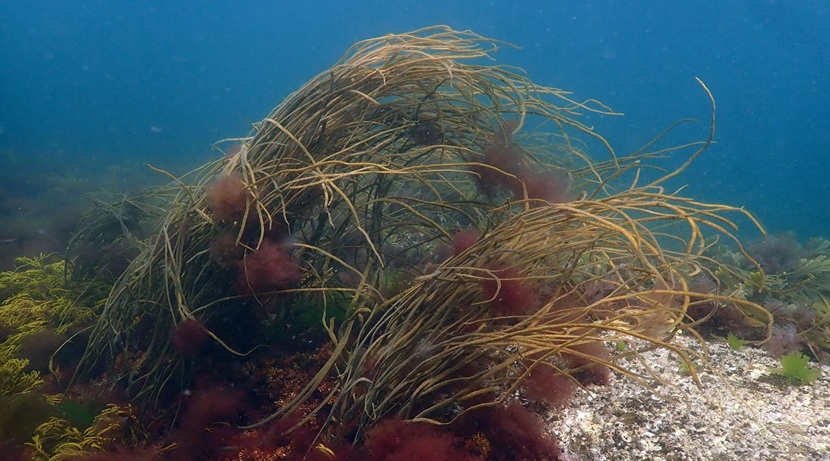
France is the second largest European algae producer. Its production reaches about 70,000 tons per year, according to the Ministry of Agriculture. However, this figure comes almost entirely from the harvest in a natural environment. Algoculture, i.e. controlled algae cultivation, remains marginal on the territory. It represents only a few hundred tons per year in Brittany. However, this region concentrates the first French production of algae, all modes combined.
An overwhelming Asian dominance on the global market
Globally, algae production reached 38 million tons in 2022. This volume comes from 97% of aquaculture, according to a recent Unced report. The United Nations Conference on Trade and Development documents this concentration. Asia alone produces 97% of this world’s production of cultivated algae. China largely dominates with 60% of the total, followed by Indonesia with 25%. This concentration limits market resilience and marginalizes other continents. Only 0.75 million tons were traded internationally in 2022. The vast majority of algae therefore remain consumed on Asian national markets.
ECO-POL
Moreover, this dominance is also explained by decades of massive public investment. The Chinese and Indonesian authorities structured their cultivation channels very early on. They benefit from favorable weather conditions and reduced labor costs. Faced with these assets, European producers struggle to compete on prices. Asian imports remain significantly cheaper than local production.
Persistent regulatory and land barriers in France
Secondly, access to the maritime public domain is a major obstacle for project leaders. Any operation at sea requires a specific concession, governed by the Rural Code. These procedures remain long and complex for new entrants to the sector. The General Council for Food, Agriculture and Rural Areas, or Cgaaer, studied this brake. His 2022 mission conducted about fifty interviews with the actors in the sector. It also highlights economic and technological barriers, in addition to regulatory difficulties. Finding an adapted maritime space remains particularly difficult in the face of recurring storms. Sheltered and accessible coastal areas remain rare on the French coast.
Finally, the public authorities are trying to structure a response to these blockages. A national roadmap for the algae sector was presented. It is based on the government’s « Aquacultures of the Future 2021-2027 » plan. This text aims to support supply, stimulate demand and strengthen European cooperation. Potential opportunities remain numerous, between human food and industrial bio-refining. This second use enhances compounds of interest for cosmetics and pharmacy. For the moment, however, France remains far from its ambitions displayed on this file.
Varied outlets but still little exploited
On the industrial level, the potential uses of algae remain numerous and promising. Human food is the most visible outlet for French consumers. Algae also enter the manufacture of texturing agents, such as food gelling agents. Cosmetics and food supplements also exploit certain molecules extracted from cultivated algae. However, these opportunities remain largely dominated by low-cost Asian imports.
In addition, several European projects are trying to strengthen this nascent sector. The Biotecmar network, funded by European funds, supports SMEs on the Atlantic façade. It aims to transfer marine biotechnologies to French, Spanish and Portuguese companies. However, this cooperation remains modest given the scale of Asian investment in the sector.
Finally, climate change could reshuffle some cards in the coming years. Global warming in coastal waters threatens some species of wild algae in Brittany. This pressure could paradoxically encourage the further development of controlled cultivation. Growing in land-to-land ponds provide more accurate control of environmental conditions. This option remains expensive, but it limits the risks associated with marine storms. For French players, the challenge is now to transform these constraints into industrial opportunities.