
For 455 days, five species of marine sponges lived on the dike of a Catalan port. Only one resisted and even multiplied by cloning in these polluted waters.
At the end of July 2026, the Blanes Advanced Study Center publishes in Frontiers in Marine Science its experimental results at the heart of this Catalan marina. The Mediterranean sponge tested resists it for more than a year, where four other species die. These port areas are among the most damaged coastal sectors. The experimental site remains occupied by boats twelve months out of twelve. However, restoring marine life there is rarely crowned with success.
Forty-two marine sponges faced for 455 days to a Catalan marina
Manuel Maldonado and Carlota Escarré begin by collecting their animals around Blanes. The duo then raises the specimens on a ceramic plate, in several tanks containing 500 liters of seawater. These supports are then installed on several metal grids covered with a layer of calcium carbonate, fixed against the submerged dike of Marina Palamós. Underwater cameras and image analysis software then make it possible to regularly measure the extent.
In four species, the experiment is short. Corticium candelabrum dies in the laboratory before its arrival at the port. Once transplanted, Crambe crambe, Scalarispongia scalaris and Ircinia oros gradually decrease. None exceed 165 days, while some losses occur from the twentieth day. This contrast with the next sponge then becomes very sharp.
A species survives and even ends up creating clones
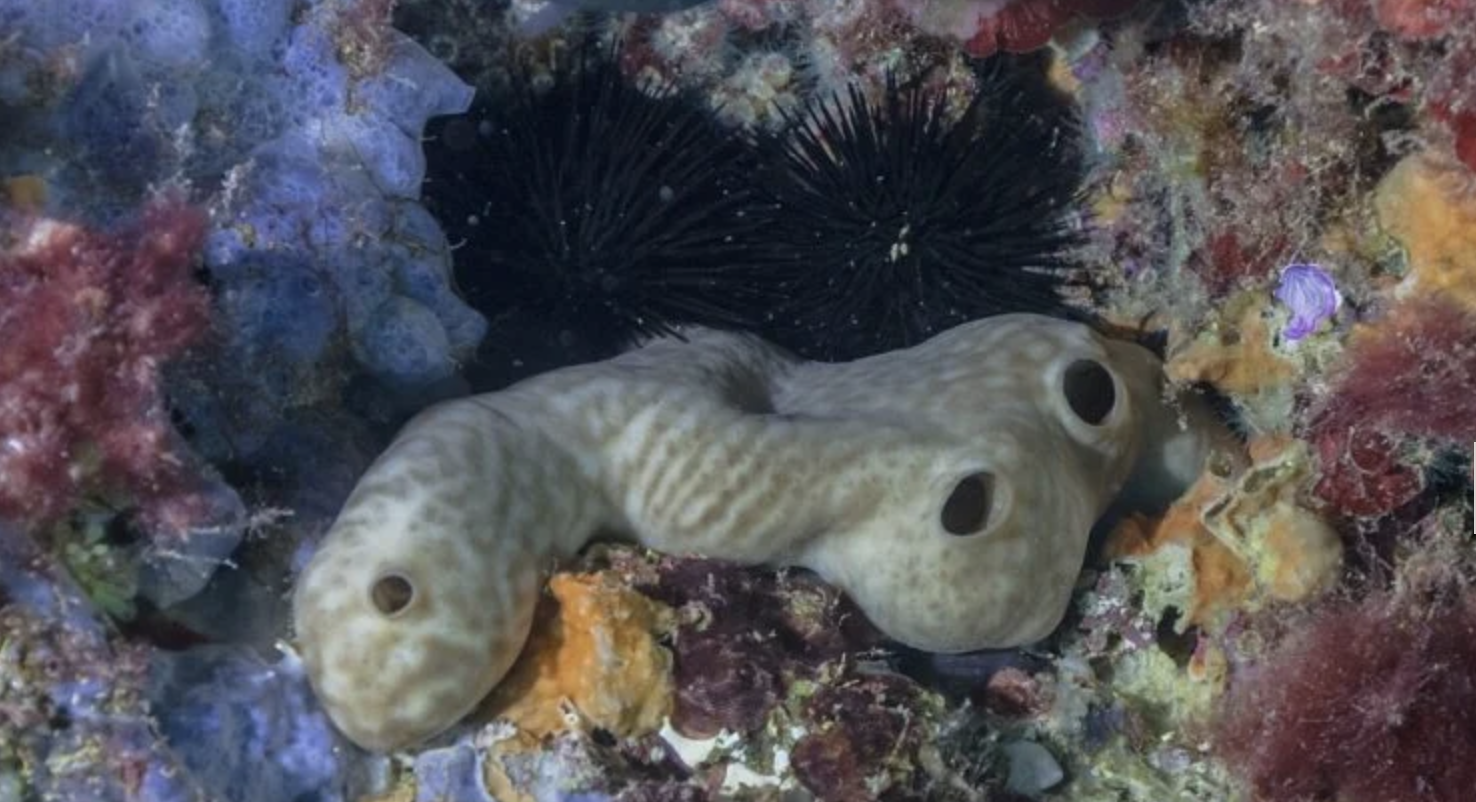
Chondrosia reniformis is an exception with 91.7% survival after 455 days. At the end of the observation, twenty-two specimens among twenty-four remain alive. Many first shrink during the first few months, before their dimensions stop changing. No growth therefore appears within the marina, but these sponges manage to maintain themselves there.
Seven specimens go further, until they multiply. Their body lengthens, then two parts appear, temporarily joined by a thin strip of tissue. When this bond breaks, the fission releases a clone that can be established a few centimeters from the parent. Chondrosia reniformis managed to reproduce alone in this port basin, without human assistance.
Another unusual faculty in a fixed animal, this sponge knows how to crawl. Its movement on the substrate remains very slow, but allows it to reach a less exposed place if its environment deteriorates. Its tissues also house an important microbial community. According to the team, this microbial community could cooperate with its filtering system, a hypothesis that scientists wish to deepen.