
Fixing simple recycled plastic bottles on fishing nets has reduced accidental dolphin catches in Brazil by 88%, according to a study published in the journal Marine Mammal Science. The evaluation focused on 318 fishing trips conducted between 2020 and 2025, comparing classic nets to nets equipped with these empty bottles.View moreFishingRecycledBook An Outing
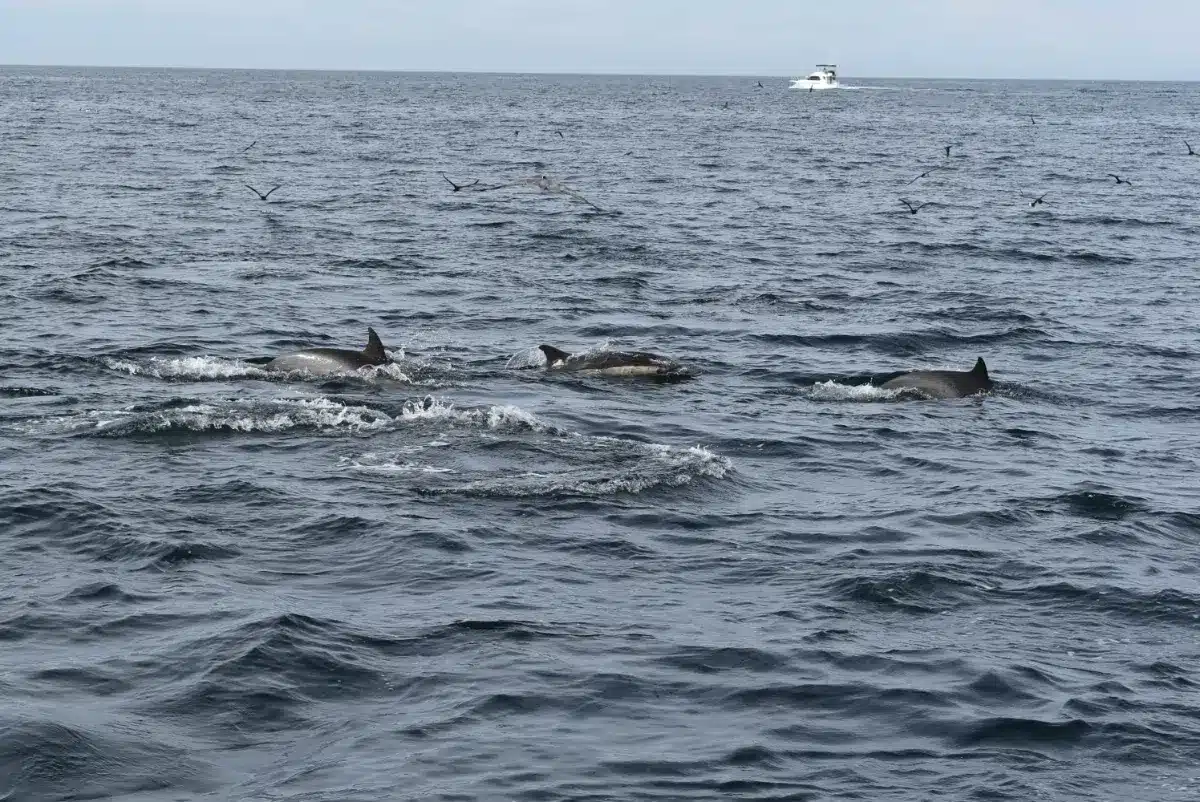
Another fact that weighs in the balance sheet: commercial catches of fish remained almost stable during this period. The measure did not therefore harm the profitability of fishermen. The first beneficiary of this scheme, the Franciscana, a coastal dolphin classified Vulnerable by the International Union for Conservation of Nature, has seen its population decline for decades because of these nets.
A first Brazilian test, conducted between 2020 and 2022, had already set the tone: zero dolphins caught in modified nets, compared to four in conventional nets. The gap was not considered statistically significant in the absence of a sufficient number of cases, but the trend was clear, and the weight of commercial fish was even higher in nets equipped with bottles.
A bottle of air that betrays the net
The principle is based on acoustics. A nylon net reflects very little sound and remains almost invisible to a dolphin that navigates by echolocation, that is to say by emitting clicks and listening to their echo. On the contrary, the air enclosed in a closed bottle reflects a much more intense echo.
In the laboratory, a single bottle is enough to make a net 100 to 1,000 times more detectable by this means. The glass bottles used in some tests contain screws inside, which produce additional sound when moving.
The idea comes to Per Berggren, professor emeritus of marine megafauna conservation at the School of Natural & Environmental Sciences at Newcastle University. He got it by observing the accumulation of plastic and glass bottles on beaches frequented by fishing communities. « This is really recycling that saves dolphins, » he summarizes.
Faced with pingers, these electronic devices already used to warn cetaceans by acoustic signals, the researcher’s argument is that of the cost. Pingers remain inaccessible to thousands of small-scale fishermen, while recycled bottles require no battery or expensive maintenance.
A system that doesn’t work everywhere
However, the method did not produce the same effects elsewhere. In Peru and Zanzibar, Tanzania, the bottles did not reduce the capture of dolphins, porpoises, or sea turtles. In Zanzibar, tuna capture has even increased with plastic bottles.
The explanation is due to the sound environment. Near the surface, waves, wind and human activity create ambient noise that prevents the echo of the bottle from being sufficiently distinguished. In deeper and calmer waters, such as in Brazil, dolphins are more dependent on echolocation, which makes the system much more efficient.View moreObtain PolymersFollow The TechPlastics
The researchers draw a blunt conclusion: there is no universal solution, each marine environment imposing its own conditions.
The team is now extending its tests to Cambodia and the Republic of Congo, to check if the technique adapts to other nets, other species and other oceanographic conditions. These new land was selected directly following the results obtained in Brazil.
FAO has been promoting for years the improvement of fishing gear to limit the impact on protected species, a framework in which this type of low-cost device could find its place with communities that have not yet had access to more expensive technologies. Per Berggren himself describes it as a simple solution.