

The American state has just announced the establishment of two new marine protected areas, the first whose creation was directly carried by Native American tribes. These « underwater natural parks » limit fishing activities in order to preserve marine ecosystems.
California has just taken a new step in protecting its coastline, while the federal government, under Donald Trump’s control, is multiplying attacks on the environment and supporting oil companies wishing to develop underwater drilling off the coast.
The Fish and Game Commission approved on Thursday, October 15, 2026, the creation of two new marine protected areas off Point Sal, in San Luis Obispo County, and Carpinteria, in Santa Barbara County. The state has also strengthened or expanded two already protected areas, Point Dume and Pyramid Point.
The two areas each cover about 23 km².
This decision is the first major modification to the California network of marine protected areas since its completion in 2012. It should make it possible to better preserve some particularly rich habitats, while the waters of the Pacific are facing warming, episodes of marine heat and the decline of several species.
According to marine biologist Douglas McCauley of the California University of Santa Barbara (UCSB), quoted by the Los Angeles Times, the Carpinteria area is considered an « oceanic oasis ». The latter points out that it is home to an important growth area for young white sharks, as well as nurseries of leopard sharks and rays.Facebook and Instagram limited to 2 hours a day for minors in the United States: should France follow the American example?
In total, these new measures bring to 22.2% the proportion of California coastal waters now enjoying conservation status, compared to 21.9% previously. About 6,000 additional hectares are thus integrated into the system. The goal set by the State of California is to reach 30% of protected coastal waters by 2030, as part of the « 30×30 » program
The two new areas are classified as « State Marine Conservation Areas ». Their regulations are intended in particular to limit sampling activities in order to allow marine ecosystems to develop with less human pressure. Commercial fishing from a boat is therefore now prohibited, as is sport fishing from a boat. On the other hand, fishing from the line and hook remains authorized under certain conditions, while specific provisions concern tribal uses.
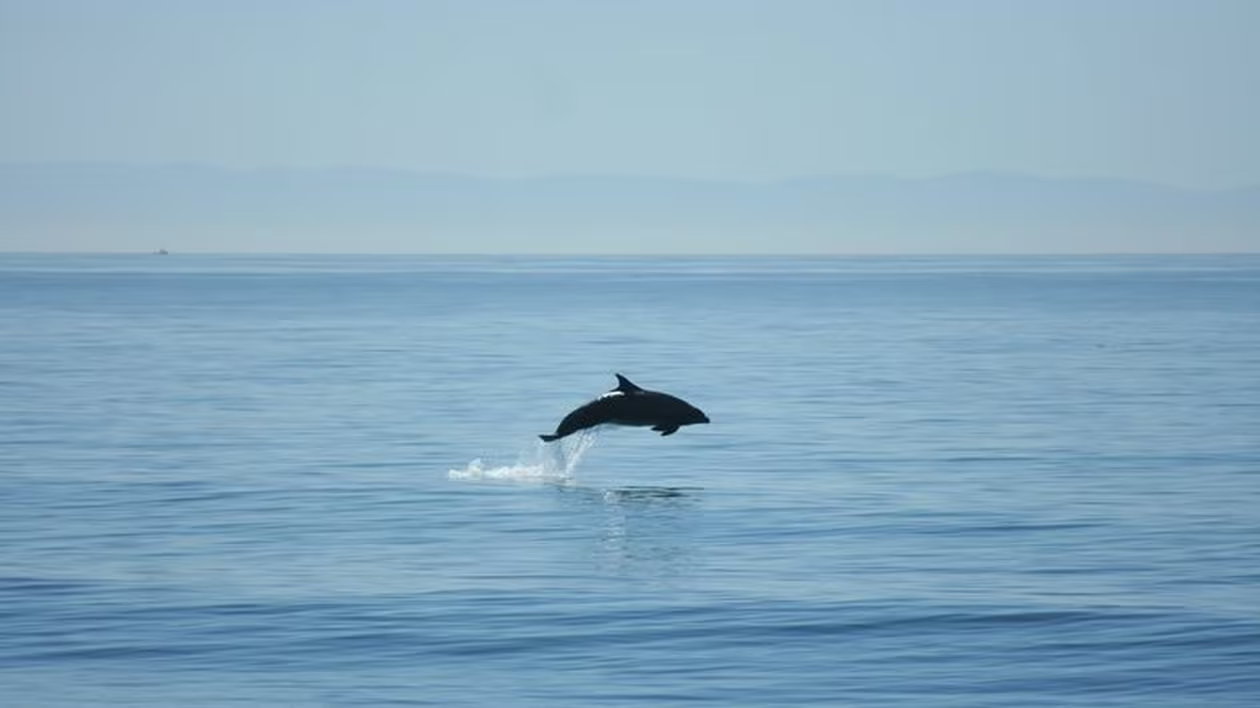
In Carpinteria, the new conservation area, called Mishopshno (Amerindian word, designating an ancient and coastal city of the Chumash indigenous people, N.D.L.R.), includes a rocky reef and a kelp forest considered one of the most persistent in the area. The documents submitted to the Commission also highlight the importance of this area for several marine species, including sharks and dolphins.
The Point Sal sector is also of particular ecological interest. Its configuration favors in particular the presence of fish and invertebrates at the larval stage, while the surrounding coastline hosts many seabirds and mammals. Protection must thus contribute to maintaining ecological continuity between different protected areas of the central coast.
The creation of Mishopshno and Point Sal was proposed with the participation of two branches of the Chumash Native American tribe, which will participate in the management of these reserves. That of Carpinteria will be provided by the Santa Ynez Band of Chumash Indians, while that of Point Sal will be the responsibility of the Northern Chumash Tribal Council.
Preserve biodiversity
The decision comes after several years of review of the California network. The law imposes an evolutionary management of marine protected areas in order to modify their regulations according to the evolution of scientific knowledge and the state of ecosystems.
However, the process was not unanimous within the state agencies. The California Department of Fish and Wildlife had recommended not to create the two new zones and to address the issue of tribal management separately. The Ocean Protection Council, for its part, had recommended their approval, believing that these areas had a particular ecological value and could strengthen the coherence of the existing network.
The issue of fishing also weighed in the discussions. Official documents acknowledge that certain commercial and recreational activities are currently being carried out in the sectors concerned. For Mishopshno, however, the evaluation of the proposal indicates that the area represents a limited share of the catches made in the fishing sector concerned. The project’s promoters also believe that the protection of certain habitats could, in the longer term, promote the reconstitution of populations and benefit neighbouring fishing areas.
Beyond these two sites, the reform includes the expansion of the marine protected area of Point Dume, near Malibu, in order to integrate more kelp forest. In Pyramid Point, on the north coast, the measures also strengthen the protection of declining fish populations while maintaining some traditional samples.
For the Californian authorities, this evolution therefore responds to a double challenge: preserving marine biodiversity and making the existing network more resilient to the rapid changes in the ocean. The system is now based on 124 marine protected areas spread along the coast, to which are added these new measures.
However, California is still far from its 30% target. The new protections represent a limited increase in area, but they mainly mark an evolution in the way the state intends to manage its marine heritage: by strengthening the connections between protected areas, by relying more on scientific knowledge and by involving coastal communities more closely in their management.


