
The Panama Canal broke its freight record over the past year, with 521 million tons of goods transported between October 2025 and September 2026. The maritime corridor took advantage of the postponement of tankers that were to transit through the Strait of Hormuz. However, the drought caused by El Niño changes the prospects.
The Panama Canal broke its annual record for freight traffic, due to a war-strenched Strait in the Middle East, and despite the decline in maritime traffic due to the drought caused by El Niño, its managing agency told AFP on Tuesday.
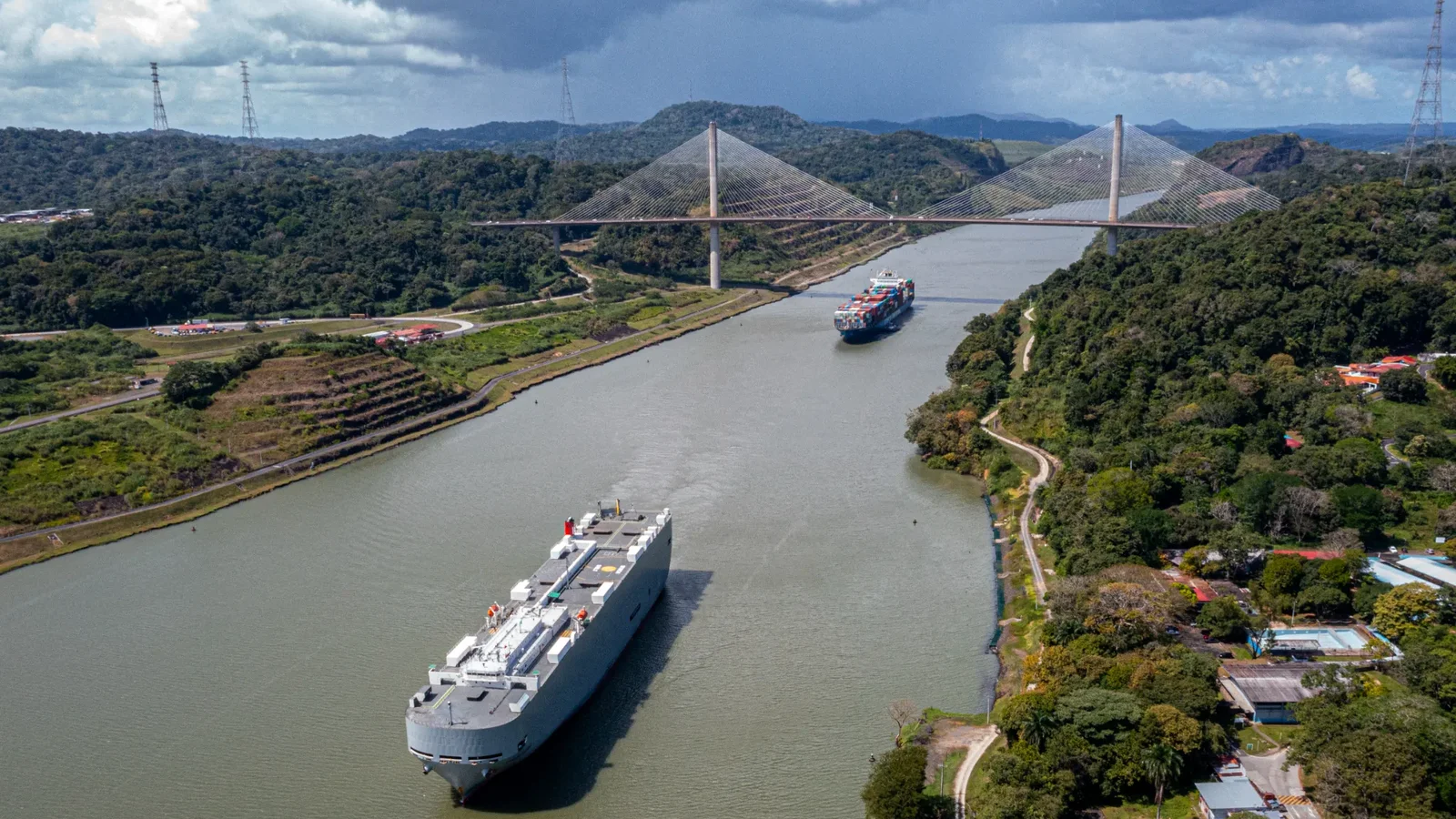
Some 521 million tons of goods were transported across the Panama Canal over the last fiscal year (from October 1, 2025 to September 30, 2026), aboard nearly 14,000 ships, according to data from the Panama Canal Authority (ACP). This is 3 million more than in 2022, the year of the previous record. The United States and China are the main users of this 80km long track through which, according to estimates, 5% of world maritime trade passes.
This time, throughout the year, the canal recorded a « boom » in maritime traffic due to traffic difficulties in the Strait of Hormuz, canal director Ilya Espino de Marotta told AFP. Indeed, the corridor increased the number of daily transits from 36 to 41 « for a certain time » after the start of the war in the Middle East at the end of February, in order to facilitate the passage of ships seeking a secure alternative to the transport of hydrocarbons, she said.
Reduced traffic since September due to El Niño
This increase cushioned the subsequent reduction in the number of crossings that the Central American Canal had to implement due to the lack of rainfall. The waterway works thanks to the fresh water stored in two artificial lakes, whose level has dropped due to the drought caused by the El Niño climate phenomenon.
Therefore, since the beginning of September, the number of daily crossings has been gradually reduced, from 36 to 32, before being reduced to 33 thanks to an increase in rainfall. The Canal Authority (ACP) has also begun to reduce the draft of the ships – the depth of the boat under the waterline – from 15.24 to 14.63 meters. The impact of El Niño was « really » only felt during the last four months of the fiscal year, assured Ilya Espino de Marotta.
For each boat, it is indeed necessary to pour about 200 million liters of fresh water. This water « is the most important resource for the exploitation » of the canal, but « between April and August, the cumulative rainfall deficit stood at 35.8% below the historical average, » said Erick Cordoba, head of hydrometeorology for the canal, in September. And there is « no sign of improvement in the short term, » he warned.
« If we can’t fill the lakes in November, we’ll have to tighten our belts, » warned former canal administrator Jorge Quijano, interviewed by AFP.
According to the Panamanian government’s forecast, the 2027 dry season, usually between January and April, will begin earlier and will last until May, which could lead to further restrictions.