
Kinshasa, capital of the Democratic Republic of Congo, is preparing to host the second edition of National Climate Week. Focused on the opportunities offered by the carbon markets, this meeting aims to make the natural resources of the Democratic Republic of Congo a lever for financing sustainable development while guaranteeing concrete benefits for local communities and indigenous peoples
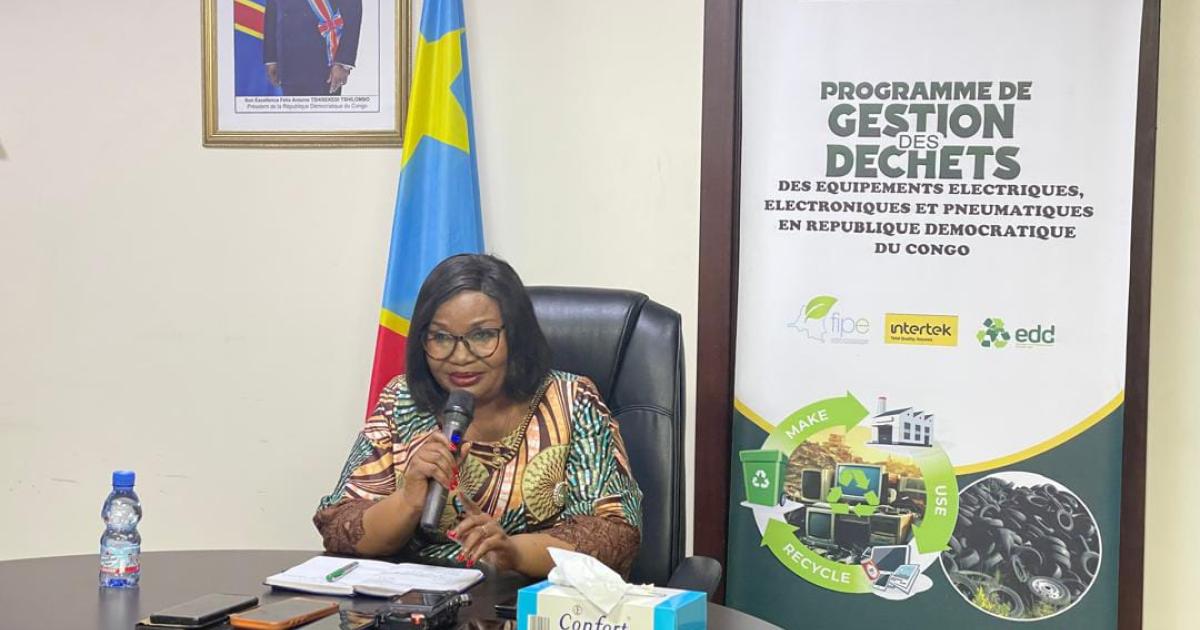
It is in this context that the Government of the Democratic Republic of Congo intends to take a new step in the economic enhancement of its natural heritage. From Monday 26 to Friday 30 October 2026, the Cultural and Artistic Center for Central African Countries, in Kinshasa, will serve as the framework for the second edition of National Climate Week, under the theme: « The Democratic Republic of Congo in the era of the development of carbon markets: opportunities for all and future prospects ». The announcement was made on Thursday, October 22, 2026 by Professor Marie Nyange, Minister of the Environment, Sustainable Development and the New Climate Economy during an exchange with the press in the facilities of her ministry
This second edition, according to the guardian ministry, is intended as a framework for consultation between national and international actors committed to the fight against climate change. It aims in particular to promote effective environmental policies, strengthen the sustainable management of renewable natural resources and contribute to improving the living conditions of Congolese populations, particularly those of local communities and indigenous peoples.
Carbon markets at the heart of national priorities
For Minister Marie Nyange, this meeting is an opportunity to raise awareness of the various stakeholders of the reforms undertaken by the government, particularly in the field of carbon market regulation
« We will use the second Climate Week to popularize the legal instruments we have been able to produce, including the legal regimes of the carbon market, » she told the press during her speech
The Minister also stressed the need to strengthen dialogue between public institutions, technical and financial partners, the private sector, civil society and communities directly concerned with the management of natural resources.
« I therefore worked to first set up a permanent dialogue framework, which is Climate Week, with all the actors, in order to reflect on the roadmap to be presented to international bodies, especially at the COP, » she explained
According to the Minister, provincial Environment Ministers, coordinators, provincial directors, representatives of local communities, Aboriginal peoples and international organizations are expected to be at these meetings. The exchanges will focus on the progress made by the country, the challenges to be met and the strategies to be implemented to strengthen the contribution of the DRC to the global fight against climate change
COP31, an opportunity to defend the interests of the DRC
Beyond national issues, Climate Week will prepare Congolese participation in the 31st United Nations Climate Change Conference (COP31), scheduled from 9 to 20 November 2026 in Antalya, Turkey. Asked about the priorities of the DRC at this international event, Marie Nyange clearly announced a strategic orientation focused on carbon markets and the mobilization of climate financing
« I think that, for the DRC, this time, we will focus on carbon markets, » she said
According to the minister, this orientation is part of the continuity of the efforts and steps undertaken at COP30 in Belém, Brazil, where the DRC had highlighted its ecological potential and its contribution to global climate regulation. She also mentioned the diplomatic advances made by the country, including the prospect of chairing the Congo Basin Forest Partnership and the agreement with Brazil around the TFFF initiative, designed to support forest preservation for the benefit of local communities and indigenous peoples.
« We will therefore work at COP31, in Antalya, to realize these results and, above all, to mobilize international actors to support our carbon market, which we will launch soon, as soon as the carbon register is put in place, » she said
For the government of the DRC, the challenge is to transform the country’s international commitments and ecological potential into financial resources that can support ecosystem conservation and socio-economic development
The « Light » register to ensure the traceability of carbon credits
Among the main reforms presented by the minister is the establishment of a legal framework to organize the Congolese carbon market. Marie Nyange explained that the DRC now intends to have a sovereign mechanism to record carbon projects, monitor them and guarantee the transparency of transactions
« Today, we were able to provide the country with a carbon market law, which we call the legal regime of the carbon market. It is a very important instrument that will help the state set up the sovereign carbon register, » she said
This register, called « Light », should allow the Congolese authorities to monitor carbon projects developed on national territory and to control the sales and transfer of carbon credits. Explaining the choice of this name, the minister referred to a statement by the President of the Republic, Félix-Antoine Tshisekedi Tshilombo: « Darkness will not reign forever over Congo. «
« We therefore have today a sovereign register called « Lumière ». Thanks to him, all projects will be registered. And thanks to him, we will sell and transfer all carbon credits transparently, » she assured
The system also provides for measurement, reporting and verification mechanisms, commonly referred to by the acronym « MRV », in order to strengthen the reliability of carbon credit data and improve project monitoring
Local communities at the center of revenue sharing
The issue of the redistribution of profits from the carbon markets plays an important place in the reforms announced by the ministry. For this member of the government led by Prime Minister Judith Suminwa Tuluka, the enhancement of forests, peat bogs and other ecosystems must contribute not only to the protection of the environment, but also to the improvement of the living conditions of the populations who depend on it. In this regard, Marie Nyange announced that a share of the income from the sale of carbon credits should go back to local communities
« In this sale, local communities will be entitled to at least 20%. Decentralized territorial entities will have their percentage, provinces will have their percentage, structures that help the state perpetuate forests will also have their percentage, and so on, » she said
This orientation, according to her, aims to reconcile conservation imperatives with the requirements of social justice and economic development. It also responds to a recurring concern of the DRC: ensuring that populations living in contact with forest ecosystems can concretely benefit from efforts to preserve these resources. The effective implementation of this mechanism, its transparency and respect for the rights of beneficiaries will be decisive issues for the credibility of the future Congolese carbon market
Forests, peat bogs and water resources: a strategic heritage
Continuing her speech, the minister-in-chade recalled that the DRC has a major natural heritage, the preservation of which contributes to the global climate balance. The country is home to a significant part of the forests of the Congo Basin, huge expanses of peat bogs and considerable freshwater resources. According to data advanced by the minister, the DRC owns 62.58% of the forests of the Congo basin, 50% of the freshwater of Africa and more than 75% of the peat bogs of the Congo basin
« Despite all these resources, the country had not seized this opportunity before Félix-Antoine Tshisekedi Tshilombo, » she said, underlining the authorities’ desire to make this heritage a lever for financing national development
The minister also highlighted the role of peat bogs in carbon storage and the contribution of ecosystems in the Congo basin to climate regulation. According to her, the valorization of these resources is thus among the central issues of the new climate economy, which seeks to mobilize financing for conservation and to create mechanisms to better pay for services rendered by nature.
The Congolese Water Office, another funding lever
On the sidelines of the carbon markets, the government also intends to promote the economic valorisation of the country’s water resources. Marie Nyange announced that the recently established Congolese Water Office should occupy an important place in the strategy defended by the DRC at COP31
« At COP31, we will promote this Office, because it will also be an important and strategic tool for our country, so that we can draw financial resources from our waters, » she said.
The minister insisted on the need to transform Congolese water potential into financing opportunities for the benefit of the country and its populations. The promotion of this new institution is part of a broader approach aimed at diversifying the financing mechanisms for conservation and sustainable development, beyond only the carbon markets
« This water flows, it flows, it flows, and the country has never drawn a single dollar from these resources, » she lamented during her speech
The first edition of National Climate Week in the Democratic Republic of Congo was held from 27 to 30 October 2025. This first edition allowed the DRC to prepare for the COP30 held in Brazil.