

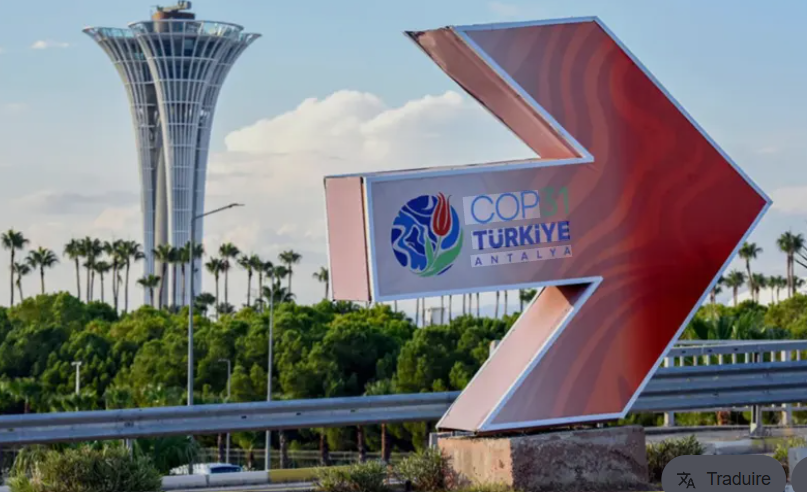
Antalya, the main city of the Turkish Riviera, located on the southern coast of Turkey on the Mediterranean Sea, hosts, from November 9 to 20, 2026, the 31st United Nations Conference on Climate Change (COP31). A new edition of the climate negotiations held in a context marked by the worsening climate impacts, tensions in energy markets and the expectations of developing countries regarding the implementation of international commitments.
For African countries, including Senegal, several issues will naturally be at the heart of the discussions. These include, among other things, issues related to the financing of adaptation, the energy transition, access to affordable energy, trade and the resilience of coastal areas.
1. Climate financing: Africa calls for concrete commitments
The African Group of Negotiators (AGN) wishes to place at the heart of the discussions the implementation of the objective of tripling funding for adaptation by 2035, as well as the role of the Green Climate Fund.
The publication on 4 November of the new report of the United Nations Environment Programme (UNEP) on the financing deficit for adaptation strengthens the attention paid to this issue.
These discussions are particularly important for Senegal, facing in particular the challenges of coastal erosion, floods and the vulnerability of agriculture to climate change.
2. Energy transition: how to accelerate the exit from fossil fuels?
COP31 will have to examine ways to advance the transition to energy systems that are less dependent on fossil fuels.
Several meetings are planned, including an event dedicated to this transition on November 10 and a high-level dialogue on November 11.
For Senegal, these discussions are part of a context of diversification of the energy mix, the development of renewable energies and the search for a balance between energy security, climate ambitions and economic development.
3. Electrification: towards new global commitments
Electrification will be among the important topics of COP31, including an initiative aimed at a global electrification rate of 35% of final energy consumption by 2035.
Discussions will focus on the necessary investments in renewable energy, electricity networks and energy infrastructure.
These issues meet the priorities of many African countries in terms of universal access to electricity, affordable energy and industrial development.
4. Trade and green industrialization: growing challenges for African economies
The African Group of Negotiators also proposes to put trade issues on the agenda of climate negotiations.
The evolution of international climate policies raises important questions regarding the competitiveness of African economies, investment in clean technologies and the possibilities for the development of new industrial sectors.
For Senegal, these discussions echo national ambitions in terms of green industrialization and economic transformation.
5. Oceans and coastal resilience: better consideration in negotiations
A coalition of more than 100 countries calls for strengthening the integration of the oceans in the implementation of the Paris Agreement, particularly in terms of adaptation, financing and emission reduction.
Discussions could lead to new initiatives on the protection of marine ecosystems, clean shipping and the resilience of coastal communities.
These issues directly concern Senegal and other countries on the West African coast, which are particularly exposed to coastal erosion and rising sea levels.


