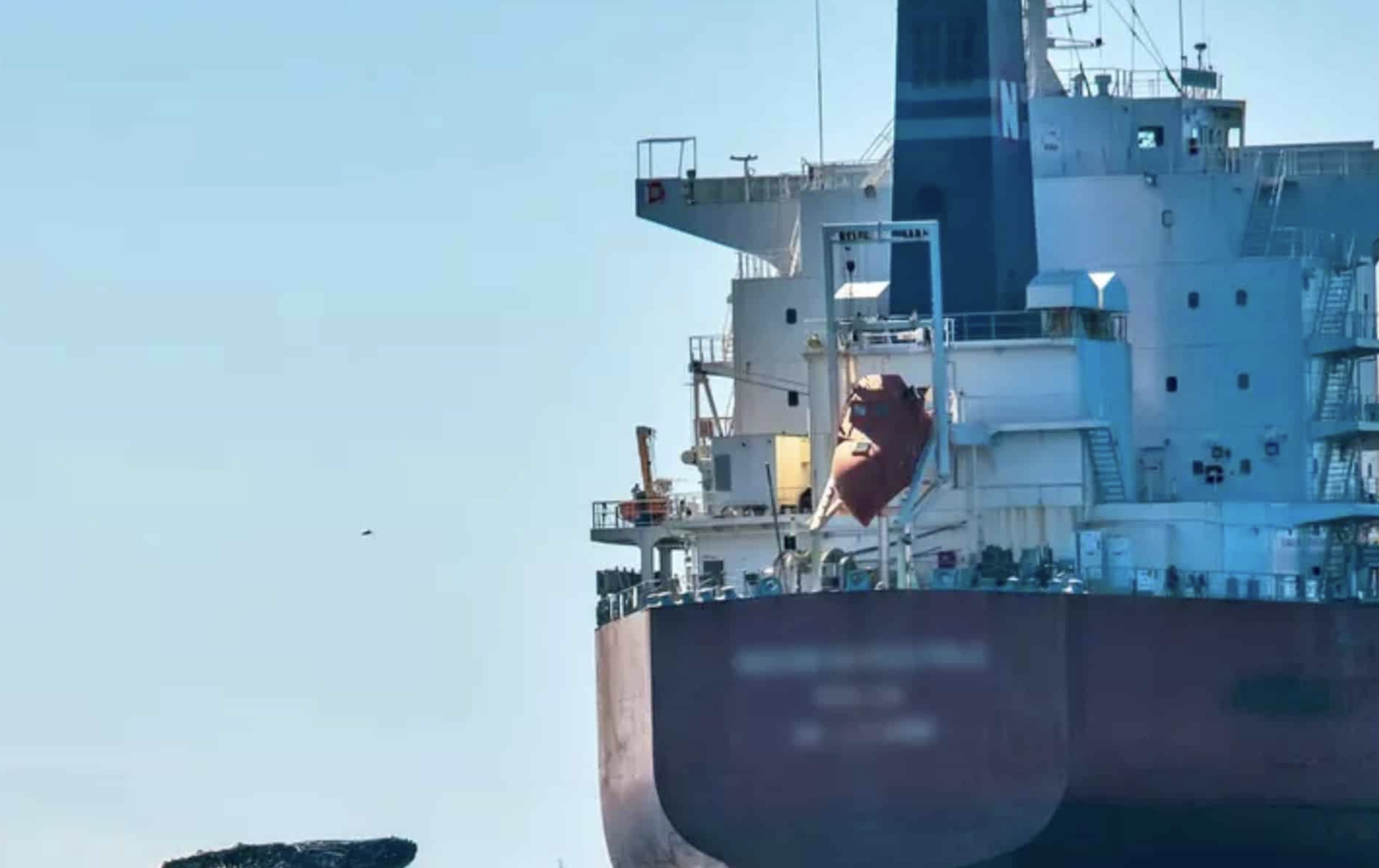
Thousands of miles from the Middle East, South African whales are suffering the indirect consequences of the conflicts. Diversion of maritime traffic out of the Red Sea increases the risk of collisions between large cetaceans and merchant ships.
The diversion of maritime traffic to South Africa
Since the end of 2023, tensions related to the conflict in the Middle East have severely disrupted maritime traffic in the Red Sea. To avoid the Suez Canal, many companies choose to bypass Africa by the Cape of Good Hope.
This reorganization of global trade routes has led to a sharp increase in maritime flow off the coast of South Africa. According to data from PortWatch, a maritime traffic tracking tool developed by the International Monetary Fund (IMF), 89 commercial ships took this route daily between March 1 and April 24, 2026, compared to 44 over the same period in 2023.
However, the South African coasts are an important area for several species of whales. Among them: Southern right whales, humpback whales and rorwhales, which migrate, feed or reproduce there.
Faced with the increase in maritime traffic in these waters, researchers from the University of Pretoria have assessed the risks for whales. Their conclusions were presented in May before the International Waling Commission.
Increased risk of collisions with cetaceans
To measure the effects of diversion of maritime traffic, the researchers analyzed the overlap between new routes taken by ships and areas frequented by several species of whales off the coast of South Africa.
The report led by researcher Els Vermeulen concludes that there is a sharp increase in the risk of collision between whales and ships. Sailors also reported the presence of cetaceans as close as possible to ships, scenes sometimes relayed on social networks.
Collisions with ships are among the leading causes of human activities-related death in large cetaceans. However, the phenomenon remains difficult to quantify, because many incidents go unnoticed or are never reported.
Margins for action to limit impacts
The researchers talk about the possibility of adjusting sea routes in the most frequented areas by whales in order to reduce the risk of collision, without greatly changing the organization of commercial traffic.
The protection of the oceans cannot be dissociated from global economic and political dynamics. They call for better consideration of the increase in maritime traffic, in order to reduce the risk of collision for whales.
Information with independent and free media is a necessary guarantee for a democratic society. We offer you free access articles on a daily basis because we believe that information should be free to all. If you want to support us, the sale of our books finances our freedom.
source : la releve et la peste