

No one lists the foundations when they describe their house, but nothing holds without them.
On the other side of the Pacific, we see the villages, the houses, the community rooms and the gatherings around the tanoa. Under all this is the ocean. Culture, identity and subsistence are all based on her. It is the fish on the table, the road between the islands, but above all, it is the history of the origins of the people.
When world leaders met in the Pacific earlier this month for pre-COP31, the conversation focused on maintaining the 1.5°C reach, improving access to climate finance, and valuing the Pacific’s voices and leadership.
The other axis of interest: raising the ocean agenda.
What is now on this agenda is changing, partly thanks to the entry into force this year of the Agreement on Biodiversity Beyond National Jurisdiction (BBNJ).
Governments and partners are questioning how the ocean is governed, managed and protected both within and beyond national jurisdiction. And although climate negotiations often focus on emissions and adaptation, Pacific leaders recognize that the future of ocean governance is essential to maintaining the resilience, prosperity and security of the Blue Pacific.
Much of the discussions around the BBNJ focused on marine protected areas, environmental impact assessments and the protection of biodiversity on the high seas. But considering the agreement only from a conservation point of view may miss a broader history on the future of the governance of our oceans.
The agreement is therefore much more than just a conservation initiative. This is an attempt to strengthen the collective management of the largest shared domain in the world.
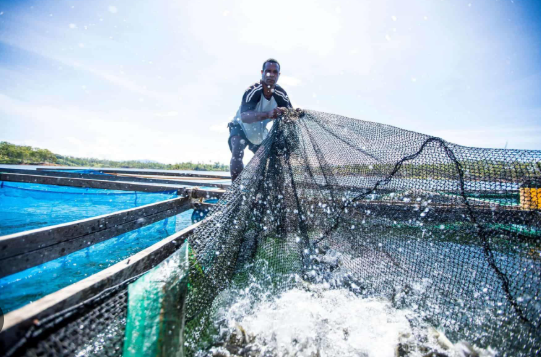
For the Pacific, few examples illustrate this as clearly as tuna. The western and central Pacific Ocean provides more than half of the world’s tuna catches, making this region a central part of the world’s fishing and food systems. For many Pacific island countries, tuna supports government revenues, employment and national development priorities.
Through the Parties to the Nauru Agreement, the Forum Fisheries Agency and regional fisheries management arrangements, the Pacific countries have demonstrated that cooperation can strengthen responsible management, improve management and increase the value of shared marine resources.
BBNJ does not replace these arrangements, but it should learn from them.
As discussions progress on management tools based on marine areas and future protected areas beyond national jurisdiction, attention is being paid to practical issues of surveillance, compliance and supervision. How will activities in these areas be monitored? Who is responsible for reporting violations? What information sharing arrangements will be needed? Which States have the competence to act when rules are broken? These are fundamentally governance issues, but they also involve important security dimensions.
The relationship between BBNJ and security is often assumed rather than explained. The agreement is frequently discussed in parallel with concerns about illegal fishing, maritime crime and growing competition for ocean resources. However, BBNJ is not primarily a security tool. Its importance lies in the strengthening of governance conditions that support maritime security through greater transparency, cooperation and collective supervision of activities beyond national jurisdiction.
As the geopolitical interest in the ocean increases, the link between governance and security will become increasingly important. Competition for marine resources, ocean science, emerging technologies and strategic influence are already shaping the way the ocean is governed. In this context, the agreement strengthens cooperative approaches to a vast global common good, proposing shared rules and expectations at a time when ocean requirements are testing existing arrangements.
For the Pacific island countries, these implementation challenges are familiar. The region has long been confronted with the practical realities of the governance of vast maritime spaces with limited resources. Yet it is precisely this experience that gives the Pacific a valuable voice in the way BBNJ evolves.
Before COP31 sent a strong signal that the oceans should be in the foreground during COP31. Pacific leaders and partners have launched a resounding call for climate action not to be dissociated from ocean action, given the crucial role of the ocean in regulating the Earth’s climate and the sustainability of peaceful communities.
A major result was Turkey’s commitment to work for an Antalya Ocean Declaration at COP31. The declaration is expected to strengthen the recognition of the ocean-climate link and support increased action on ocean climate solutions, reflecting a key Pacific priority.
Foundations rarely make headlines, until they crack. BBNJ is an attempt to strengthen one before he does.
For the Pacific, the next step is practical: ratification, preparation, as well as monitoring and data systems that transform shared rules into shared supervision.
UNDP is ready to support Pacific countries in this journey, from ratification and preparation to access to funding for implementation, working alongside the Forum’s Fisheries Agency, regional partners and the Global Environment Fund.
The region has spent decades proving that cooperation can govern a vast ocean. This experience should influence the way BBNJ works in practice.