
Central Africa intends to make its maritime resources a new engine of economic growth. Through the Sustainable Ocean and Blue Economy in Central Africa (ODEBAC) program, the European Union is mobilizing €42 million over seven years to support the development of sea-related sectors in six coastal countries in the region.
The system, implemented with the Economic Community of Central African States (EECAC), was at the center of the first session of its Strategic Guidance Committee, organized in Libreville on November 9, 2026. The aim of this meeting was to make it possible to define intervention priorities, to coordinate projects and to ensure their consistency with the economic strategies of the beneficiary States.
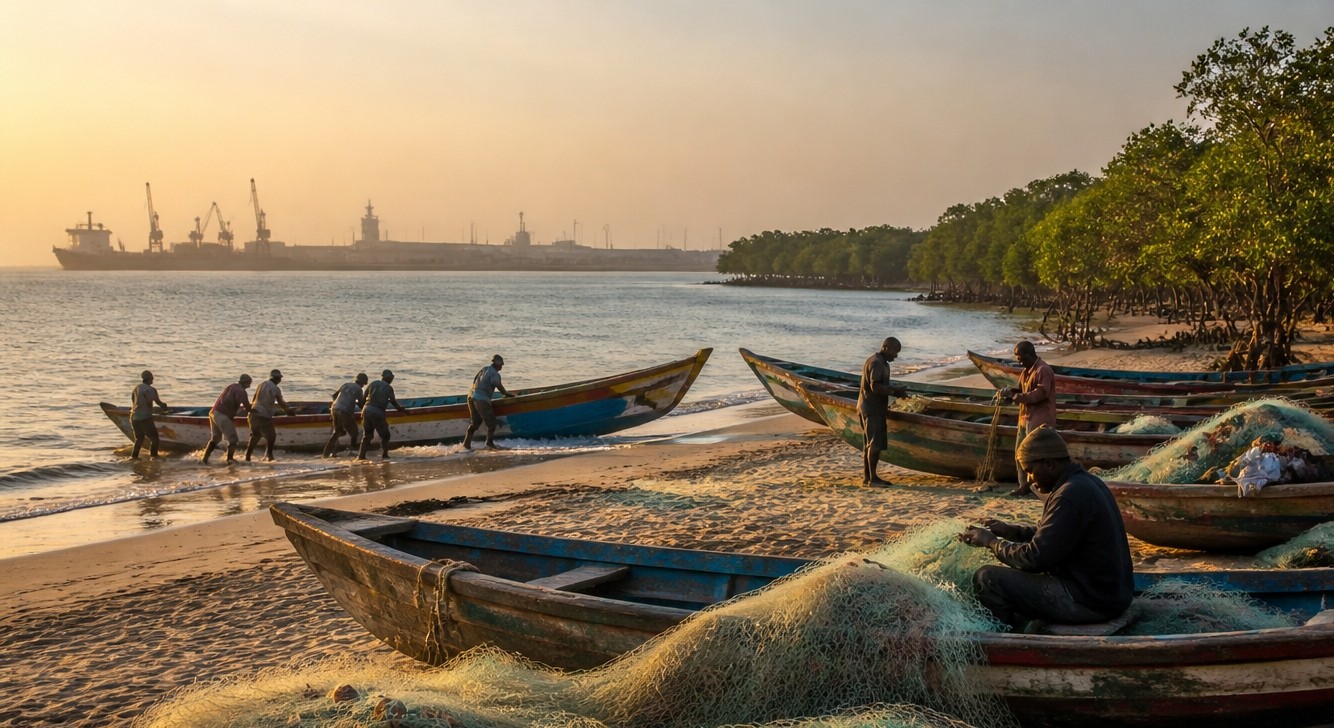
The program concerns Cameroon, Congo, Gabon, Equatorial Guinea, the Democratic Republic of Congo and São Tomé and Príncipe. It aims to strengthen economic activities related to marine resources, including fisheries, aquaculture, coastal tourism and related services. The objective is to better enhance the economic potential of maritime areas while preserving the resources on which local populations and businesses depend.
At the opening of the work, Barthélémy Ngoulakia, Secretary General of the Gabonese Ministry of the Sea, Fisheries and the Blue Economy, took part in the exchanges alongside Claudio Bacigalupi, Head of Cooperation in the European Union Delegation, and Maxime Nzita Nganga Di Mavambu Mba, Commissioner of the CEEAC in charge of the Environment, Natural Resources, Agriculture and Rural Development.
Multi-faceted partners
Operationally, ODEBAC relies on a portfolio of twelve projects led by several international and regional partners, including Expertise France, the Research Institute for Development (IRD), the French Development Agency (AFD), the FAO and the International Union for Conservation of Nature (IUCN). Regional technical assistance, installed in Libreville since July 2026, provides support for the coordination and implementation of the program.
The planned investments concern several segments of the maritime economy. They include the improvement of fisheries resources management, the fight against illegal fishing, the development of sustainable value chains and the restoration of coastal ecosystems. The protection of mangroves and marine areas must also help preserve the natural resources that support local economic activities.
For the economies concerned, the challenge is to go beyond the simple exploitation of resources and to develop sectors capable of generating more added value on the territory. This requires productive investments, adapted skills, infrastructure and a better organization of economic actors.
Promote coordination
As part of the European Global Gateway initiative, the programme is based on a regional approach, with the CEEAC responsible for promoting coordination between the six countries. This dimension is particularly important for activities such as fishing and maritime transport, which are at stake beyond national borders.
The economic scope of ODEBAC will ultimately be measured by its ability to attract more funding, strengthen local businesses and create sustainable jobs. The EUR 42 million is a first envelope. Their impact will depend on the quality of the projects financed and their ability to transform the maritime potential of Central Africa into wealth and sustainable economic activities.