
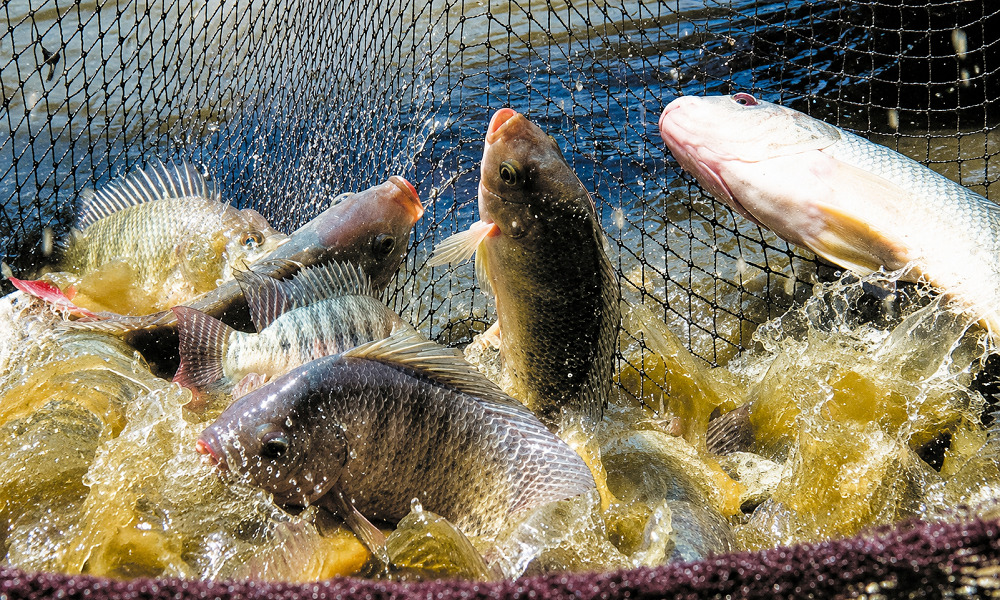
The country’s main source of animal protein, fish is at the heart of the cooperation agreement with Cairo. The goal is to increase the supply and meet growing needs.
After having requested Brazil’s expertise in meat, Côte d’Ivoire is now getting closer to Egypt to strengthen its offer of fishery products. At the end of June, the Ivorian Ministry of Animal and Fisheries Resources initialled in Cairo a memorandum of understanding with the General Authority for Fish Resources Development (GAFRD).
The text aims to intensify cooperation in the fields of fisheries, aquaculture and the protection of the marine environment, with a particular focus on the development of fish farming and the fight against illegal, unreported and unregulated fishing (IUU).
Recognized Egyptian know-how
With this rapprochement, the largest economy of the West African Economic and Monetary Union (WAEMU) hopes to make the most of the experience of the country of the pharaohs, which has established itself over the last decade as the leading producer of fish products in Africa. According to data from the US Department of Agriculture (USDA), total fish production in Egypt increased by 35%, from 1.48 million tons in 2014 to 2 million tons in 2023.
The country’s main source of animal protein, fish is at the heart of the cooperation agreement with Cairo. The goal is to increase the supply and meet growing needs.
After having requested Brazil’s expertise in meat, Côte d’Ivoire is now getting closer to Egypt to strengthen its offer of fishery products. At the end of June, the Ivorian Ministry of Animal and Fisheries Resources initialled in Cairo a memorandum of understanding with the General Authority for Fish Resources Development (GAFRD).
The text aims to intensify cooperation in the fields of fisheries, aquaculture and the protection of the marine environment, with a particular focus on the development of fish farming and the fight against illegal, unreported and unregulated fishing (IUU).
Recognized Egyptian know-how
With this rapprochement, the largest economy of the West African Economic and Monetary Union (WAEMU) hopes to make the most of the experience of the country of the pharaohs, which has established itself over the last decade as the leading producer of fish products in Africa. According to data from the US Department of Agriculture (USDA), total fish production in Egypt increased by 35%, from 1.48 million tons in 2014 to 2 million tons in 2023.
The country can also capitalize on its advances in the adoption of innovative water circulation systems and food efficiency with the use of extruded foods, more digestible and whose buoyancy allows better management of ration distribution and higher yields.
Significant fish needs
If the Ivorian authorities are betting on cooperation with Egypt, it is because the fisheries sector must grow to meet the rampant demand. According to data from the Food and Agriculture Organization of the United Nations (FAO), the country consumed 534,000 tons of fish in 2023, but produced only 92,000 tons.
Faced with this situation that sustains imports, the government has made aquaculture a national priority. In January 2022, the Strategic Aquaculture Transformation Program (PSTACI) was unveiled with the objective of bringing this segment’s contribution to approximately 500,000 tonnes per year by 2030.
This framework plan was then supplemented by a targeted roadmap on the development of tilapia. The objective set for this species is to increase production to 68,000 tonnes by 2031.
More recently last March, the Sustainable Aquaculture and Fisheries Competitive Value Chain Development Project (ProDeCAP) was launched in SanPédro for a period of five years. With a budget of 19 billion FCFA (nearly 29 million euros), the project is 85% co-financed by a loan from the African Development Bank (AfDB).
It aims to strengthen the governance and sustainable management of maritime, lagoon and continental fisheries, while boosting aquaculture and improving the competitiveness of value chains. In total, 700,000 people should benefit, directly or indirectly.
source : La tribune