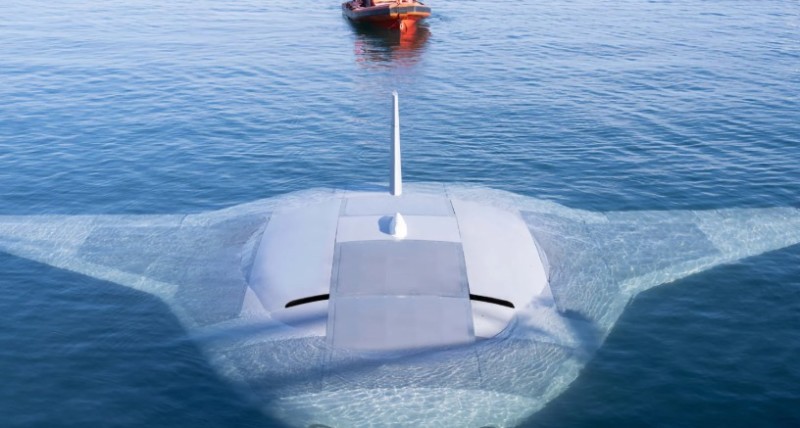

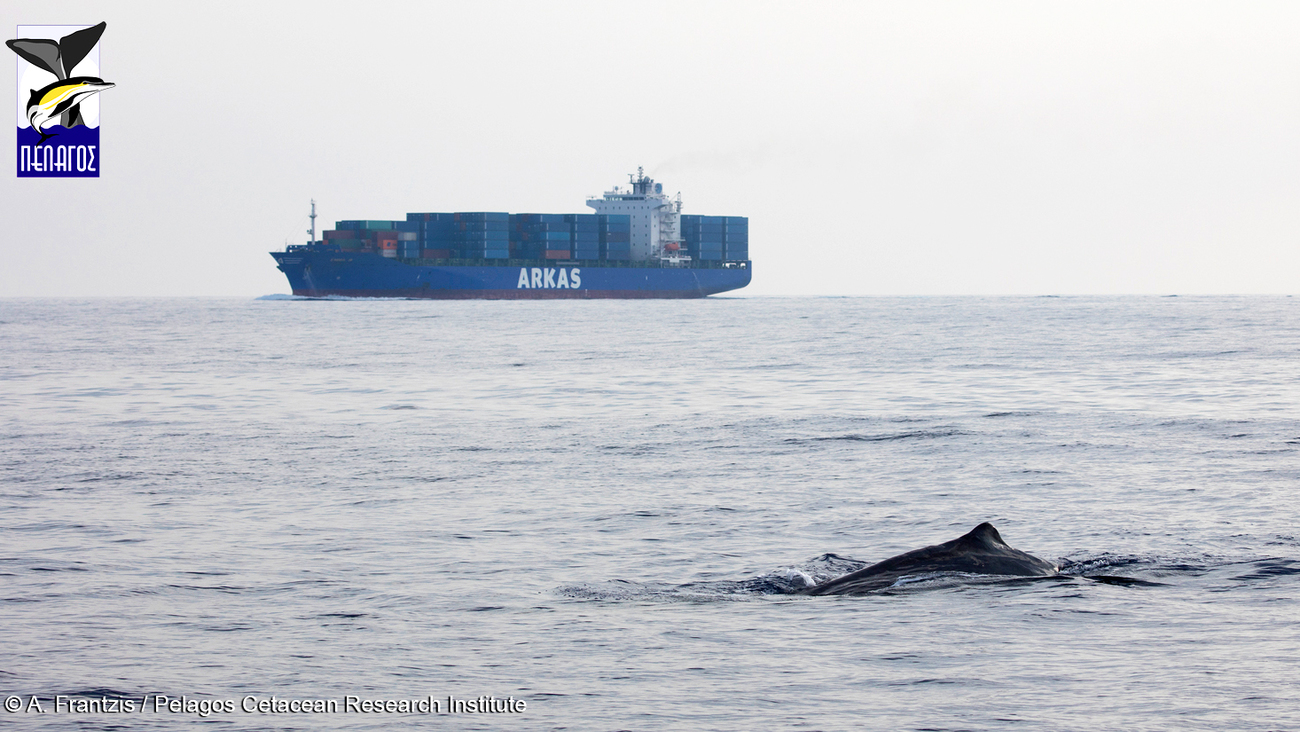
Below the surface of the ocean, sound is a matter of survival. For whales, dolphins and countless other marine species, it allows them to communicate, find their way around, find their food and avoid danger. Today, however, this vital soundscape is being stifled — largely by our activities.
A new survey conducted at European level reveals both a challenge and an opportunity: if underwater noise pollution remains largely unknown, Europeans massively support actions to remedy it as soon as they understand its impacts.
An invisible threat highlighted
According to a survey conducted in March 2026 by Ipsos for IFAW with the support of KRESK 4 OCEANS, 98% of respondents in five European countries believe that it is important to protect marine life. However, only 14% today identify underwater noise as a threat to marine biodiversity.
This difference is significant, but it does not reflect a lack of interest. Above all, it shows that this problem remains largely invisible to the general public.
When interviewees learned that the noise generated by ships disrupts the ability of marine animals to communicate, feed and move, their level of concern increased sharply. Nearly 9 out of 10 people (89%) believe that the problem must be addressed urgently. This observation is clear and powerful: when people understand the issue, they care about it – and they want solutions.
Europeans are ready for change
The survey also shows that this awareness quickly translates into support for action. A large majority — 84% — supports reducing the speed of ships to protect marine life. Even more revealing, 78% believe that this measure should be regulated, and not based solely on voluntary commitments.
Citizens are also ready to do their part. Nearly 7 in 10 people (69%) say they would accept slightly longer delivery times for goods and packages if it would reduce underwater noise pollution. A clear signal to decision-makers demonstrating that citizens are prepared to support concrete and pragmatic solutions.
Slow down ships to save lives
One of the most effective solutions to reduce underwater noise already exists. This is what IFAW calls the Blue Speeds: it is a modest reduction of about 10% in the speed of the entire global maritime fleet.
This simple change can produce immediate and measurable benefits. The implementation of Blue Speeds worldwide could reduce underwater noise by up to 40%, thus helping to restore the acoustic environment on which marine animals depend. It could also halve the risk of fatal collisions between ships and large cetacans, while reducing greenhouse gas emissions from global shipping by about 13%. In other words, slowing down ships is beneficial not only for whales, but also for climate, biodiversity and safety at sea.
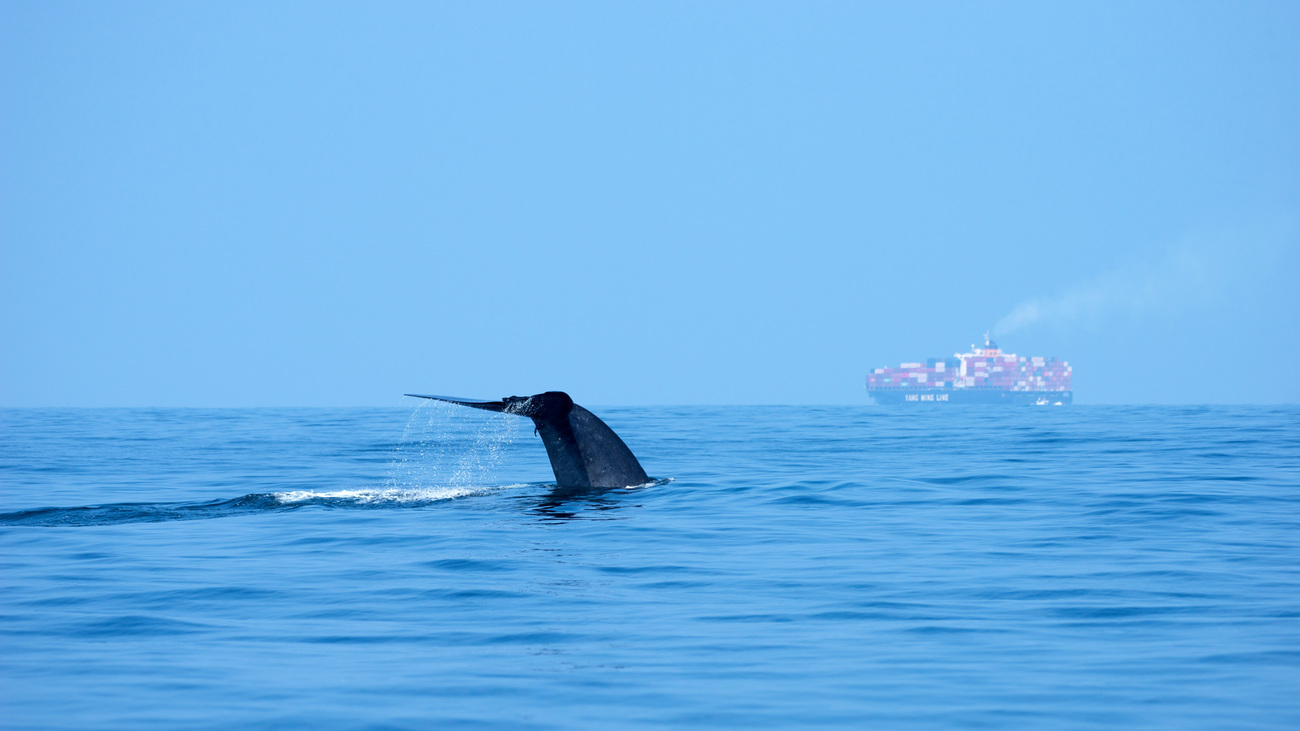
A decisive period for European seas
These results occur at a key moment. The European Union is currently revising the Marine Strategy Framework Directive (MMSD), a major legislative text designed to achieve the « good ecological state » of European waters. This goal was to be achieved by 2020, but it was not.
Among the areas in which progress has been most limited is the reduction of underwater noise pollution, about half of which is generated by maritime transport. Without enhanced action, this invisible threat will continue to worsen.
However, the way forward is clear: Europeans support it, science confirms it, and solutions are at hand.
Transforming public support into public policies
IFAW calls on European institutions and national governments to seize this opportunity. By integrating mandatory ship speed reductions in European waters within a strengthened DCSMM, the European Union can take immediate and decisive action in favor of a calmer and healthier ocean.
This is an opportunity to align public policies with the will of citizens – and to bring concrete and measurable benefits to marine life.
A quieter ocean is possible
European citizens show that they are deeply concerned about the future of our ocean. They are ready to learn, adapt and support solutions that protect marine life.
Together, we can reduce the volume of underwater noise and give whales, dolphins and other species the sound space they need to survive and thrive. A quieter ocean is not a distant ambition, but a solution within our reach – provided we choose to act.
This work benefits from the generous support of KRESK 4 OCEANS.
Survey conducted by Ipsos BVA for IFAW between 11 and 26 February 2026 in France, Germany, the Netherlands, Spain and Sweden, with representative samples of 1,000 people aged 18 and over in each of these countries.
source : ifaw