
In accordance with its economic sovereignty policy, Gabon wants to generate more value for its fishing sector. Beyond the sole exploitation of fisheries resources, the national authorities want to make these natural resources a lever for industrialization and job creation.
Gabon has decided not to renew the Sustainable Fisheries Partnership Agreement (SDPP) that had linked it to the European Union for nineteen years. When it came to an end on June 28, the partnership signed in 2007 and renewed several times allowed European ships to operate in Gabonese waters. But for Libreville, this device did not fulfill its promises. The government explains « that a preponderant part of the fisheries resources exploited in Gabonese waters was destined for foreign markets, limiting the development of a local processing industry, job creation and the national exploitation of this strategic wealth« .
According to the government, the revenues generated by the agreement did not compensate for the real value of the catches, the surveillance costs assumed by the State, or the losses of added value related to the lack of local processing. Set at about 26 million euros for the last agreement (2021-2026), the financial consideration of the fishing agreement is considered derisory by the Gabonese authorities in view of the volumes of fish taken annually, set at 32,000 tons.
Gabon also pointed out the low investment made by European partners in national employment and capacity building. « By ending this agreement, the Gabonese Republic affirms its desire to fully exercise its sovereignty over its maritime resources and to initiate a new dynamic of development in the fisheries sector. […] From now on, the wealth from Gabonese waters will have to contribute primarily to national prosperity, benefiting economic operators, the people and the country’s sustainable development, « say the authorities.
Tuna, a symbol of a failed industrialization
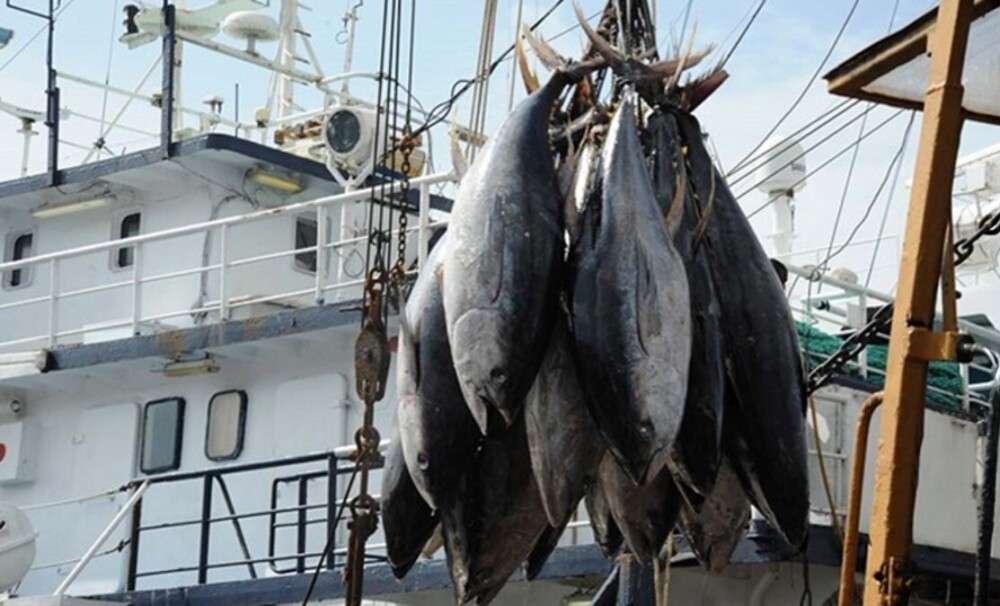
Tuna also illustrates Gabonese frustration. This resource, largely captured by European tuna and longliners, mainly Portuguese, Spanish and French, was mostly exported raw, without going through local processing units. However, Libreville now intends to make fishing a relay of its policy of economic sovereignty, already applied to the mining and forestry sectors, by conditioning access to its resources on firm commitments to industrial exploitation on national territory.
On the European side, the break is not presented as final. The European Union has declared itself « willing to address the concerns expressed in recent months in a constructive and transparent manner. Our approach is forward to the future: preserving what works, dealing with obstacles in a pragmatic way, and building a renewed, balanced and effective environment. Thus, the European Union is ready to negotiate, in parallel, a new generation Sustainable Fisheries Partnership Agreement, as well as a new Mutually beneficial Implementation Protocol.
However, the non-renewal of this fishing agreement is not without risk. Gabon will have to strengthen its fight against illegal, unreported and unregulated fishing alone. The country has thus become the second country in the sub-Saharan Africa region after Senegal in 2024 not to renew the fisheries agreement with the European Union.
source : La tribune