
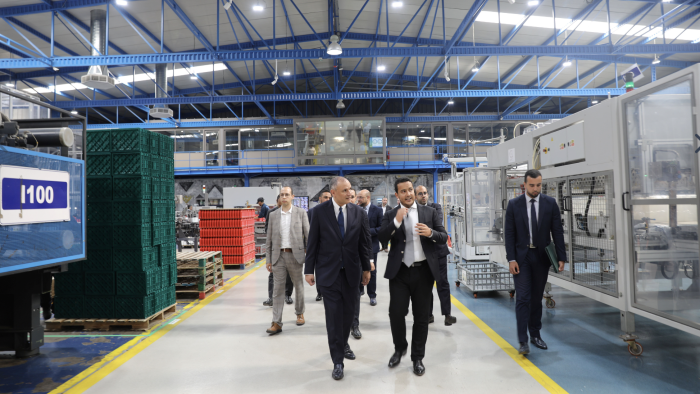
Greenpeace Middle East and North Africa (Greenpeace MENA), which is leading a campaign against plastic pollution in the region, called on the authorities to give up investments in single-use plastics after the opening of a Plasticpack Morocco factory in Sidi Bou Othmane, according to a statement released by the organization.
Farah Al Hattab, head of the plastic campaign at Greenpeace MENA, acknowledged that job creation, the growth of local industry and support for the national economy were important objectives but believed that they should « go hand in hand with protecting the environment and preserving the health of people ». She asked that new investments give priority to sustainable solutions rather than increased dependence on a material that, according to her, « often ends up in nature, on the coasts and in our bodies ».
The organization invited the Moroccan authorities to join international efforts against plastic pollution and to discard investments in disposable products. Farah Al Hattab judged that the answer should be through « the prohibition of these plastics » and « reuse and recharge » systems, in line with Morocco’s climate strategy and the national development of renewable energies.
The organization estimates 75,000 tons of plastic waste reaching the sea and $26 million in losses for the blue economy
Greenpeace MENA also asked the government and manufacturers to subject any industrial expansion to measurable waste reduction targets. The organization defended a circular economy that favors the decline in the production of single-use plastics, called for extended producer liability rules covering « the entire life cycle of their products » and pleaded for Rabat to support a « strong and legally binding » global treaty on plastics.
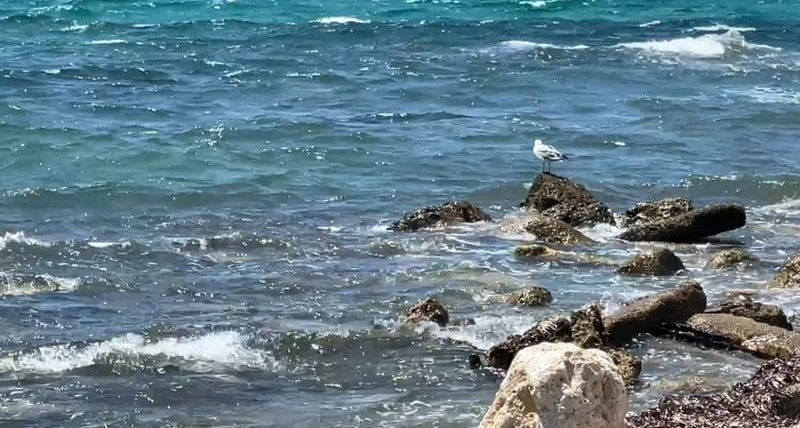
According to estimates taken up by Greenpeace MENA, about 75,000 tons of plastic waste would reach the marine environment in Morocco each year. Most of it would reach the Atlantic Ocean, due to population density and industrial concentration around Casablanca and Kenitra, the statement said.
The losses attributed to this pollution for the Moroccan blue economy would reach nearly $26 million per year, according to the same estimates. This amount would include lost revenue, cleaning costs and environmental damage in fishing, tourism and shipping. In its response to the opening of the plant, the NGO asked that industrial choices be evaluated against their long-term effects on public health, ecosystems and local communities, and not on the investment criterion alone.
source : barlamane