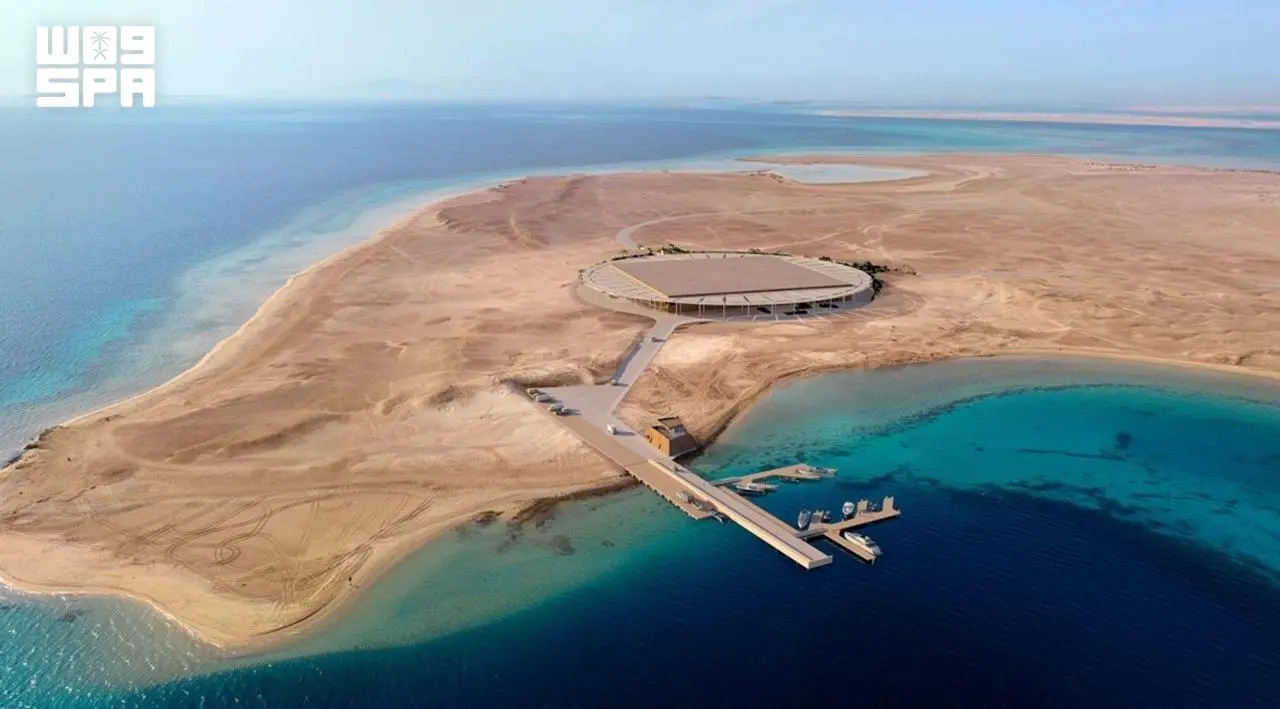

Antalya, November 11, 2026, SPA — King Abdullah University of Science and Technology (KAUST) has inaugurated the world’s largest coral reef cultivation and restoration facility on the Red Sea Coast, as part of the KAUST Coral Reef Restoration Initiative (KCRI), aimed at protecting marine ecosystems and building national marine science capacities.
The facility includes a terrestrial nursery for coral reproduction and a cutting-edge research centre, with a production capacity of up to 360,000 young coral colonies per year. The initiative plans to transplant more than two million young colonies into their natural habitats, over an area of 100 hectares in the Red Sea Island region of Shusha by 2030, in order to build a reef ecosystem capable of adapting to environmental changes by 2040.
The announcement of the inauguration of this facility coincides with the 31st Conference of the Parties to the United Nations Framework Convention on Climate Change (COP31), held in Antalya, Türkiye, as coral reefs face growing challenges related to rising ocean temperatures. According to data from the U.S. National Oceans and Atmospheric Administration (NOAA), more than 84% of the area of coral reefs worldwide was exposed to thermal stress causing their bleaching between 2023 and 2025.
The initiative is based on the natural characteristics of Red Sea coral reefs and their ability to adapt to high temperatures and salinity levels, as well as on the scientific expertise of KAUST, in order to develop coral propagation techniques and strengthen their resistance to high temperatures.
It includes terrestrial and marine inners, as well as more than 50 research programs on heat-resistant corals, beneficial bacteria, robotics and artificial intelligence-assisted modeling. It also integrates the eCoral platform, which uses digital twins technology to simulate reef ecosystems, determine suitable sites for transplantation of young coral colonies and monitor their growth.
The initiative also benefits from the international expertise of the Global Platform for Coral Research and Development Acceleration (CORDAP), to develop scientific and technological solutions to protect and restore coral reefs.
It also contributes to the training of Saudi skills specialized in sea sciences, thanks to the participation of Saudi scientists, divers and specialists in the care of aquatic organisms in coral propagation and coral reef restoration activities, thus allowing them to acquire advanced scientific and technical expertise.
These efforts are of global environmental importance, given the role of coral reefs in maintaining nearly a quarter of marine species, protecting coasts from storms and providing livelihoods to more than 500 million people worldwide.