

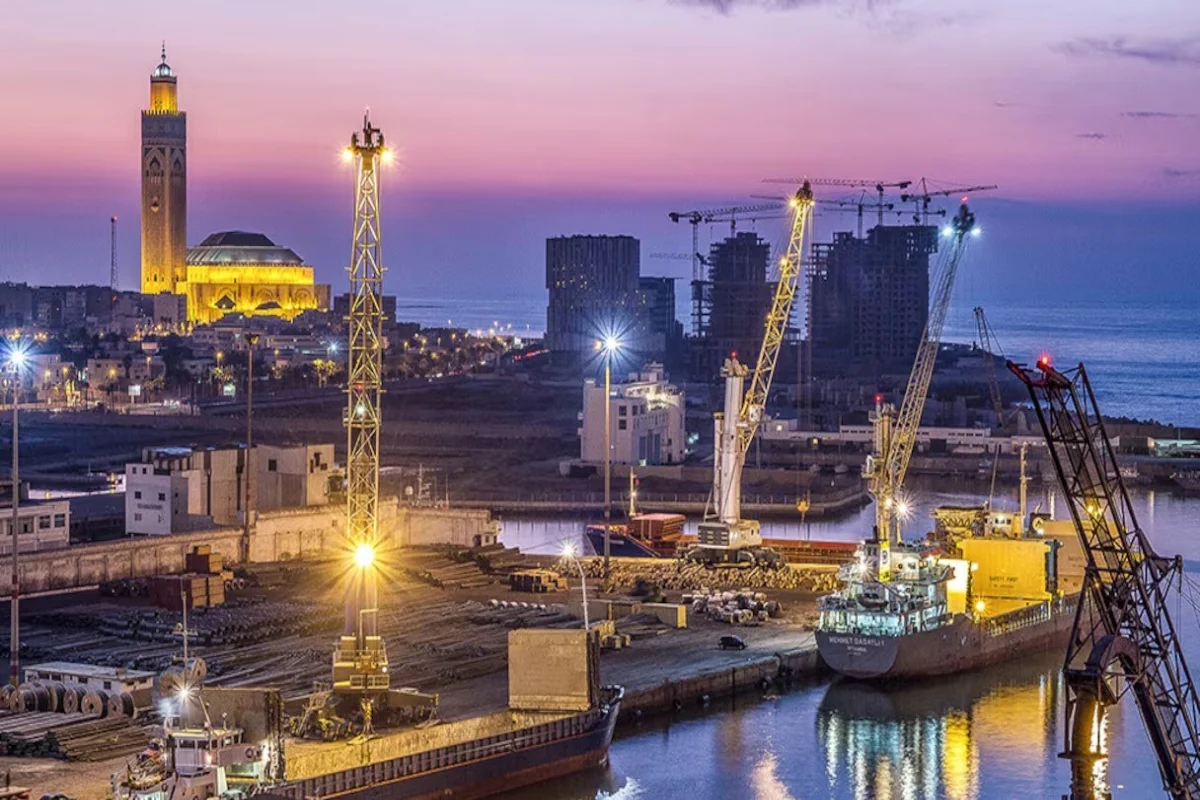
Morocco continues its rise in world maritime trade. According to the latest data from the Regular Shipping Connectivity Index (LSCI), published for 2026 by the United Nations Conference on Trade and Development (UNCEDCD), the Kingdom is ranking 20th in the world, with a score of 259.33 points. A ranking that confirms the gradual repositioning of the country as a strategic logistics platform between Africa, Europe and the Americas.
Morocco is now ahead of several economies historically rooted in maritime transport. At the top of the ranking are China, followed by South Korea, Singapore and the United States, which continue to dominate the major flows of world trade.
The LSCI index, considered to be one of the main barometers for the integration of countries into global maritime transport networks, assesses in particular the number of regular shipping lines, the capacity of ships, the volume of services provided by transport companies, port capacities and the number of countries connected by direct sea links.
This Moroccan progression is part of a broader transformation of the national port landscape that has been underway for several years. The development of the Tanger Med port complex has profoundly changed the Kingdom’s place in international supply chains. Located near the Strait of Gibraltar, the port has established itself as one of the main container hubs in the Mediterranean and on the African continent.
Before the entry into service of Tanger Med, Morocco occupied much more modest positions in international maritime connectivity indicators. Several reports published in recent years have highlighted the extent of this evolution, which has allowed the Kingdom to join the countries most integrated into global trade networks. This dynamic has also strengthened its attractiveness to industrial and logistics investors.
Beyond the ranking itself, the improvement of maritime connectivity has major economic challenges. Better integration into global transport networks generally helps reduce logistics costs, streamline supply chains and strengthen export competitiveness. It is also a lever of attractiveness for industrial multinationals, especially in the automotive, aeronautics and export sectors.
Morocco’s positioning finally reflects a broader ambition, that of consolidating its role as a regional transshipment and distribution platform for African and European markets. This strategy is based on continued investment in port infrastructure, road and rail networks and logistics areas spread across the Kingdom.
source : hespress